Placement guide · eight reviewed works · Kelowna
Forearm Tattoos in Kelowna
Alex Roze tattoos forearm projects at Rocky Mountain Tattoo, 532 Bernard Avenue in downtown Kelowna. A forearm can hold a self-contained vertical panel, a design that turns with the arm, or one part of a larger arm plan. The useful decision is not simply “forearm”: it is the exact side and surface, measured space, visibility, required detail, nearby tattoos, and whether the composition must connect later.
Portfolio and sources reviewed 14 August 2026
Eight reviewed works
Forearm portfolio across four styles
These eight finished tattoos were selected only after a full contact-sheet review and individual image inspection. Every record carries a dated forearm-specific visual review. The set includes neo-traditional, black-and-grey, cyberpunk anime, and traditional work, showing that placement does not prescribe one visual language.
The examples solve different composition problems: a long character panel, a face built across the arm's width, a mask fitted between wrist and elbow, a horizontal eyes composition, and subject-led pieces framed by flowers or supporting objects. Use them as evidence of approaches Alex has completed, not as templates to copy or proof that the same dimensions, hours, price, or result apply to a new body and brief.
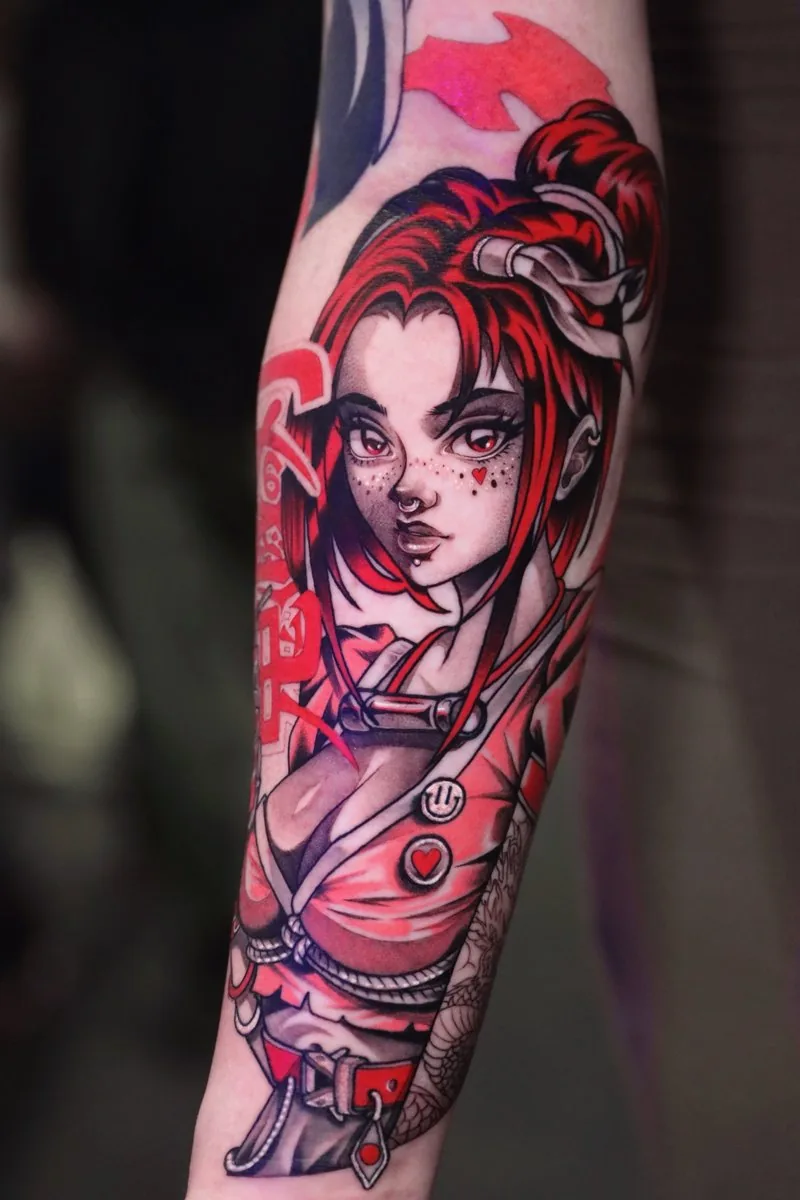
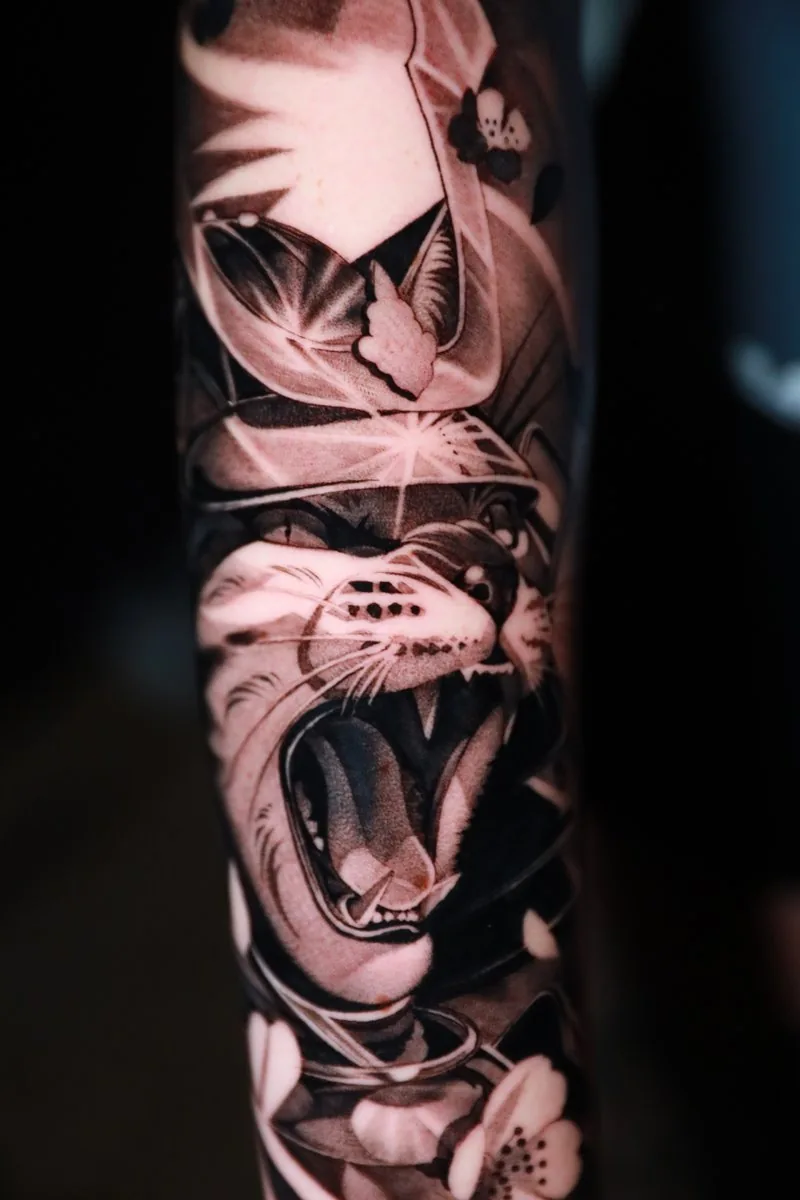
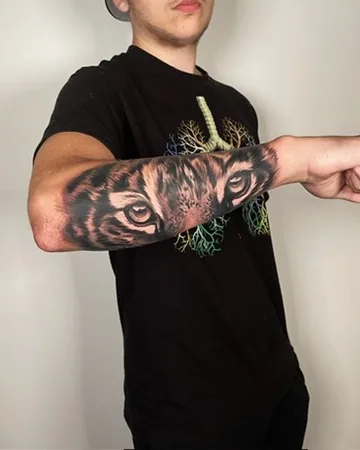
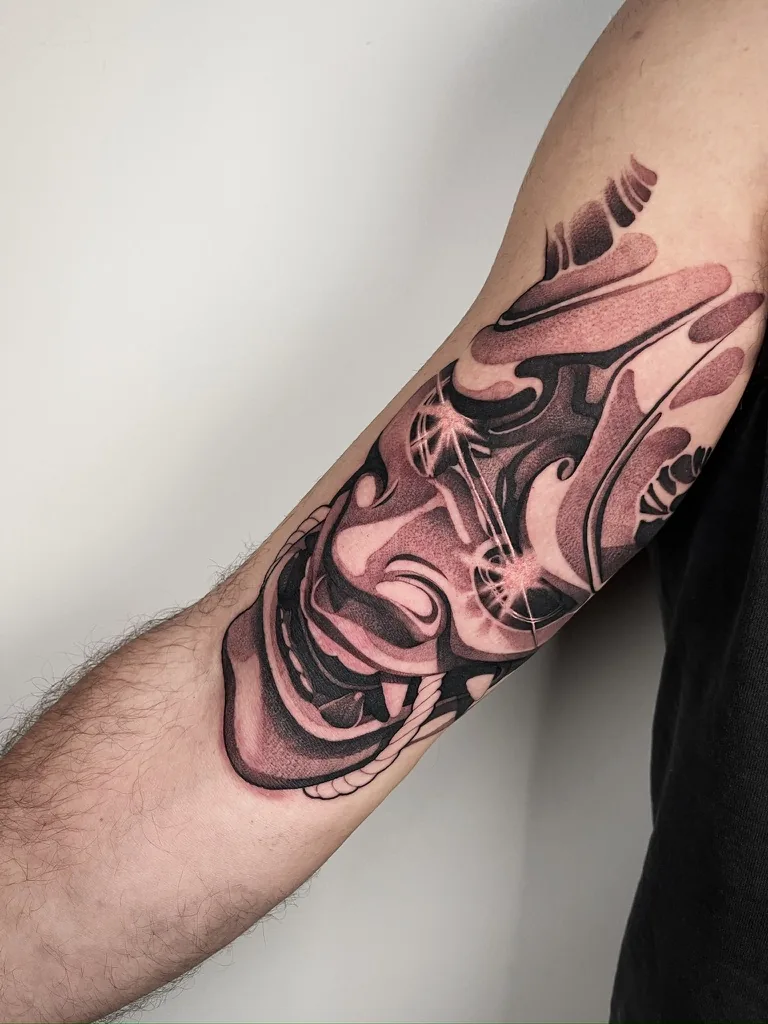
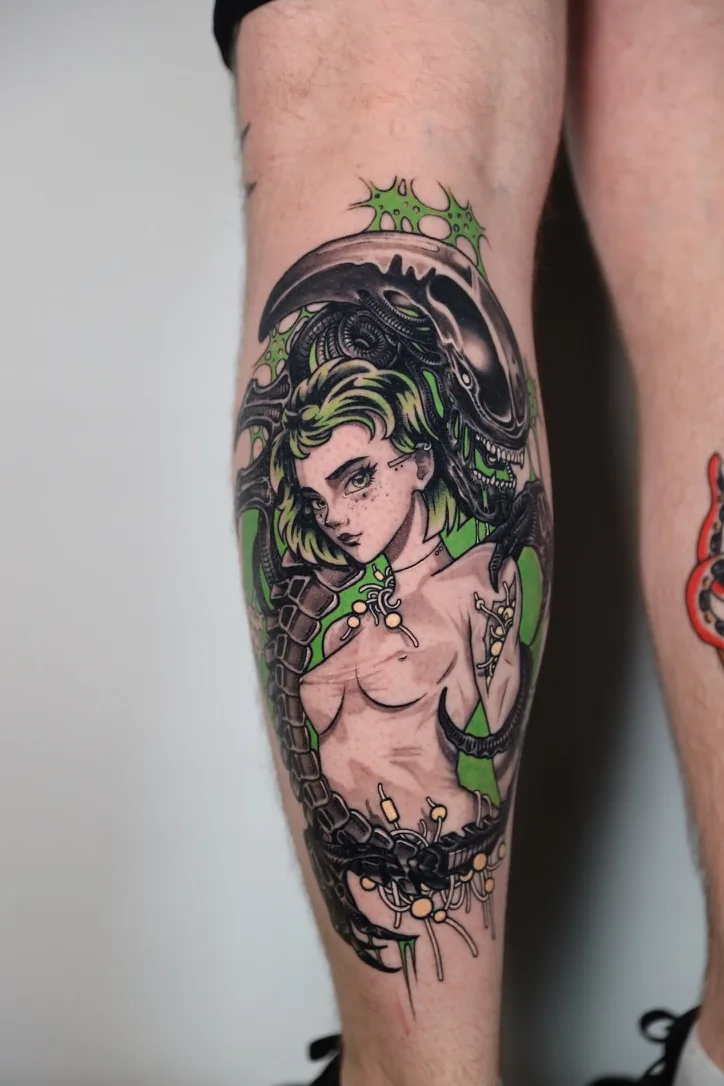
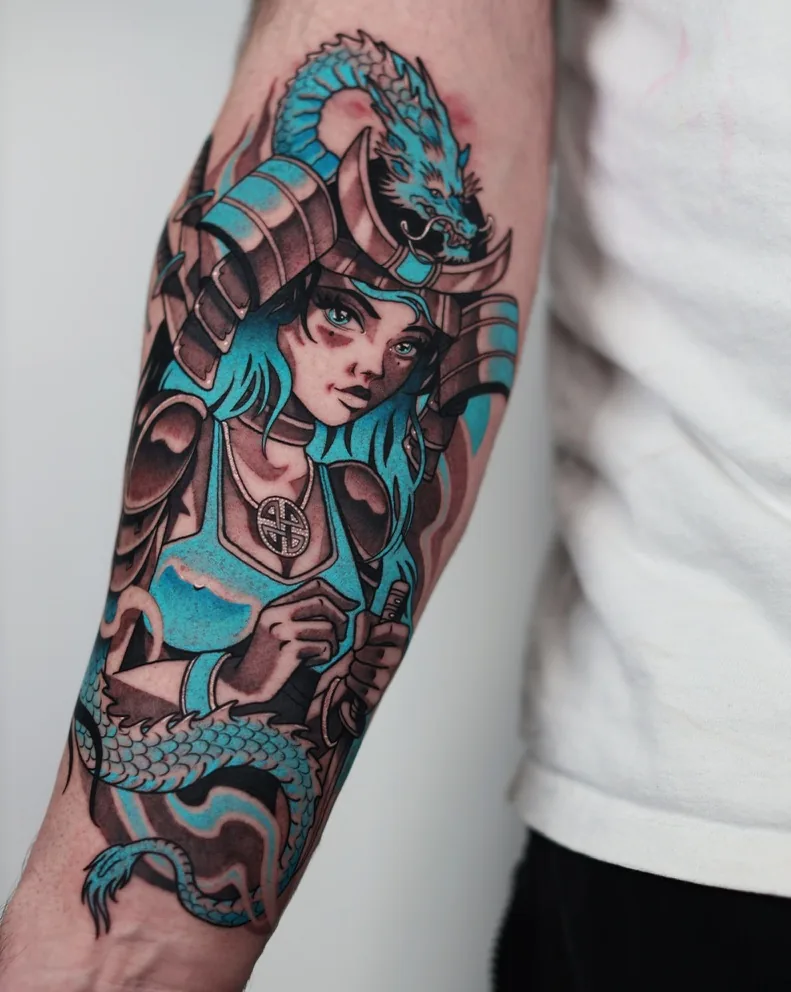
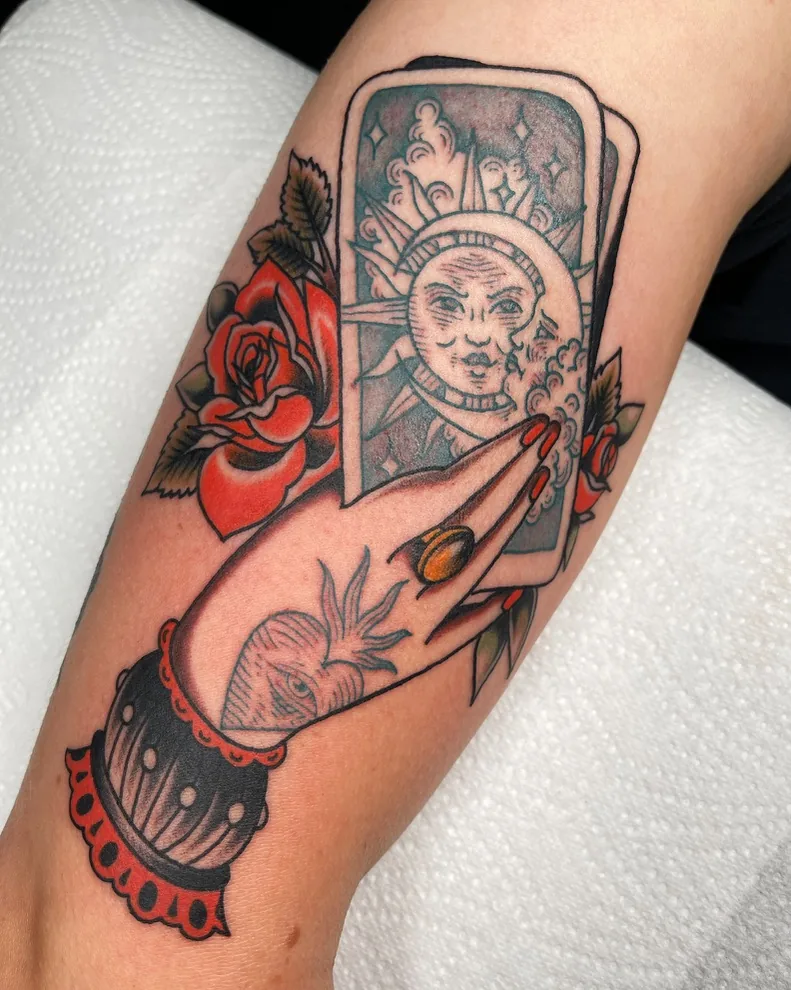
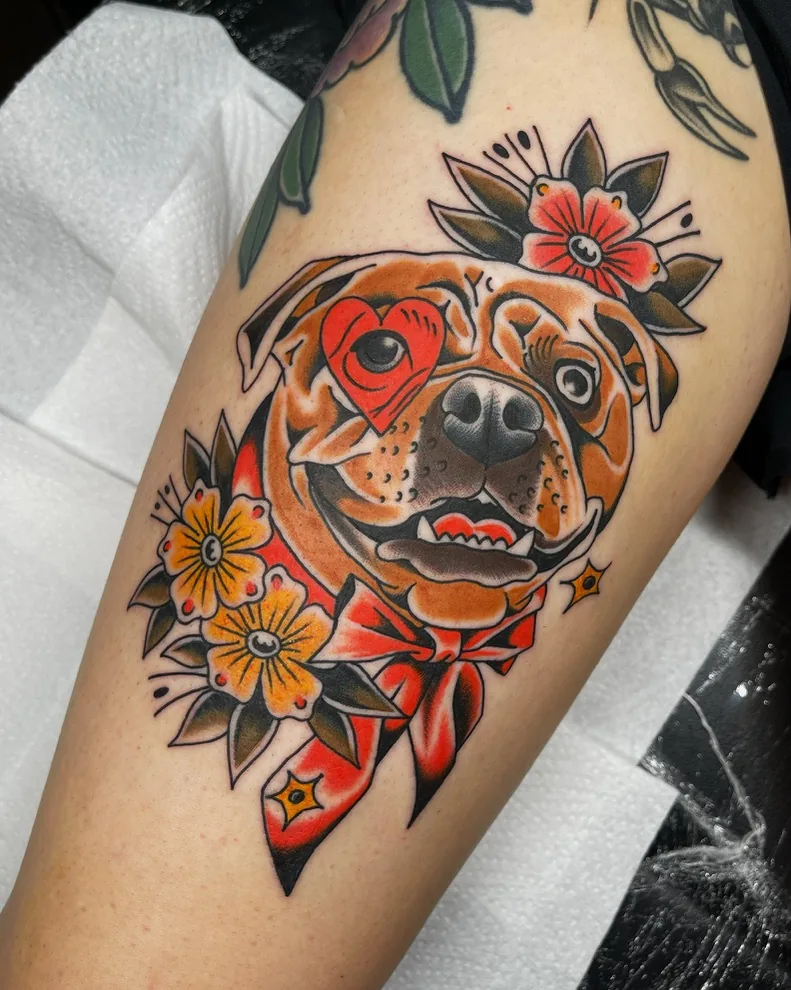
Forearm inclusion means the placement was visible in the reviewed finished-work photograph. It does not establish the client's experience, exact surface terminology, dimensions, tattooing time, price, healing course, or future appearance, and it does not guarantee that every subject or scale will be accepted.
Name the actual surface
“Forearm” is only the first coordinate
State left or right, then identify the surface you mean: inner, outer, or a composition intended to turn around the arm. Say whether it should sit nearer the wrist, nearer the elbow, or occupy most of the available length. These labels are not a substitute for photographs. They make the first message precise enough for Alex to compare your words with the actual area.
Send one straight, well-lit photograph of the intended surface with the arm relaxed. Add a wider photograph that shows the wrist, elbow, body direction, and any nearby work. If the design should be readable from one view, say which view matters. If it should turn, connect, or reveal different information as the arm moves, explain that rather than assuming “wraparound” resolves the composition.
Visibility is also part of the brief. A forearm tattoo may be exposed in ordinary clothing, but workwear, personal preference, and the exact surface change what remains visible. Decide whether concealment matters and tell Alex the real constraint; this page cannot make a workplace or personal decision for you.
Style follows the read
Compare visual systems before choosing detail
The reviewed black-and-grey examples use value, contrast, texture, and negative space for tiger eyes, a mask, and the Okanagan panther. The cyberpunk-anime and neo-traditional examples use character silhouettes, directional shapes, selective colour, and framed detail across a longer panel. The traditional examples use bolder separations between the main subject, flowers, cards, and supporting forms.
Start by choosing two or three finished pieces whose structure is relevant. Explain what you are pointing to: the long vertical read, the amount of background, the contrast, the colour restraint, the subject-to-frame relationship, or the way supporting elements fill the available shape. “I like this” is useful only when the specific quality is named.
If you are undecided between styles, use the style comparison and the complete tattoo portfolio. A subject can often be interpreted through more than one visual system, but reference quality, available scale, and the details that must survive determine whether that interpretation remains readable.
Pain without a fake chart
There is no honest universal forearm pain score
The International Association for the Study of Pain states that pain is always a personal experience influenced to varying degrees by biological, psychological, and social factors. That rules out promising that a forearm tattoo will feel mild, severe, easier than another placement, or identical from wrist to elbow for every person.
The practical response is to tell Alex about relevant concerns and ask how breaks are handled in the published tattoo process. Do not use a placement chart to diagnose your tolerance or hide a health concern. The exact surface, the individual session, and your own experience matter more than a universal number this page cannot establish.
If pain, swelling, warmth, redness, red streaks, pus, fever, an allergic reaction, or another symptom concerns you after tattooing, use HealthLink BC's tattoo-problem guidance or appropriate medical care. Alex's aftercare page records his artist-specific base protocol; neither page replaces diagnosis or individualized medical advice.
Measure the design problem
Plan size, existing work, and future sleeve intent
Give approximate longest height and width in centimetres or inches, or explain the coverage using clear anatomical endpoints visible in the photographs. “Medium forearm tattoo” does not tell Alex whether the subject must occupy one narrow surface, cross a curve, leave a margin near the wrist, stop before the elbow, or use most of the forearm.
List the details that cannot be removed. Faces, eyes, hands, text, small objects, costume features, petals, markings, and mechanical parts compete for space differently. If the placement cannot carry every element at a readable scale, the useful decision is what leads, what supports it, and what can be simplified—not a promise to compress everything.
Show existing tattoos in both close and wider views. Mark edges that may be approached and areas that must remain separate. If the forearm piece may become part of a half sleeve, full sleeve, or larger connected arm plan, say so before the first composition is treated as an isolated object. Preserving direction, transitions, and usable negative space early may change how the first piece is framed.
Use the size and session guide to prepare measurable inputs. Alex publishes $280 CAD per hour and $2,000 CAD for a full day, but those rates are not a quote. Subject, style, detail, coverage, colour, existing work, drawing, setup, changes, and breaks affect the estimate.
Build a useful enquiry
Send evidence Alex can evaluate
Include the subject and the story only where it changes the visual priorities. Link or name the closest Alex portfolio examples and explain which qualities matter. State the exact left or right forearm surface, measured height and width or coverage, preferred orientation, colour direction, must-keep details, unwanted elements, and whether public visibility matters.
Attach a straight placement photograph and a wider arm photograph. Include nearby tattoos and say whether the new work should stand alone, connect now, or preserve space for later work. Add your budget and date constraints as constraints, not as a request for invented availability. If reference ownership, character version, likeness, spelling, or other exact identity matters, state it plainly.
Submitting the online booking enquiry starts review; it does not reserve an appointment, guarantee acceptance, or prove a price, duration, or session count. If the idea is viable, the later design and in-person placement stages are where the composition is reviewed against the actual body and agreed project.
Direct answers
Forearm tattoo FAQ
Is the forearm a good place for a tattoo?
A forearm placement can support a self-contained panel, a design that turns with the arm, or part of a larger arm plan. Whether it fits your project depends on the subject, required detail, measured space, visibility, existing tattoos, and future plans—not the placement name alone.
Should I choose the inner or outer forearm?
Send photographs of the exact surface you are considering and explain how you want the tattoo to read when the arm is relaxed. Curvature, available space, nearby work, visibility, and any future sleeve plan need to be reviewed for your body and design.
How painful is a forearm tattoo?
There is no honest universal forearm pain score. Pain is personal and influenced by biological, psychological, and social factors. Exact surface, session conditions, and the individual experience vary, so discuss concerns and break needs rather than relying on a ranking.
How much does a forearm tattoo cost?
A placement photograph cannot establish price or duration. Alex publishes an hourly and full-day rate, but subject, style, detail, measured coverage, colour, existing work, drawing, setup, changes, and breaks affect a project-specific estimate.
What should I send for a forearm tattoo enquiry?
Send the subject, closest portfolio examples, exact left or right forearm surface, measured height and width or coverage, straight and wider placement photos, must-keep details, colour direction, nearby tattoos, future arm plans, budget, and date constraints.
Visible provenance
Sources and claim boundaries
- Rocky Mountain Tattoo: Alex Roze profile — current studio relationship and published styles.
- Rocky Mountain Tattoo: Contact — downtown Kelowna appointment address.
- International Association for the Study of Pain: revised definition — pain is a personal, multi-factorial experience.
- HealthLink BC: Tattoo Problems — symptom and medical-escalation guidance.
- Alex Roze: Size and Session Guide — measurable project inputs and estimate boundaries.
- Alex Roze: Tattoo Process — enquiry, design, in-person placement, tattooing, and aftercare sequence.
The portfolio proves eight completed forearm placements across four styles. It does not produce a universal pain rank, dimension-to-hours formula, price, availability statement, healing prediction, or result guarantee. Page, portfolio selection, and sources reviewed 14 August 2026.
START A FOREARM TATTOO ENQUIRY →