
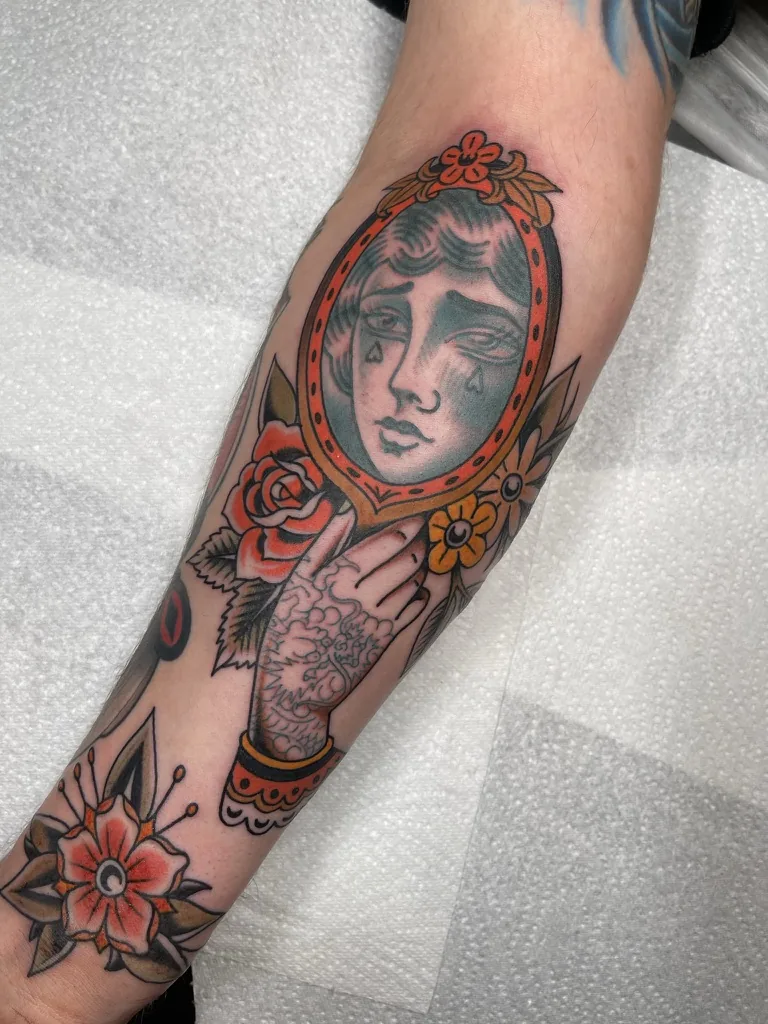
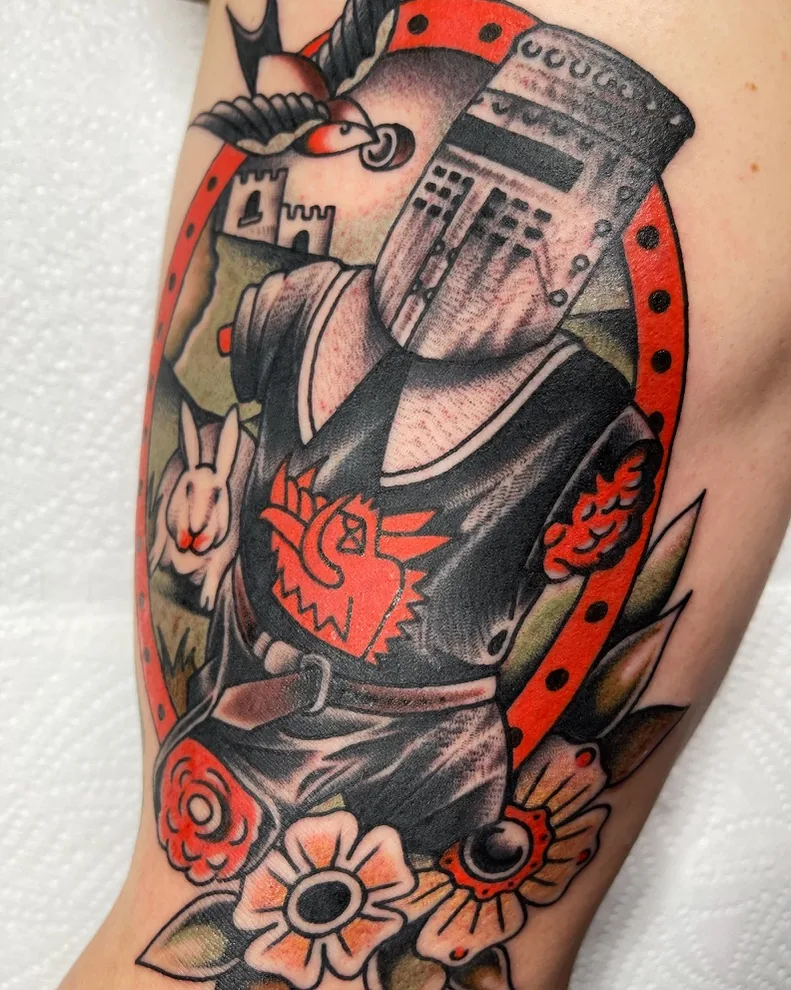


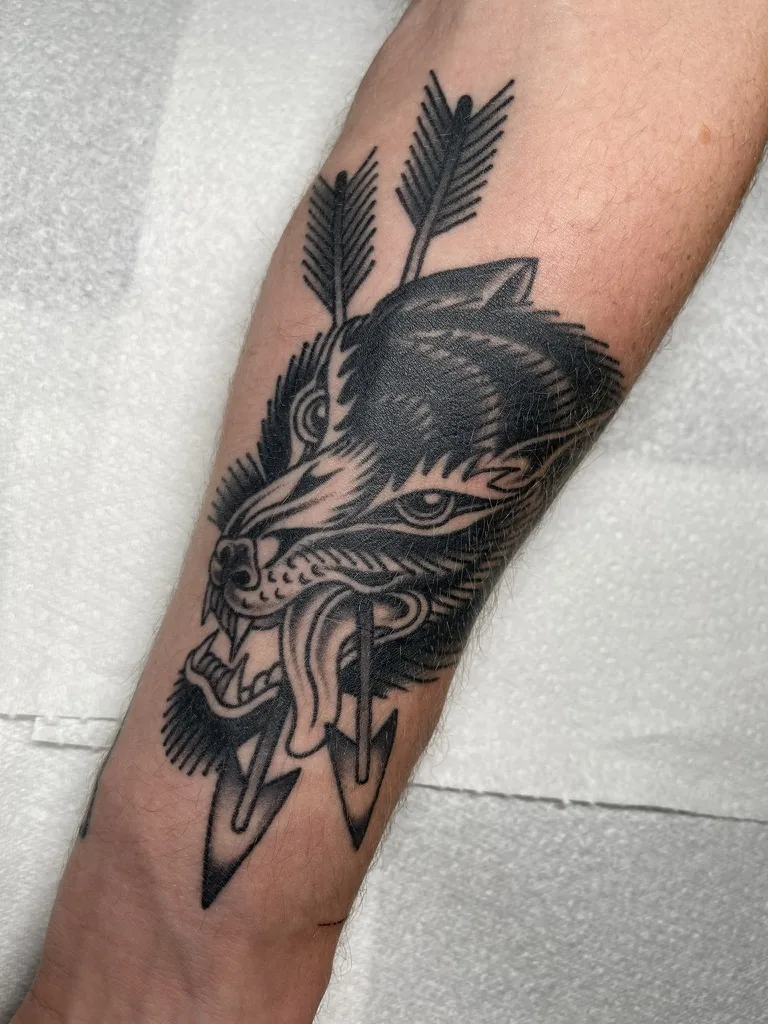

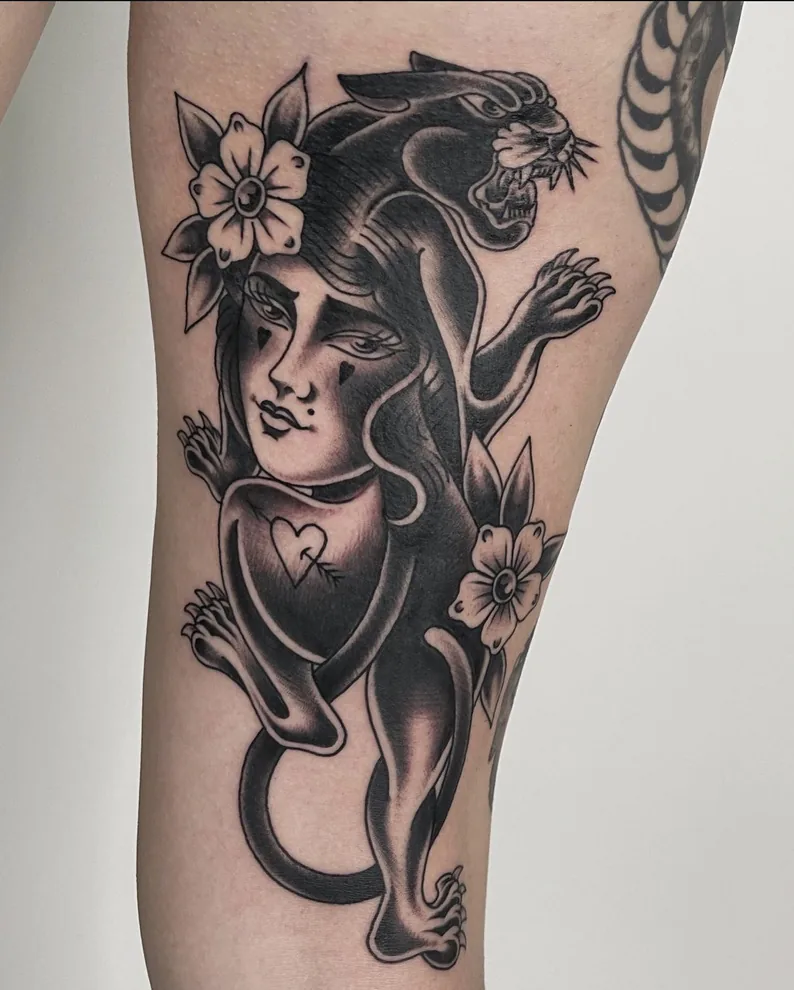



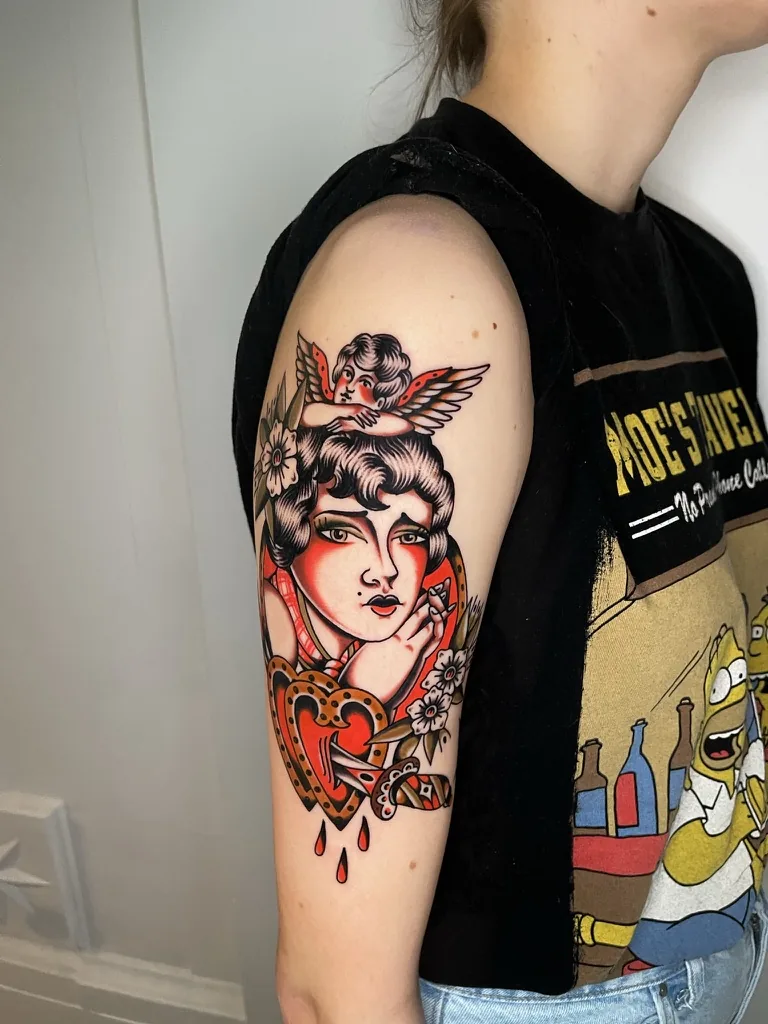

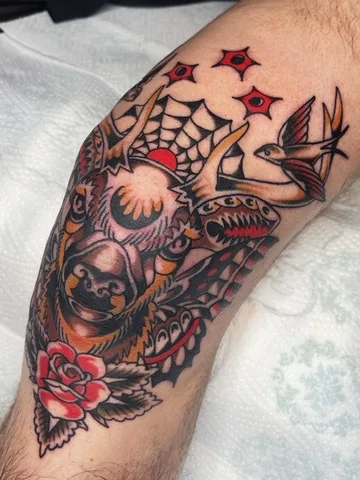


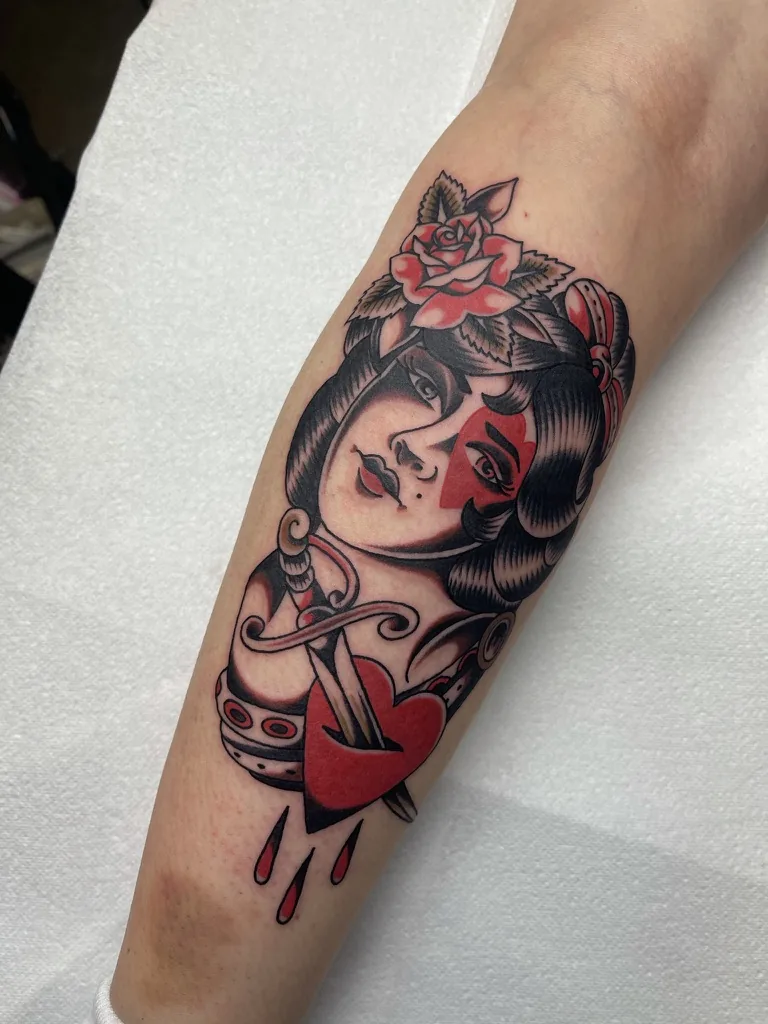
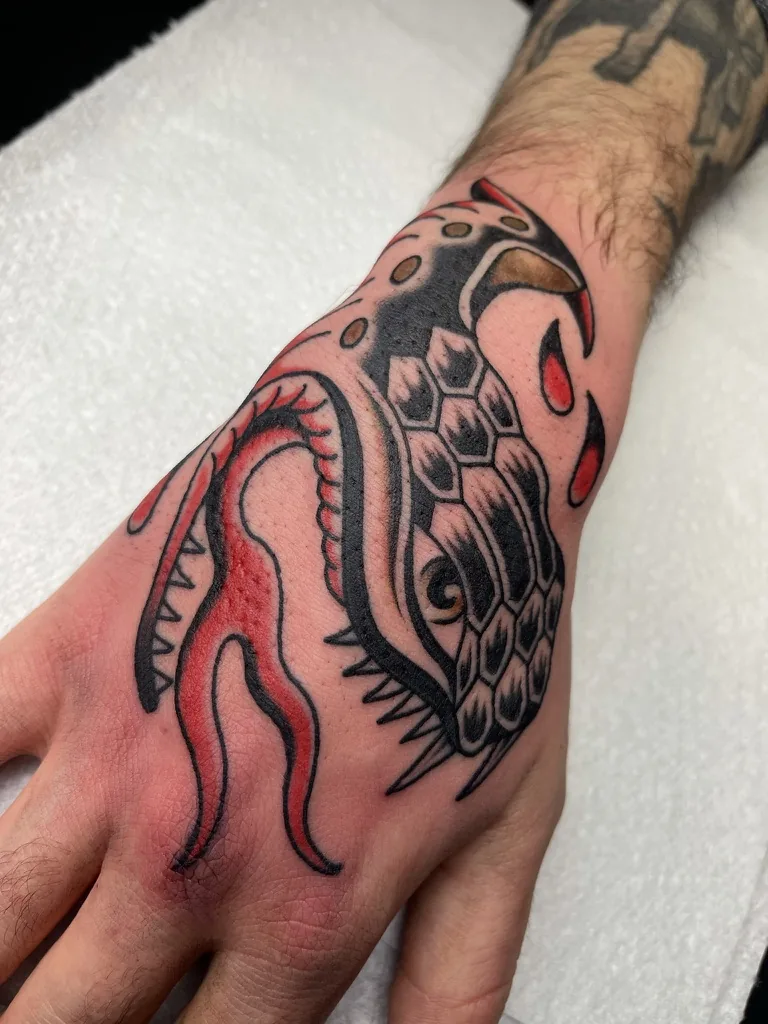




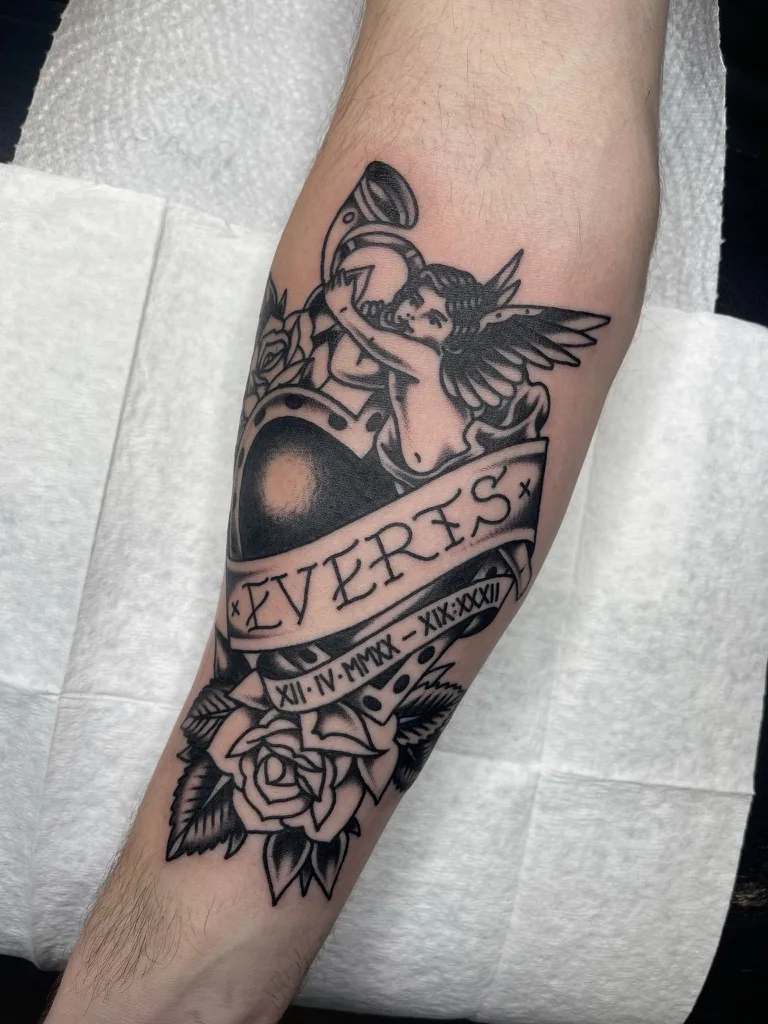

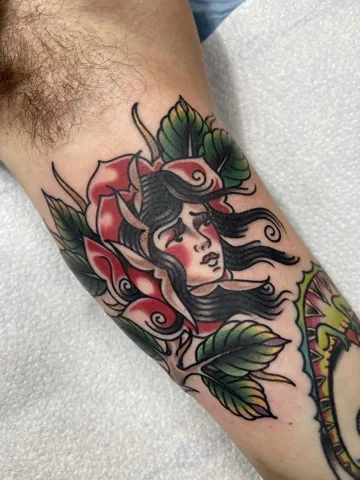
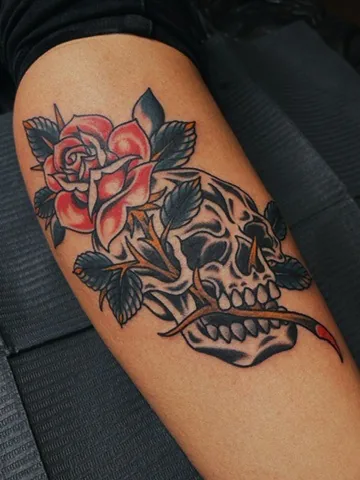

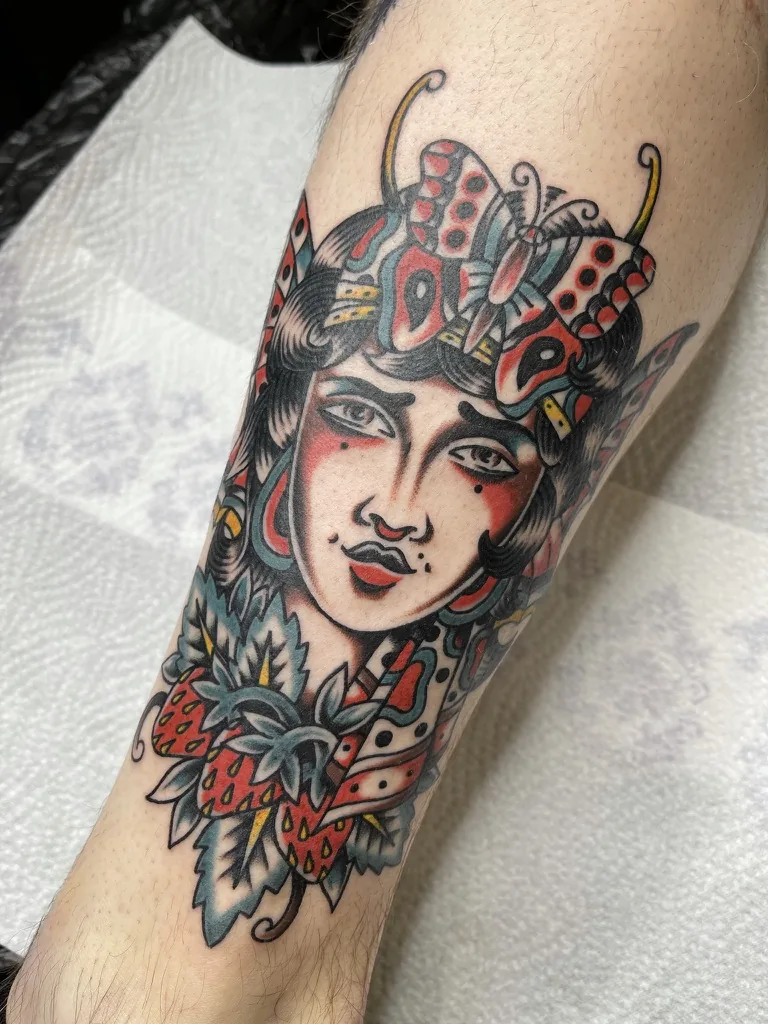

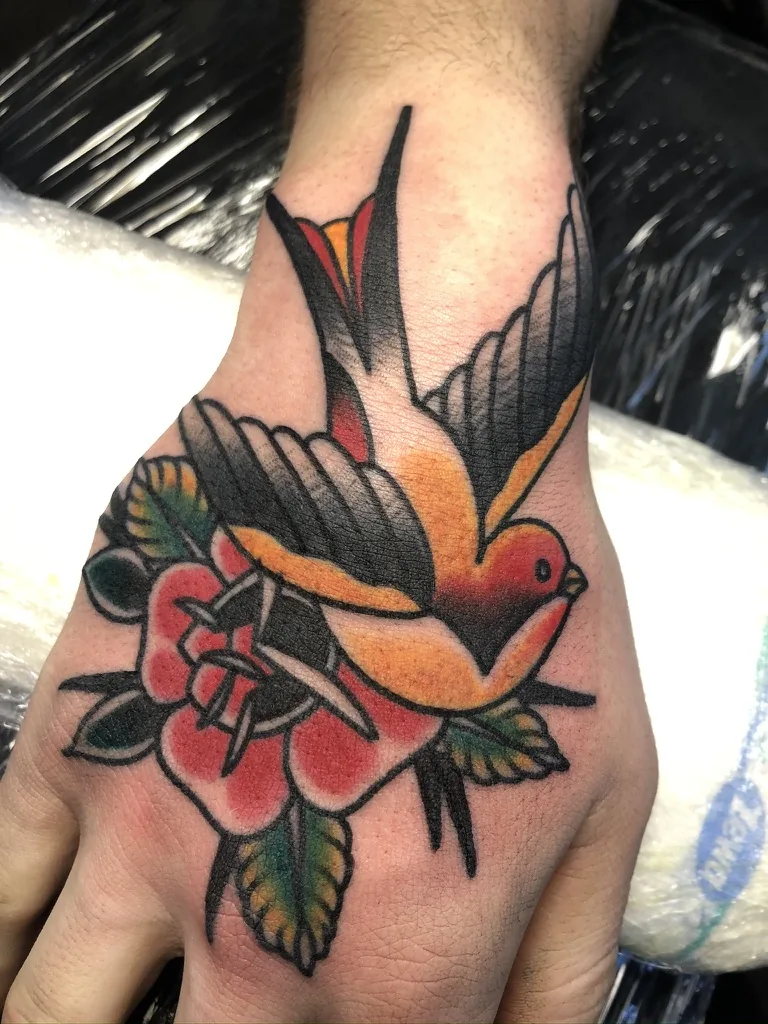
What makes it traditional?
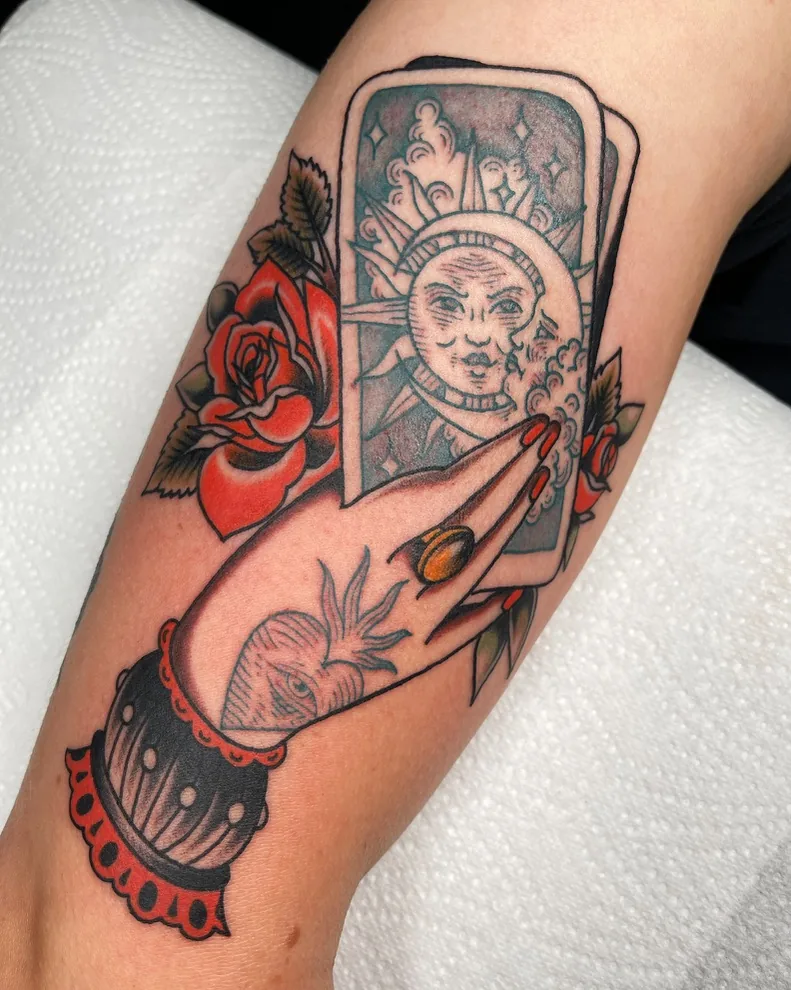
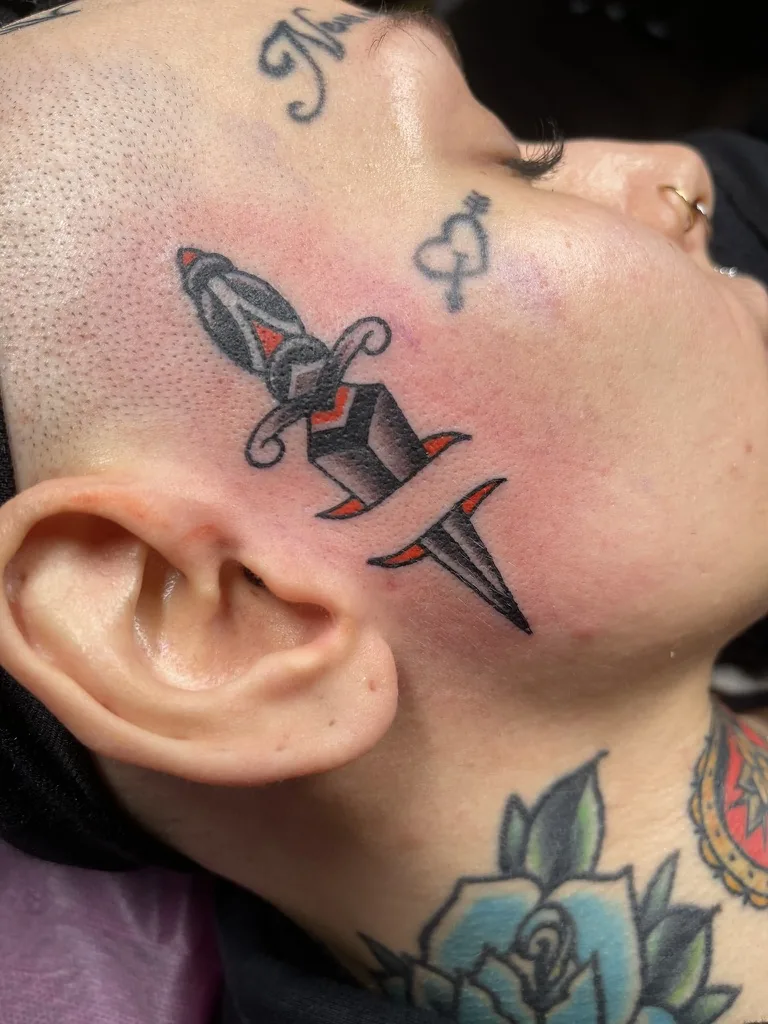
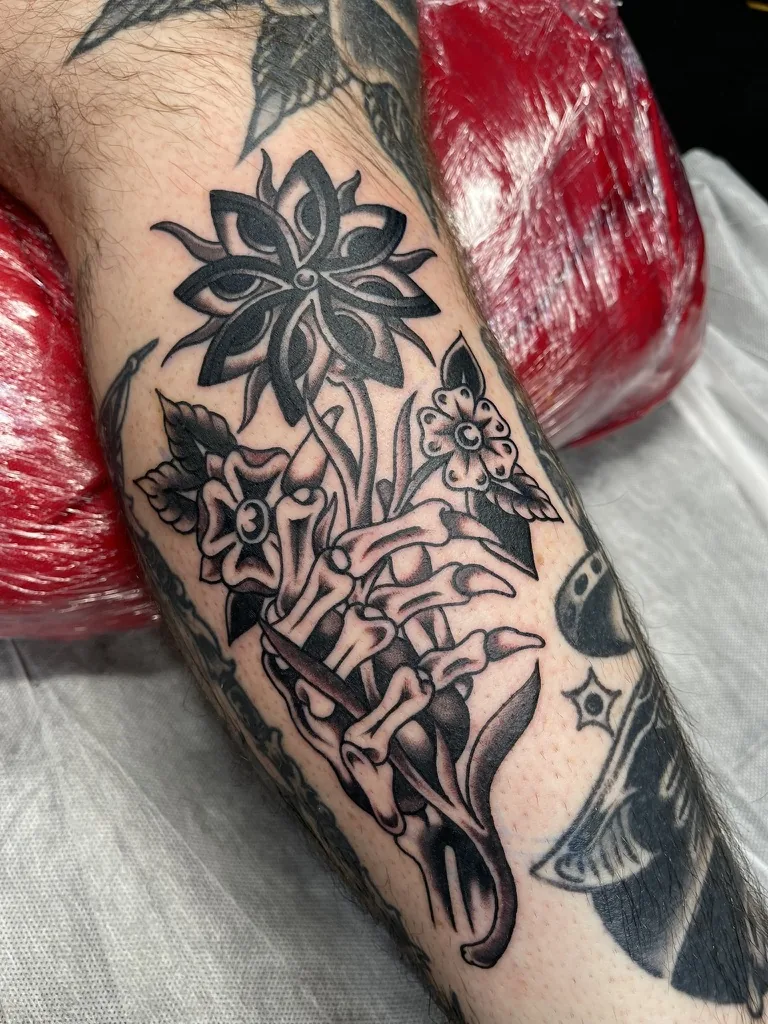
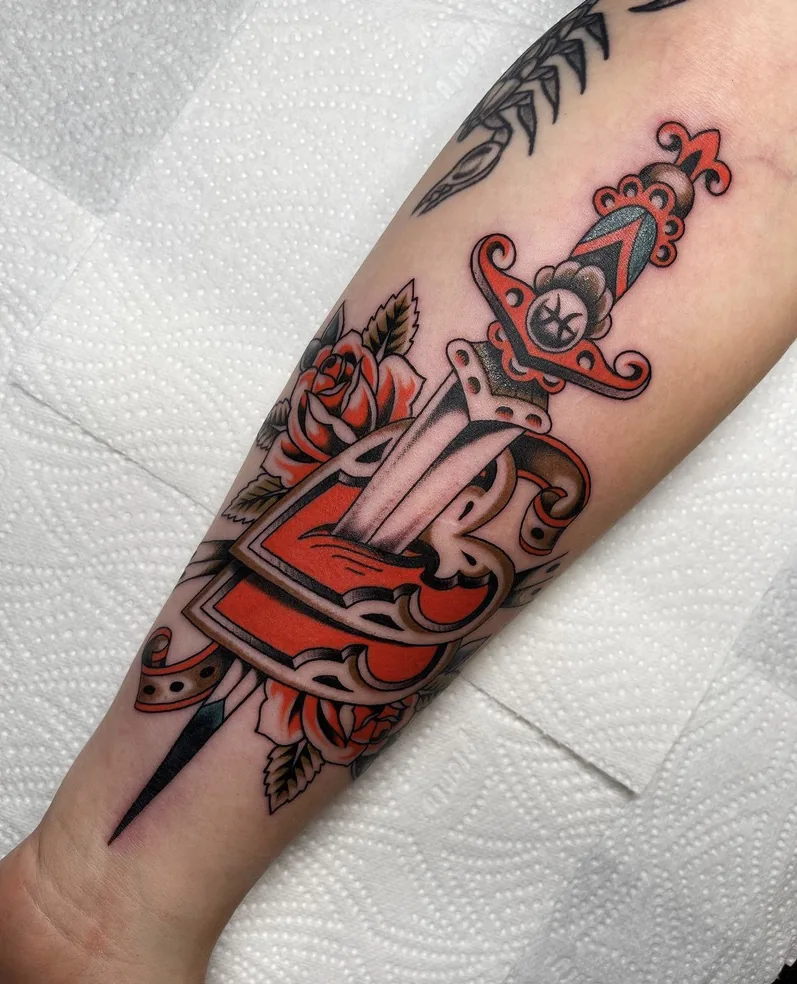
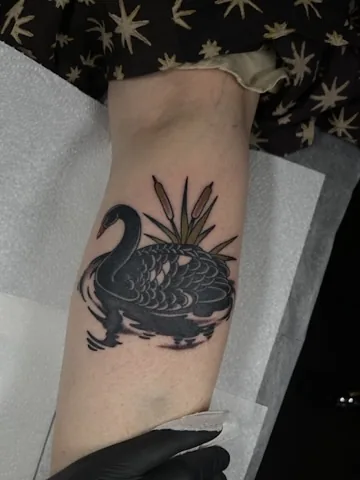
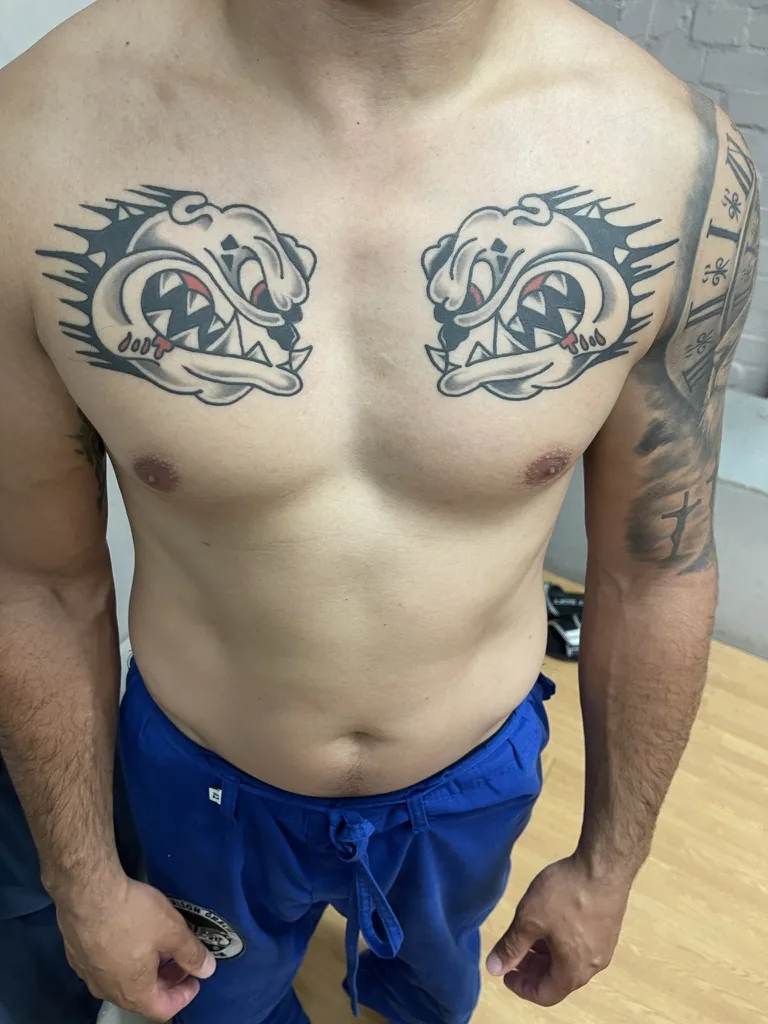
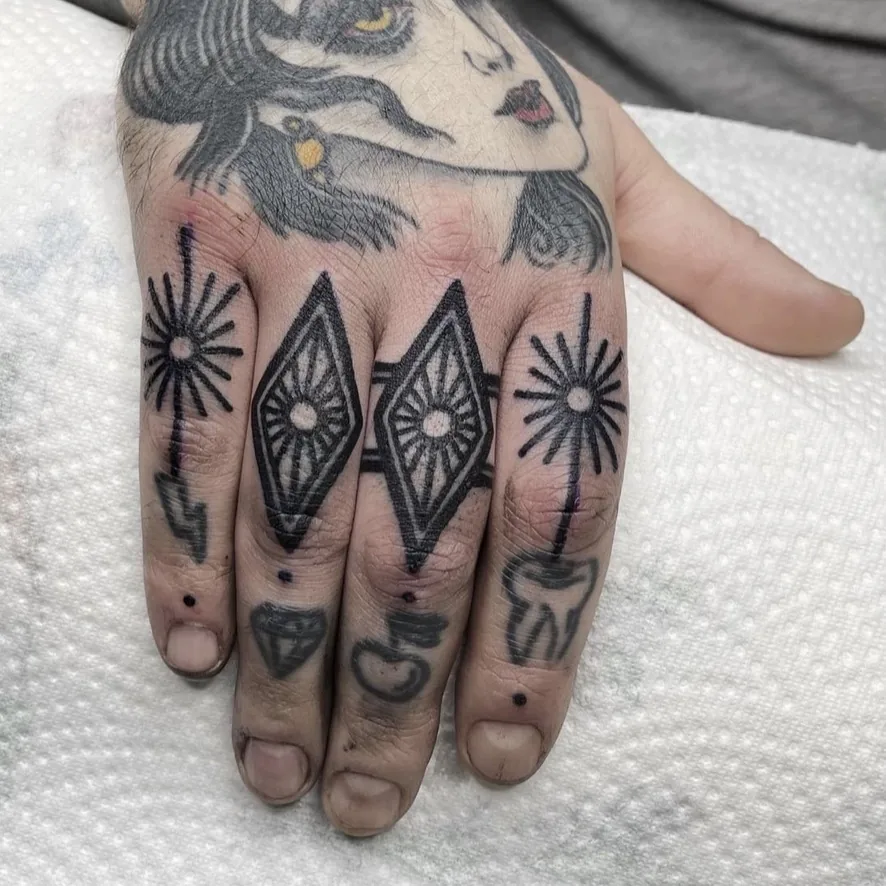
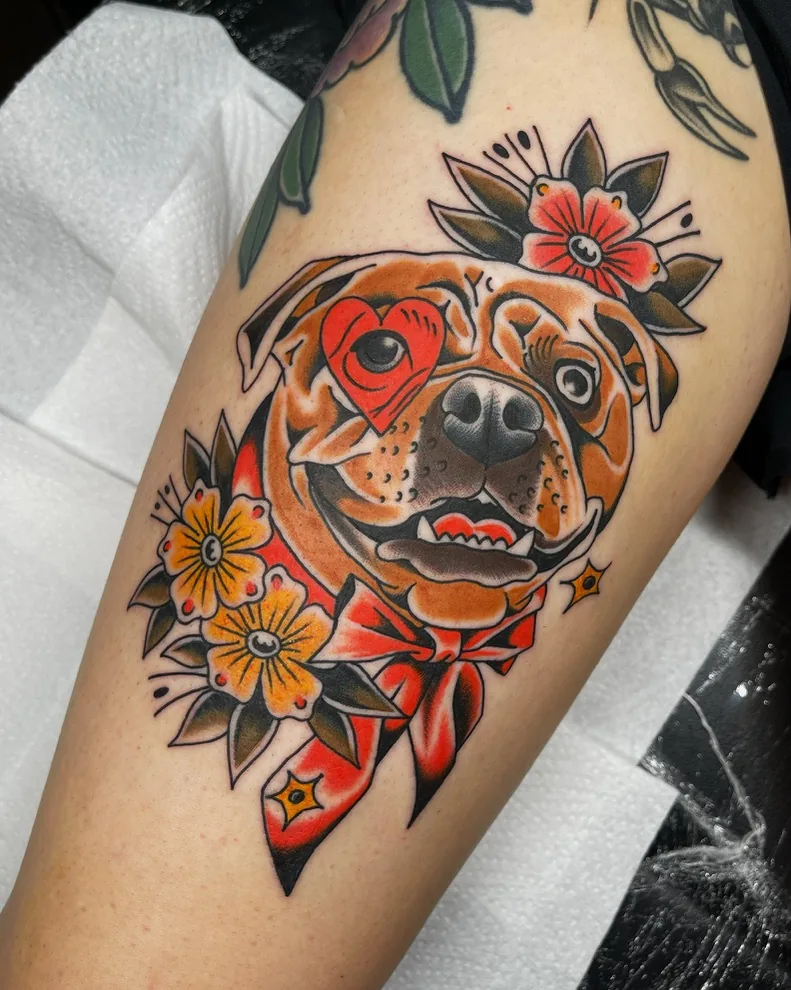
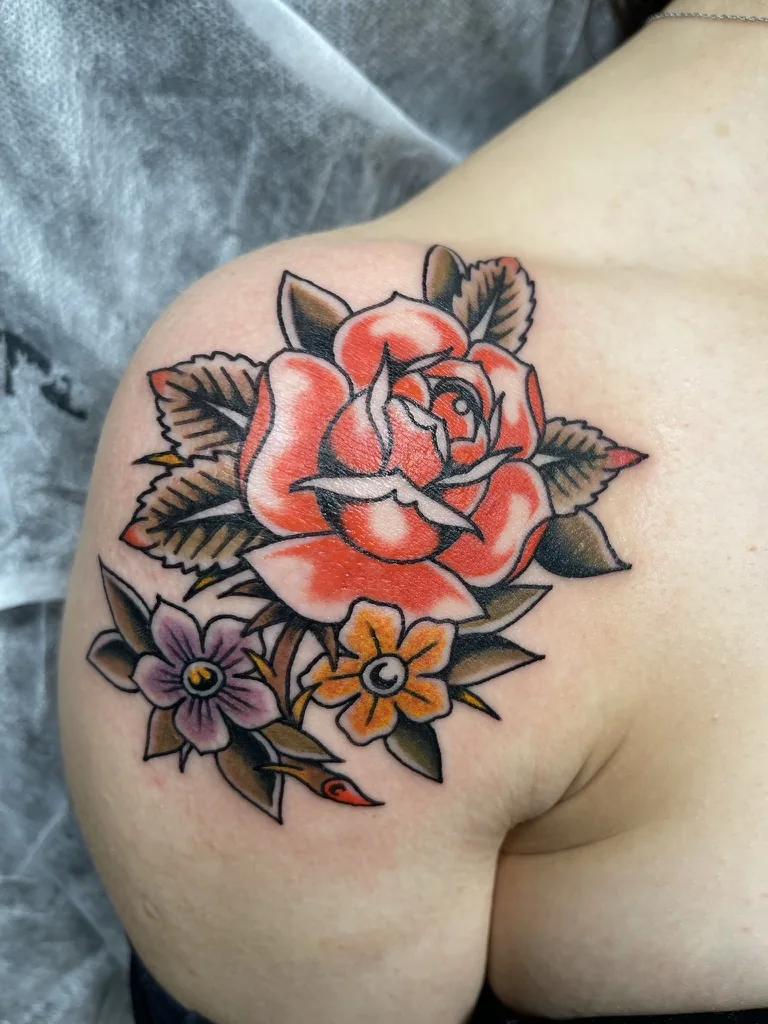
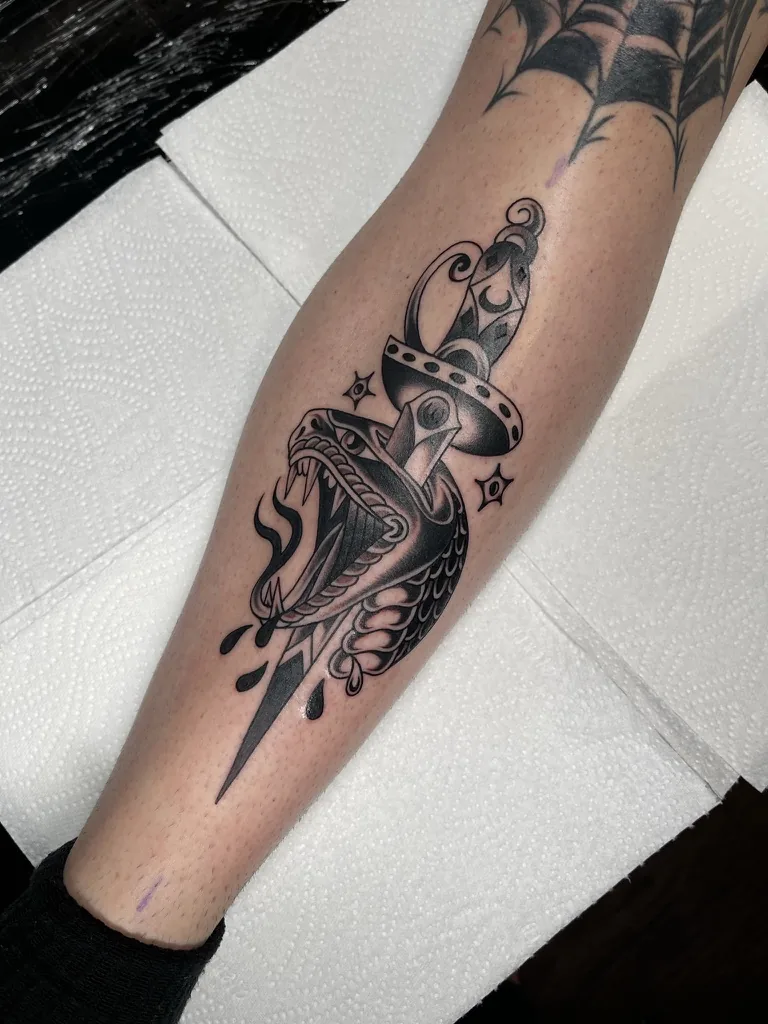
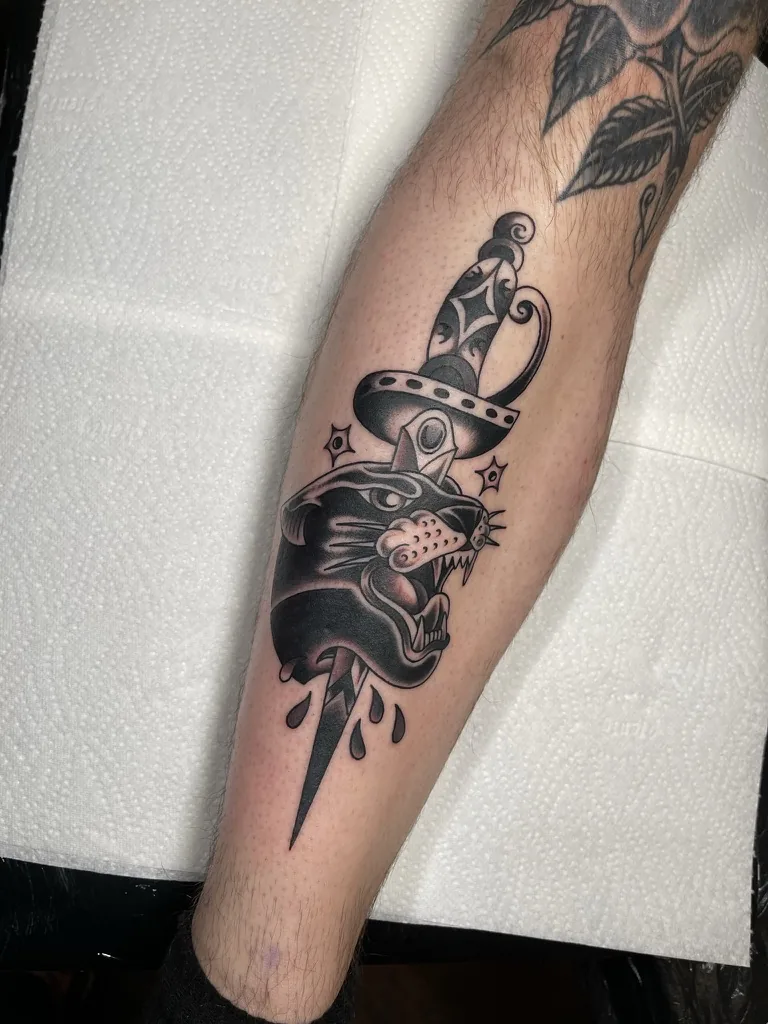
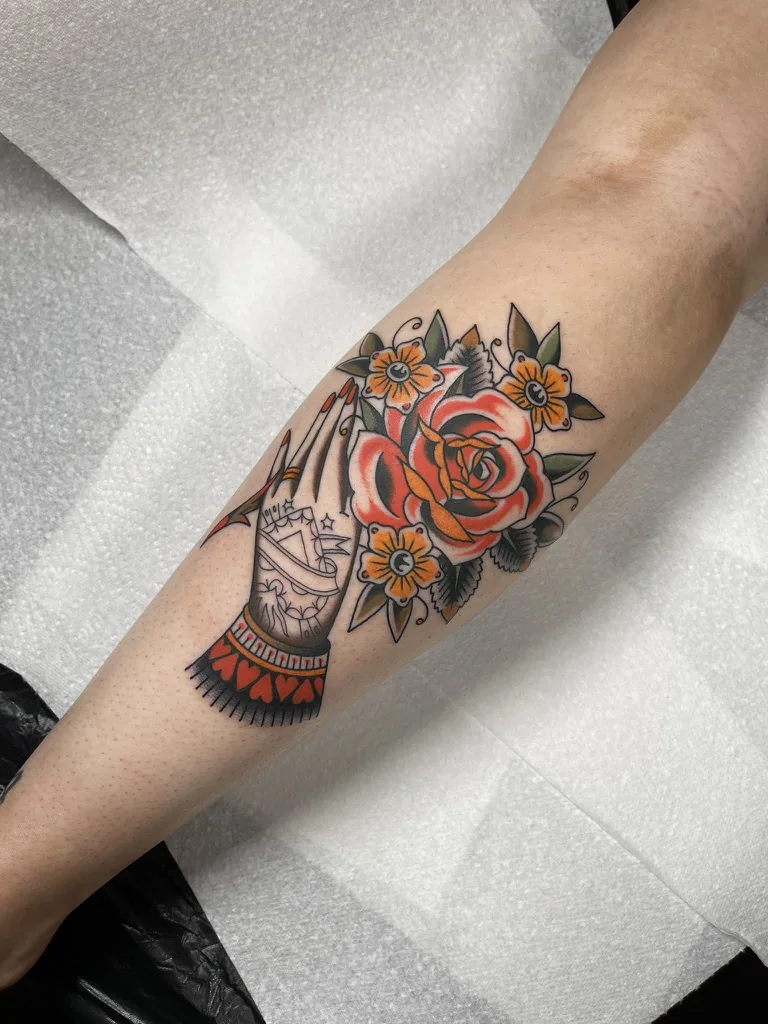
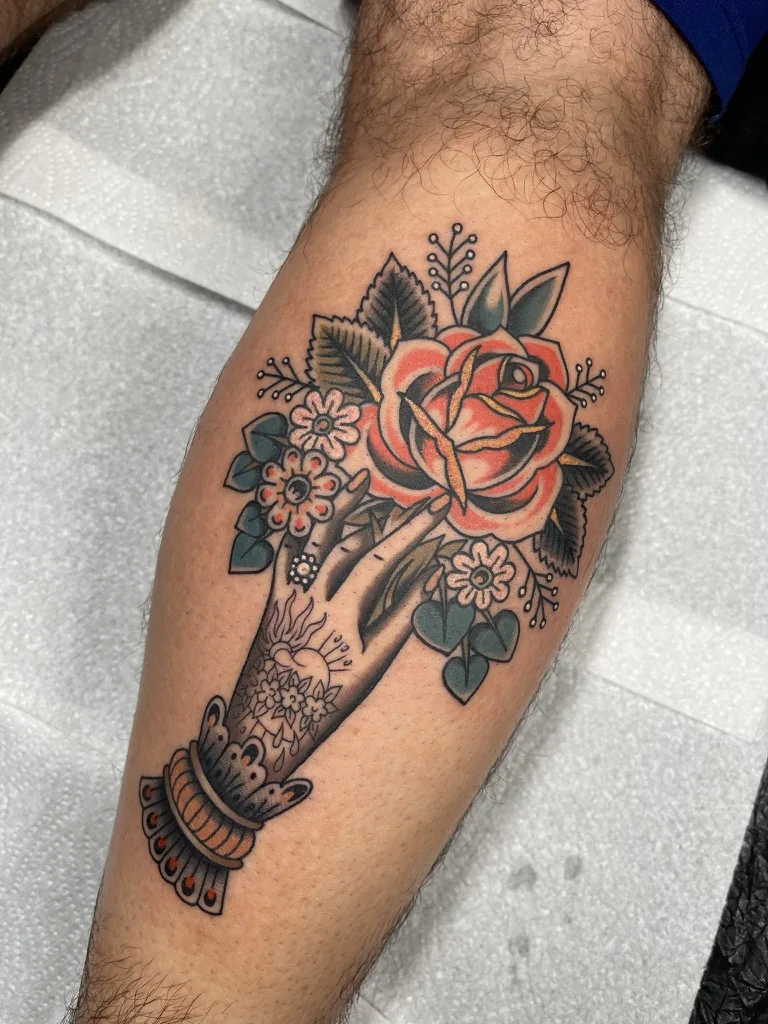
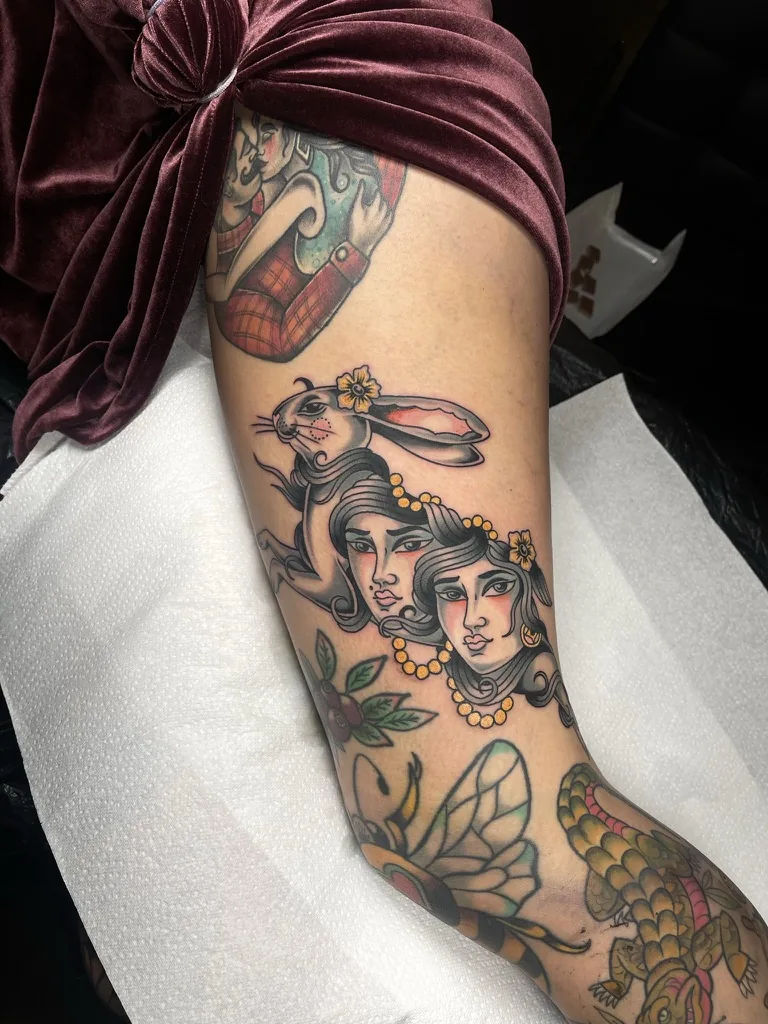
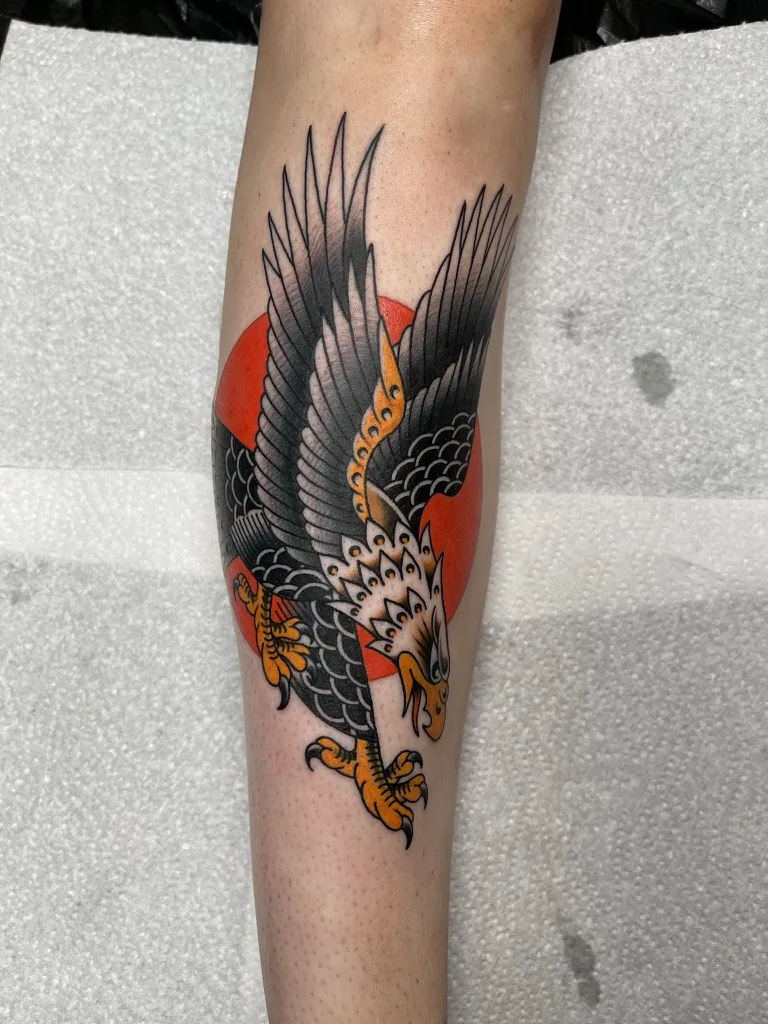
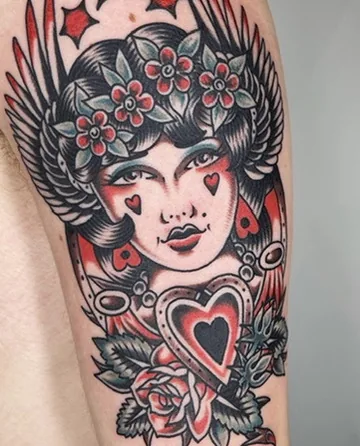
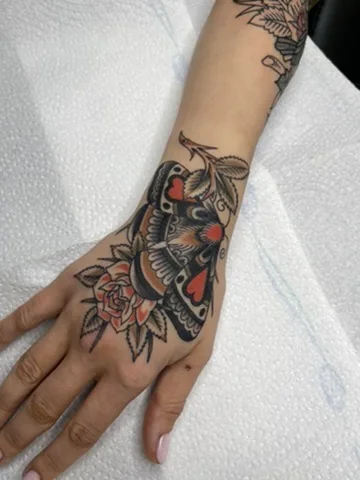
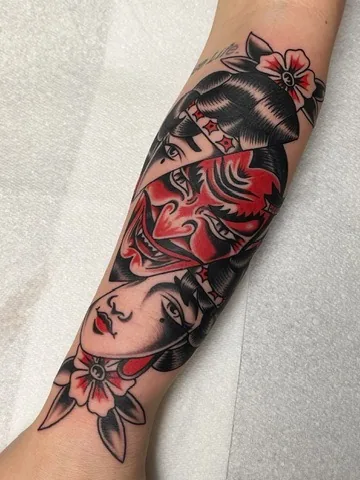
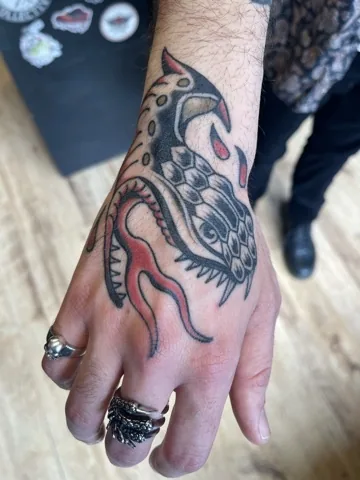
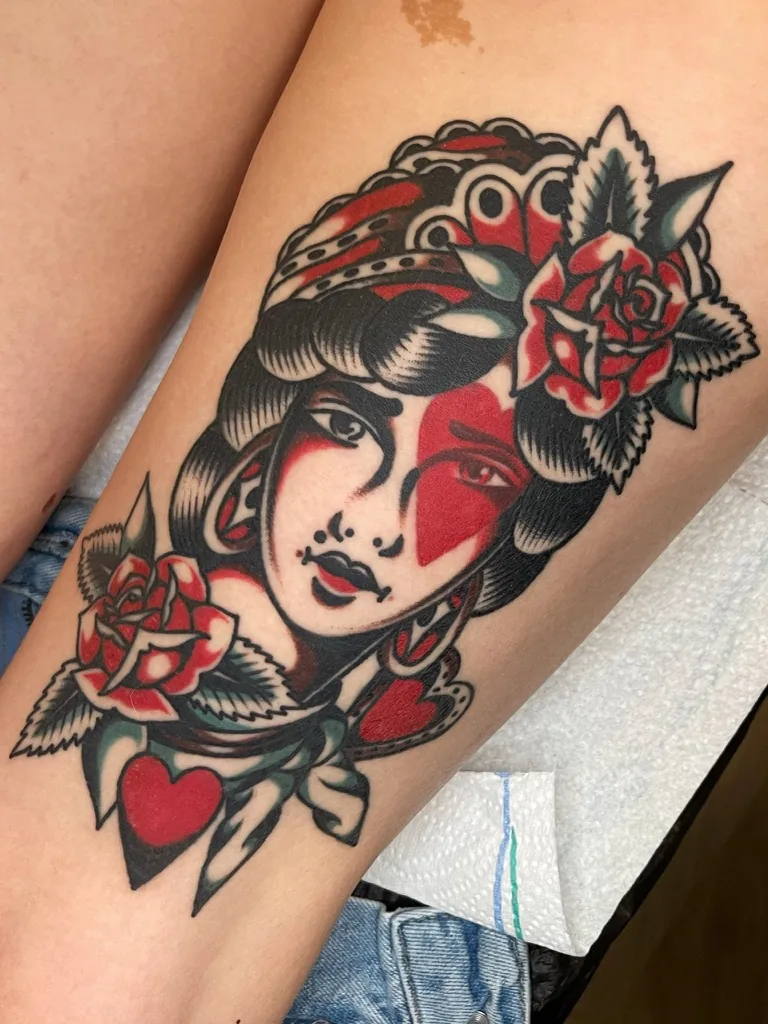
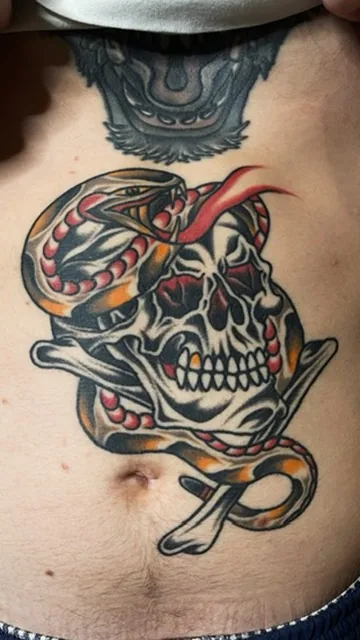
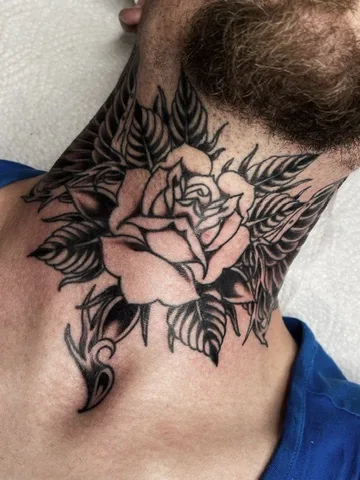
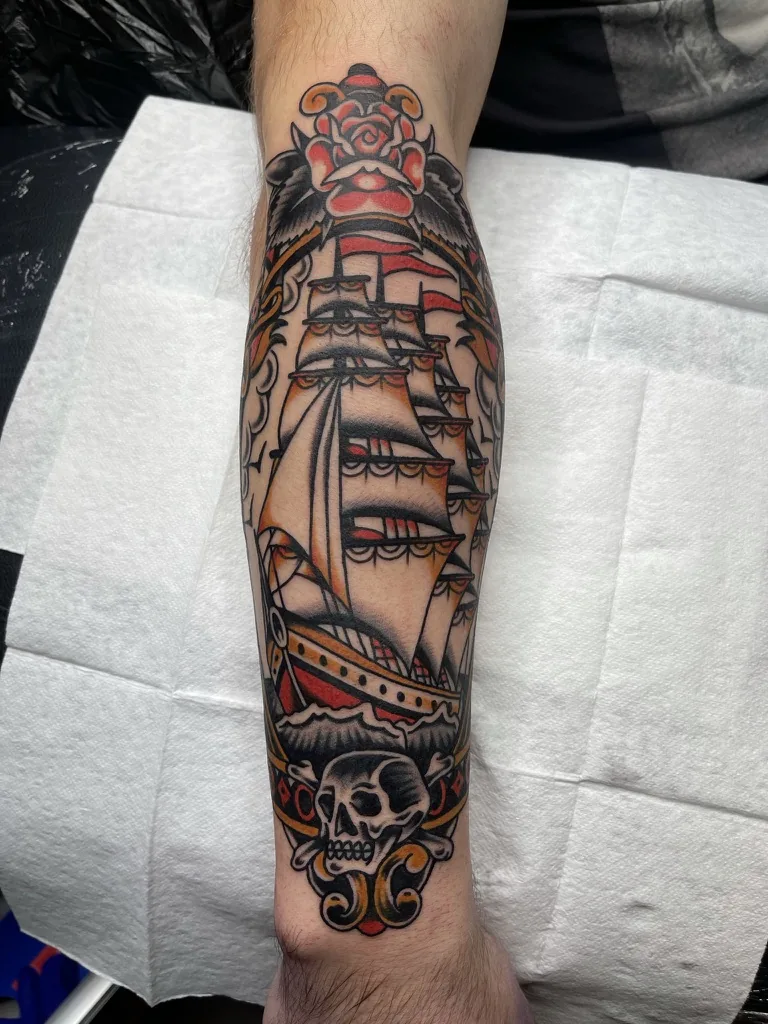
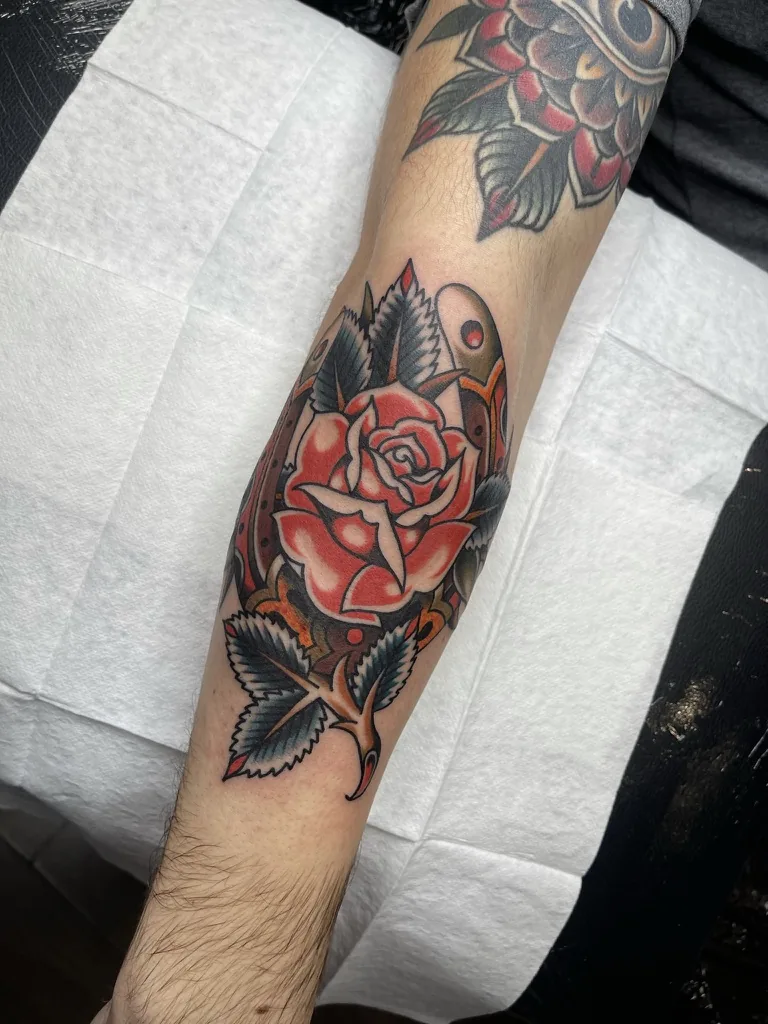
In Alex's portfolio, traditional tattooing is a system of visual constraint. The outer shape carries the subject; linework separates the main forms; solid areas of colour or black create weight; and open skin keeps adjacent elements from becoming one mass. Detail supports the silhouette instead of competing with it.
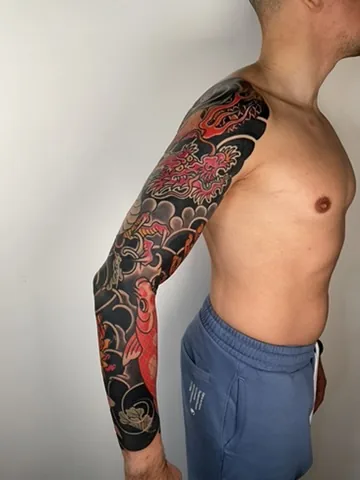
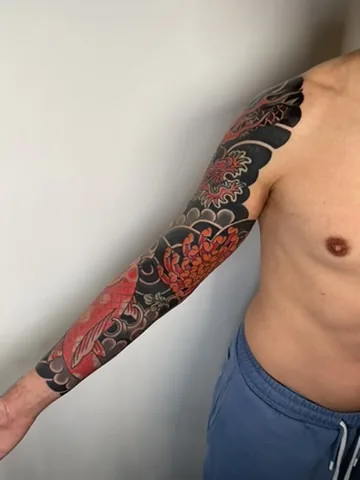
Alex's traditional tattoo framework can hold a small rose, a chest animal, paired calf ships, or a full Japanese-influenced sleeve. The scale and placement change, but the design still needs a strong first read. “Traditional” therefore describes how Alex organizes the image, not a guarantee that every motif, palette, line weight, or composition must be identical.
What 58 finished pieces prove
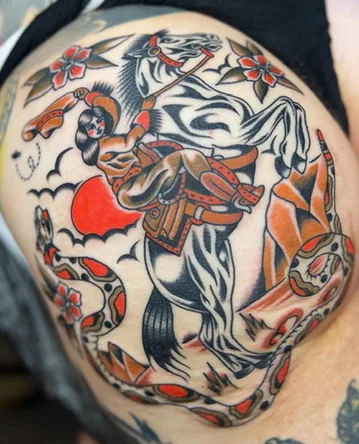
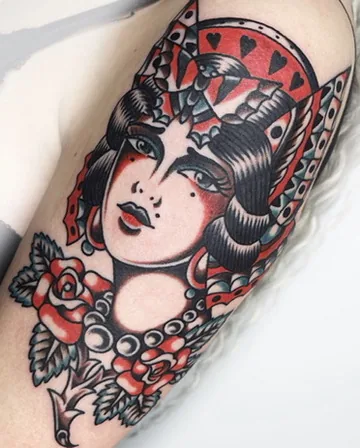
The gallery contains 58 finished traditional pieces by Alex. Visible subjects include dragons and koi, roses and daggers, panthers and snakes, skulls, lady heads, clipper ships, eagles, swallows, hearts, memorial banners, animals, masks, tarot imagery, and Japanese-influenced sleeves. Placements range from hands, face, neck, foot, and chest to shoulders, calves, arms, and larger limb compositions. The mask collection places the reviewed red heart-mask composition beside seven mask works across Alex's other styles; the heart collection isolates six traditional heart forms with explicit meaning and one-style evidence boundaries; the bird collection isolates seven traditional bird works plus three examples in other styles; the lady-head collection isolates twelve woman-led face compositions across traditional and neo-traditional work; the rose collection isolates ten substantial traditional roses plus two examples in other styles; the floral collection retains the broader flower-led comparison; the horror collection compares reviewed skeleton and plague imagery; the skull collection isolates six directly reviewed skull subjects; the dagger collection compares face, floral, animal, figure, and character blade compositions; the Japanese-inspired collection separates seven reviewed motif works from unsupported irezumi or tebori claims; and the animal collection connects wolves, a dog, a panther, and an eagle to Alex's other style portfolios.
The portfolio proves Alex has made these subjects; it does not make every traditional motif or technique interchangeable. A Japanese dragon-and-koi sleeve, a blackwork panther, and a small rose can share structural priorities while requiring different reference material, scale, movement, and placement decisions.
Who this approach fits
Traditional can fit someone who wants the subject to be graphic, direct, and recognizable without photographic rendering. It is useful when a strong symbol, animal, flower, figure, object, or narrative needs to hold together as one shape. Colour can be important, but the portfolio also includes blackwork and limited-colour pieces.
The traditional style name does not determine the correct size or session structure. A hand motif and a wrapping sleeve are different projects even when both use bold lines. Placement, coverage, subject, and must-keep detail still need to be resolved before Alex can estimate the work.
Traditional vs neo-traditional
Traditional and neo-traditional approaches use a strong outline and readable silhouette. Alex's traditional work keeps the palette, internal detail, and value transitions tighter. His neo-traditional portfolio retains that structural spine while allowing more painterly depth, a wider palette, and more information inside the outer shape.
Neither label is a quality score or a universal durability ranking. Choose by the visual system the subject needs. The style comparison places traditional, neo-traditional, black and grey, and cyberpunk anime side by side using Alex's finished work.
How to prepare the project
Send the subject or meaning, body placement, approximate size, colour preference, and anything that must be present or avoided. A few references can identify a specific animal, cultural motif, object, pose, or mood. You do not need to copy another tattoo or submit a finished design.
Use the size and session guide for useful dimensions and the complete process for design, changes, measurements, stencil, session, and aftercare. Alex's published rates are $280 CAD per hour and $2,000 CAD for a full day, but those figures are not a project quote. Alex supplies the estimate after reviewing the complete enquiry.
If the portfolio and process fit, continue to the booking enquiry. After the appointment, follow the tattoo-specific instructions and Alex's aftercare guide.
Traditional tattoo FAQ
What is a traditional tattoo in Alex Roze's portfolio?
Alex's traditional work uses bold outlines, clear silhouettes, solid colour or black, deliberate negative space, and limited detail so the main subject reads immediately.
How is traditional different from neo-traditional tattooing?
Traditional and neo-traditional tattooing both use strong outlines and readable shapes. Alex's traditional work keeps flatter colour and tighter detail constraints; his neo-traditional work allows a wider palette, more internal detail, and painterly depth.
What subjects appear in Alex Roze's traditional portfolio?
The visible portfolio includes dragons, koi, roses, daggers, panthers, snakes, skulls, lady heads, ships, eagles, swallows, hearts, memorial banners, animals, and Japanese-influenced compositions.
What references should I send for a traditional tattoo?
Send the subject, body placement, approximate size, must-keep motif or meaning, colour preference, and a few references that clarify the idea. A finished tattoo design is not required.
Sources and claim boundaries
Rocky Mountain Tattoo's current Alex Roze profile independently lists traditional among Alex's preferred styles and corroborates his studio relationship. The 58 images on this page are the direct evidence for the finished-work subjects and placements.
The construction, fit, and reference guidance above is Alex's artist-specific practice, not a universal history of traditional tattooing or a longevity promise. Page and source reviewed 14 August 2026.