ALEX ROZE

Four portfolios · one honest comparison

Tattoo Styles Compared

Alex Roze tattoos traditional, neo-traditional, black and grey, and cyberpunk anime work at Rocky Mountain Tattoo in Kelowna, BC. Traditional relies on bold constraint; neo-traditional keeps that structure and adds depth; black and grey builds form through value; cyberpunk anime combines manga linework with glitch and Y2K language. No tattoo style is universally the most durable. Compare the actual portfolios, then choose the visual system that fits the subject you want.

Comparison reviewed 14 August 2026

Side by side

What changes between styles

StyleVisual structureColourDurability and readabilityUseful reference material
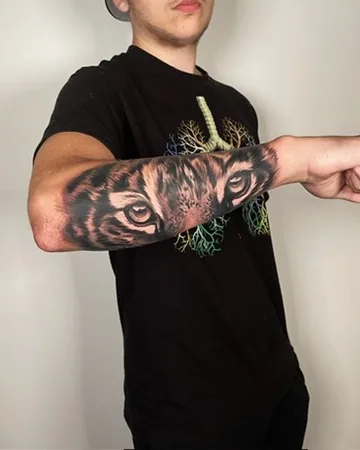
Tiger eyes forearm, black and grey tattoo by Alex RozeBlack & GreyView 22 finished pieces No colour. Form comes from light and shadow rather than a heavy outline. Portraits, horror, surreal imagery, and micro realism use depth and a controlled range of values. Black ink is diluted into greys. Contrast comes from the relationship between dark, mid-tone, open-skin, and highlight areas rather than from a colour palette. The range of values, physical scale, and placement must preserve readable contrast as the tattoo settles and ages. Small detail is not automatically durable just because the work has no colour. Send the subject and any exact likeness or scene that matters. Clear source images help when a portrait, object, or composition must remain recognizable; a finished tattoo design is not required.
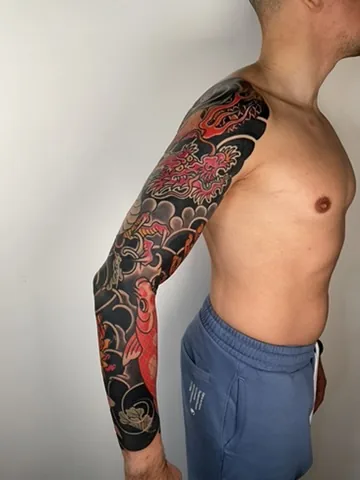
Japanese dragon and koi sleeve, traditional tattoo by Alex RozeTraditionalView 58 finished pieces Bold outlines, solid colour, a deliberately limited palette, and motifs designed to read from a distance. Constraint is part of the visual language, not a lack of detail. Colour is flat and saturated. Black can also carry the design, but the structure remains shape-first rather than built from painterly transitions. Bold separation and limited detail are used to keep the design clear as it ages. Placement, scale, healing, and sun still matter; the label alone cannot guarantee longevity. Send the subject or story and identify any motif that must be present. Say whether colour or black matters to you. References can show meaning or mood without dictating a finished composition.
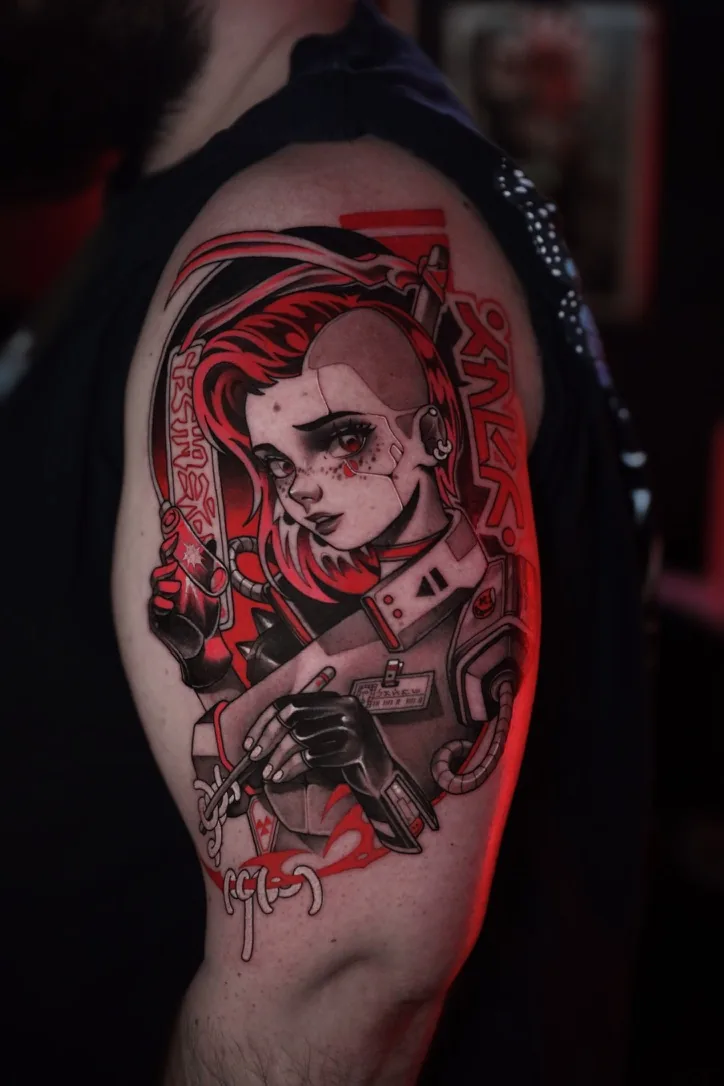
Cyberpunk anime woman with mechanical wings, tattoo by Alex RozeCyberpunk AnimeView 29 finished pieces Manga linework is the spine. Around it sit glitch effects, Y2K and Itasha language, characters, mechs, and cyber imagery. Black and grey commonly carries the figure, with lime green and lipstick red used as high-contrast accents. The finished palette follows the composition rather than a fixed formula. Character recognition and small interface detail need enough physical scale to remain clear. A complex source may need compression; adding more screen detail is not always a stronger tattoo. Name the character, franchise, or cyber subject and the exact version if it matters. Screenshots, official art, poses, clothing, or mechanical details help distinguish must-keep information from flexible material.
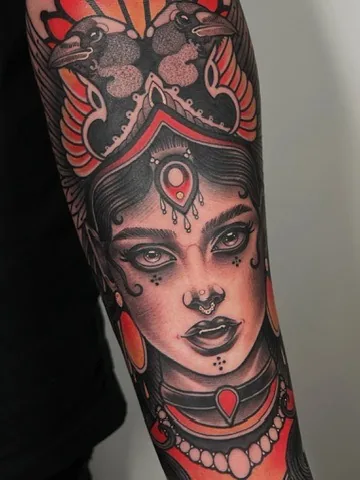
Woman with two black birds and a red headdress, neo-traditional tattoo by Alex RozeNeo-TraditionalView 7 finished pieces Bold outline and strong linework keep traditional structure, while painterly depth, more internal detail, and a wider subject range loosen the rules. A wider palette supports animals, flowers, figures, and mythical subjects. Colour can shift through more values than traditional work while the outline holds the main silhouette. The outline provides structure, but painterly transitions and added detail still need enough scale. Durability is a design decision made for the placement, not a rating attached to the style name. Send the subject, story, placement, approximate size, and any palette or mood that matters. References can identify animals, flowers, costume, or symbolism; Alex develops the final composition from those constraints.

Scale, placement, execution, healing, and sun exposure all affect how a tattoo settles and ages. The comparison above describes how Alex constructs the four portfolios; it does not promise that one category will outlast another on every body or placement. For the published evidence and its limits, read whether black-and-grey tattoos fade.

Durability without a fake ranking

Compare the design strategy

Readability comes first

A tattoo has to remain legible at its real physical size. Traditional creates separation with bold shape and limited detail. Neo-traditional carries a similar outline but uses more depth. Black and grey separates forms through value. Cyberpunk anime has to preserve the character or machine while compressing screen-level detail for skin.

Placement changes the answer

A flat forearm panel, wrapping sleeve, hand, rib, or back piece does not give a design the same area or viewing distance. Alex's process guide explains why placement decides scale and why some information must be simplified before the drawing reaches skin.

Healing is part of the result

Style selection does not replace aftercare. Follow the bandage and client-specific instructions given for the tattoo, then use the source-bounded aftercare guide. A comparison page cannot predict healing or diagnose a problem.

Finished work is the evidence

Labels overlap. A traditional subject can be tattooed in black; an anime subject can use black and grey; neo-traditional can borrow Japanese composition. Use the linked galleries to judge Alex's finished visual decisions instead of assuming a search label fixes the outcome.

Prepare the first message

What should you send?

You do not need to send a finished design. Start with the subject or story, body placement, approximate size, and anything that must be included or avoided. References are evidence of intent—not instructions to copy another tattoo. The visually reviewed floral and horror tattoo collections show how one subject family changes when traditional, neo-traditional, black-and-grey, or cyberpunk anime construction changes.

For a real person, exact character version, specific machine, or recognizable object, clear source material reduces ambiguity. For mood, palette, or composition, a small set of references is more useful than a folder with no explanation. If you do not know the style name, say what you respond to in the finished portfolios.

Alex constructs the drawing from the project constraints and shows it on the appointment day. Changes are welcome before tattooing. Read the complete eight-step process before relying on a short comparison.

A useful enquiry contains

  1. The subject, story, character, person, or object.
  2. The body placement and approximate physical size.
  3. The portfolio style—or examples of finished work—that feels closest.
  4. What must remain, what can change, and what should be avoided.
  5. Reference images only where they clarify identity, detail, palette, or mood.

Current age, ID, deposit, rescheduling, health, numbing, touch-up, and rate answers remain on Before You Book.

START A TATTOO ENQUIRY →