


What makes it black and grey?
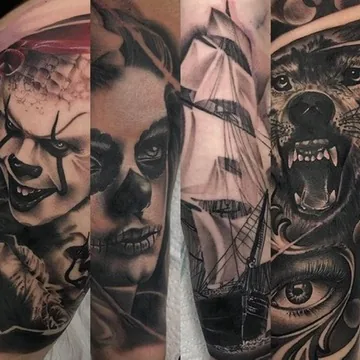
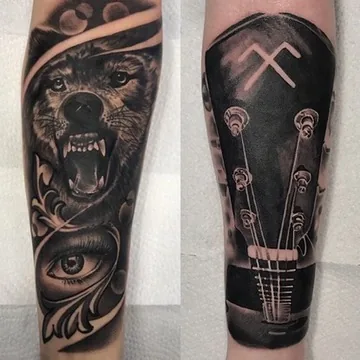
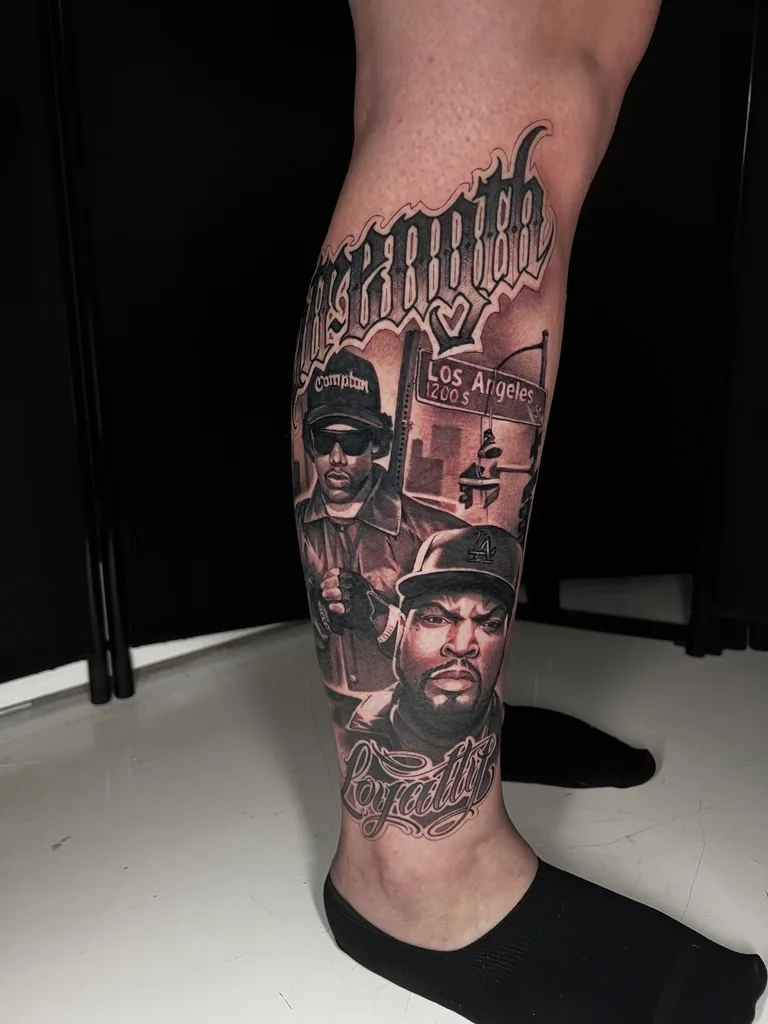
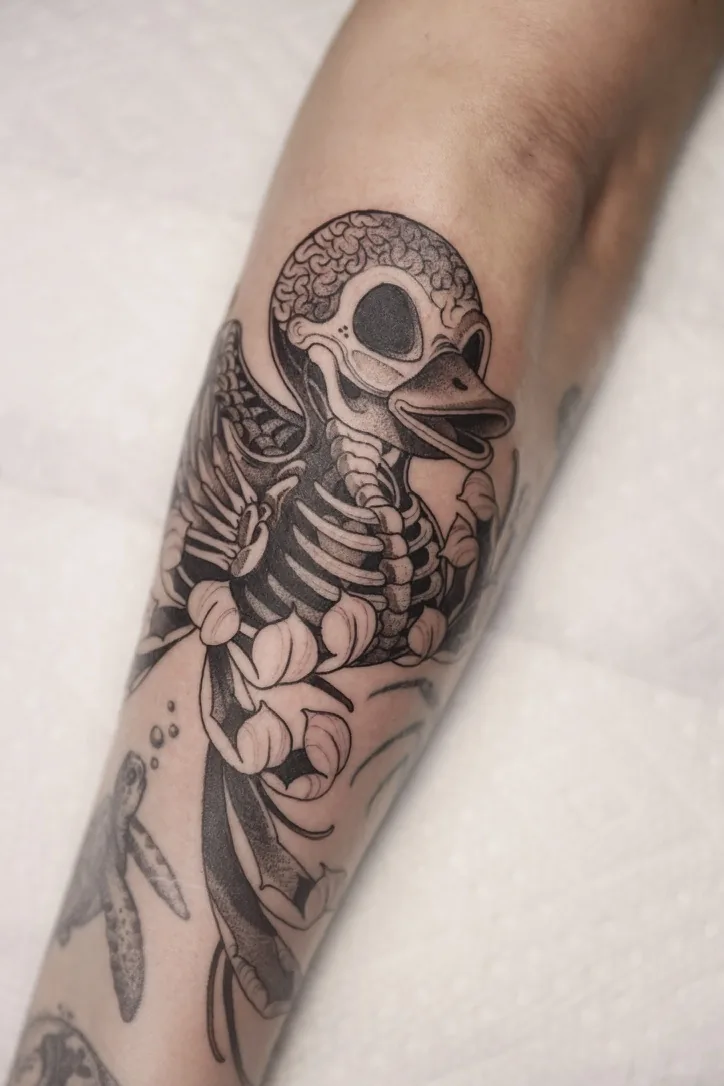
Black-and-grey describes the value system, not one subject or one level of realism. Dark areas establish weight and focus; mid-tones model form; open skin and lighter passages create separation. A portrait can use smooth transitions, while horror, anime, or a film-noir scene can use harder contrast and more graphic edges. The composition decides how those values work together.
“No colour” does not mean fewer decisions. When hue is removed, the relationships between dark, middle, and light values carry identity, depth, texture, and visual order. Alex compresses reference information so the most important face, object, silhouette, or action remains legible at the tattoo's real scale and on its actual body placement.
What the portfolio proves
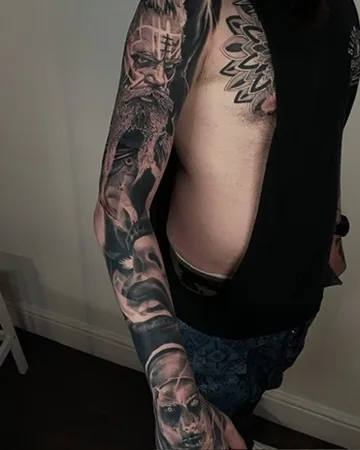
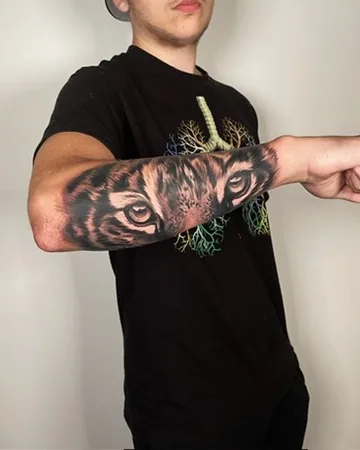
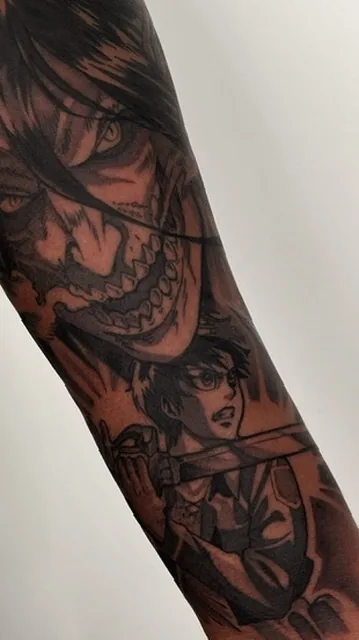
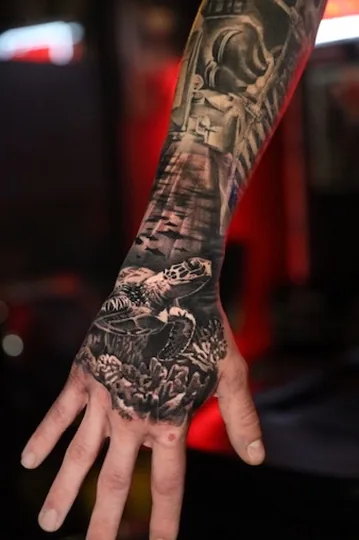
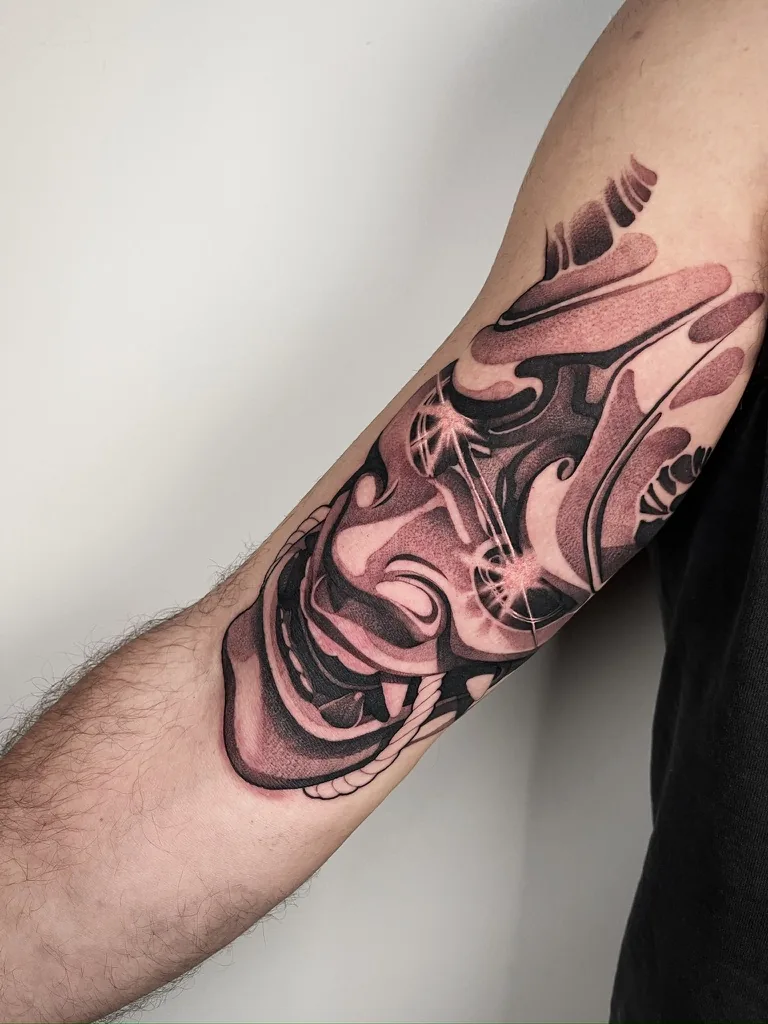
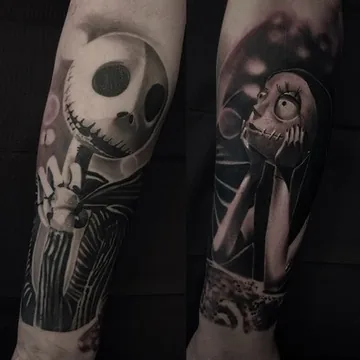
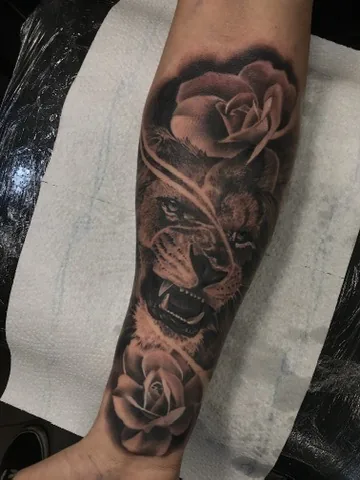
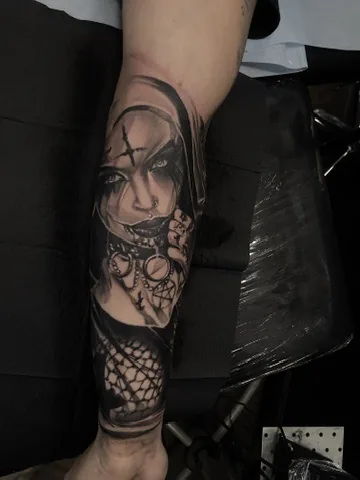
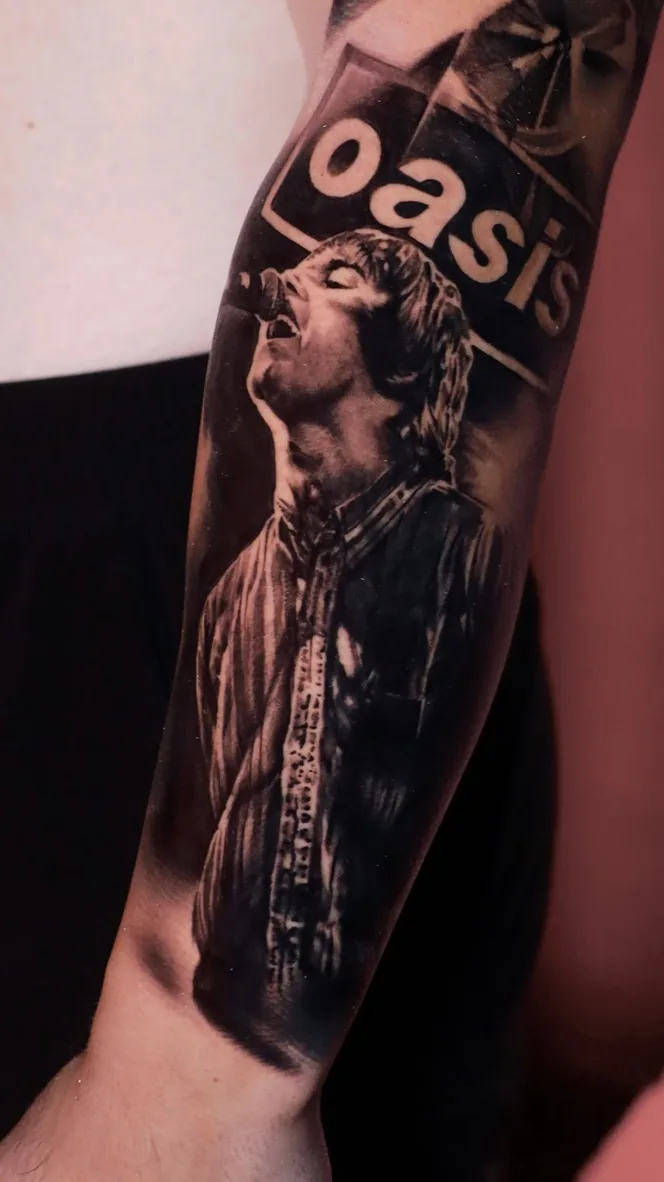
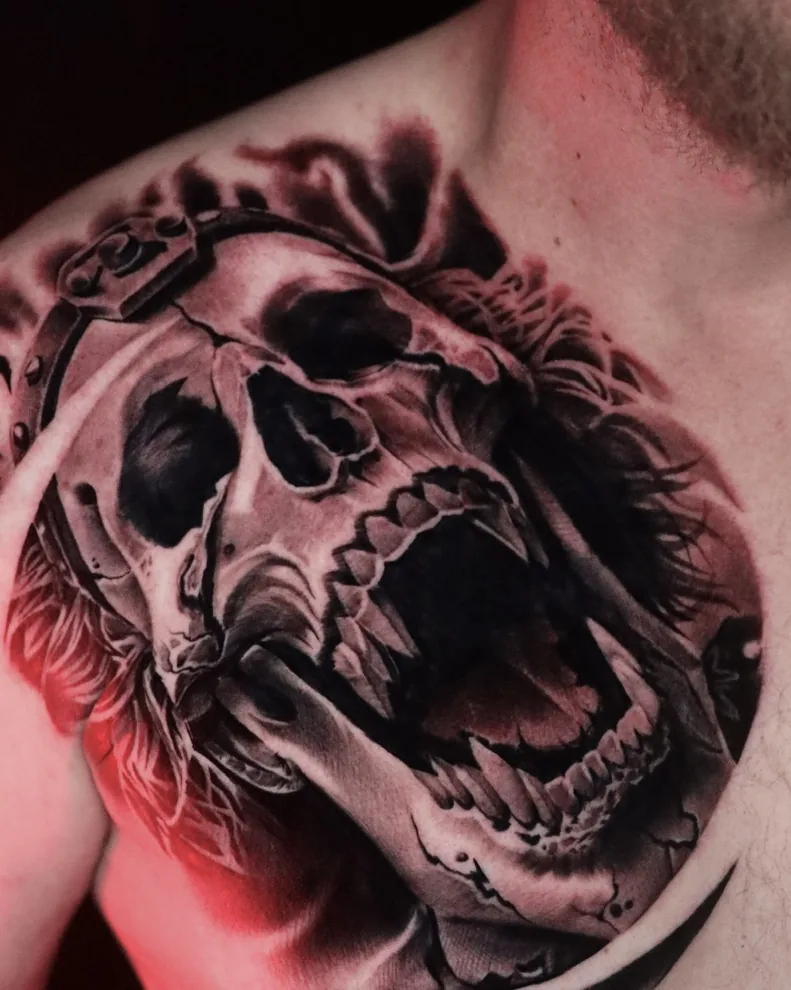
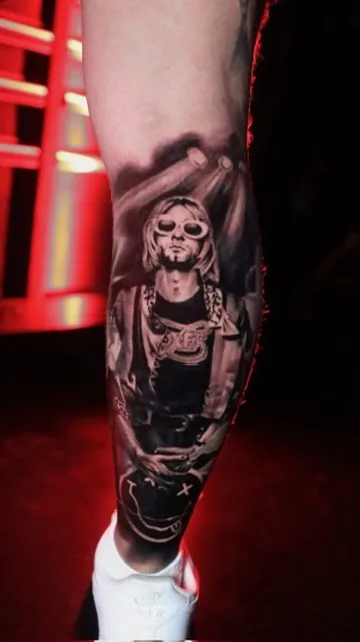
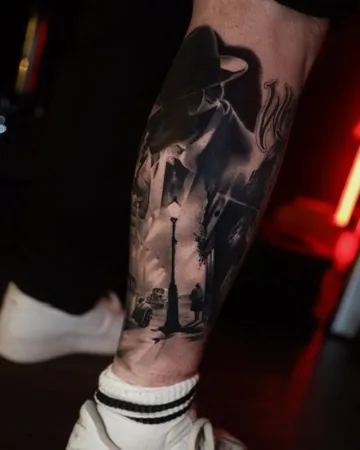
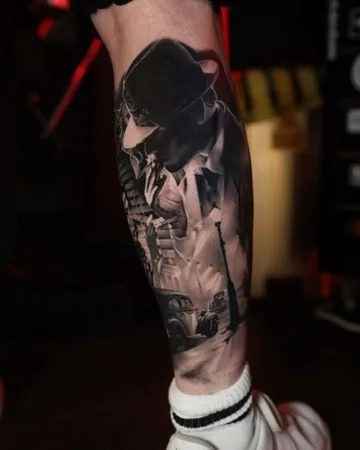
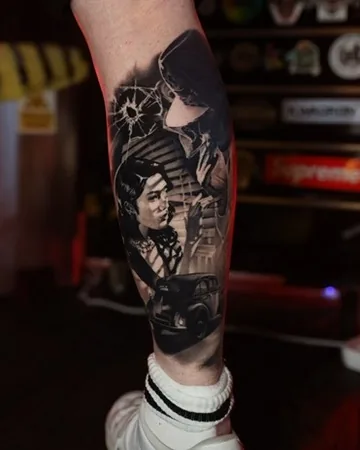
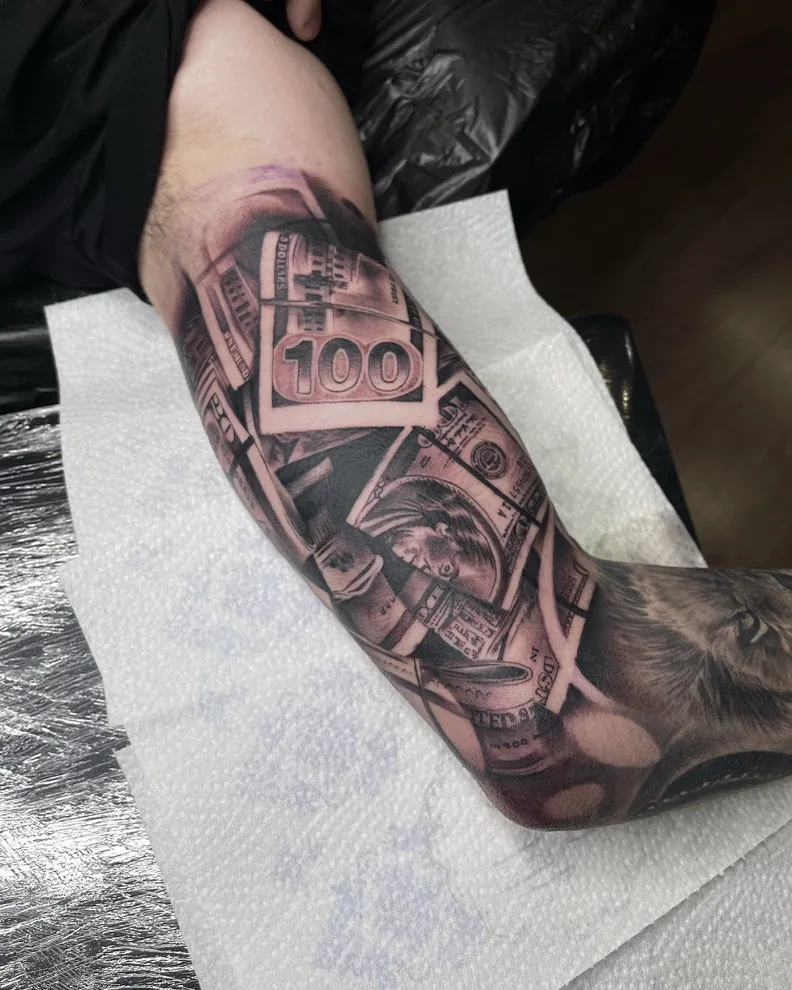
This page contains 22 finished black-and-grey pieces by Alex. The subjects include portrait sleeves, tiger eyes, a surreal draped figure, an Attack on Titan sleeve, a sea turtle scene, a Hannya mask, horror characters, musicians, a knight back piece, film-noir scenes, animals, and money imagery. That range demonstrates likeness, atmosphere, narrative scenes, pop-culture references, and large compositions in the same value-based system. The mask collection places the reviewed black-and-grey Hannya form beside seven colour examples while preserving cultural and specialization boundaries; the bird collection places the reviewed skeletal duckling beside nine colour examples across two other styles; the portrait collection isolates figure examples, the rose collection places the reviewed lion-and-roses composition beside eleven colour examples, the floral collection compares broader flower work, the horror collection connects skeletal and character work, the skull collection isolates six directly reviewed skull subjects, the Japanese-inspired collection places the Hannya mask beside six reviewed colour examples without claiming classical specialization, and the animal collection compares wolves, wildlife, and pet subjects across styles.
The portfolio proves Alex has made these subjects; it does not predict an individual tattoo's future appearance. It also does not imply that every black-and-grey idea needs photographic realism. Use the visible pieces to judge Alex's handling of depth, edges, negative space, and subject recognition, then explain which qualities matter in your project.
Who this approach fits
Black-and-grey can fit someone who wants likeness, cinematic light, dark atmosphere, monochrome illustration, or several references assembled into one composition. It can also suit a client who cares more about value and texture than a colour palette. The style name alone does not settle scale, detail, or placement.
If the priority is bold flat colour and a limited visual vocabulary, traditional may be closer. If you want the same structural outline with a wider palette and painterly colour, compare neo-traditional. If manga linework, glitch, and Y2K cues are central, cyberpunk anime may be the correct source system. The four-style comparison keeps those differences visible without declaring a universal winner.
How to prepare the project
Send the subject or story, body placement, approximate physical size, and anything that must remain or must be avoided. Clear reference images matter when a face, character version, animal, vehicle, location, costume, or object must be recognizable. Separate must-keep identity from flexible mood or composition references.
You do not need to make a finished design. Alex assembles the direction from the constraints, then resolves measurements, changes, and the stencil in person. Read the size and session guide for useful dimensions and the complete tattoo process for what happens from enquiry through aftercare.
Alex's published rates are $280 CAD per hour and $2,000 CAD for a full day. They are not a quote for a particular image or body area. After reviewing the complete idea, Alex replies with a project-specific estimate and any questions. If the work fits, continue to the booking enquiry.
Fading without a false promise
Black-and-grey tattoos can change and appear lighter or softer over time. No trustworthy evidence supplies one universal fade rate or supports a universal longevity ranking over colour. Ink formulation, design contrast, scale, placement, healing, skin, and cumulative light exposure vary.
The separate black-and-grey fading evidence guide distinguishes human carbon-black observations from mouse and red-pigment studies, shows each source's limits, and links general sun guidance. Fresh-tattoo care remains on Alex's aftercare page.
Black-and-grey tattoo FAQ
What is a black-and-grey tattoo?
In Alex's approach, black-and-grey tattooing uses black ink and a range of greys to build form through light, shadow, negative space, and contrast rather than a colour palette.
What subjects work in Alex Roze's black-and-grey portfolio?
Alex's visible portfolio includes portraits, animals, horror characters, anime, surreal figures, film-noir scenes, money imagery, masks, and large narrative compositions.
Do black-and-grey tattoos fade?
Yes. Black-and-grey tattoos can change and appear lighter or softer over time. No trustworthy evidence supplies a universal fade rate or supports a universal longevity ranking over colour.
What references should I send for a black-and-grey tattoo?
Send the subject, placement, approximate size, must-keep details, and clear source images for any exact face, character, object, or scene. A finished tattoo design is not required.
Sources and claim boundaries
Rocky Mountain Tattoo's current Alex Roze profile independently lists black and grey, realism, surrealism, and micro realism among Alex's styles and corroborates the artist relationship. The 22 images on this page are the direct evidence for the finished-work claims.
The fading link above is a separately sourced research node, not a longevity promise. Design and reference guidance is Alex's artist-specific practice. Page and sources reviewed 14 August 2026.