Lady heads · traditional and neo-traditional · Kelowna
Lady Head Tattoos in Kelowna
Alex Roze tattoos lady-head and woman-led compositions at Rocky Mountain Tattoo, 532 Bernard Avenue in downtown Kelowna. This page contains exactly twelve visually reviewed works across traditional and neo-traditional portfolios, from compact lady heads and paired faces to compositions framed by birds, masks, flowers, a panther, a snake, a moth, a mirror, a heart, and a dagger.
Portfolio and sources reviewed 14 August 2026
12 reviewed works
Lady-head tattoo portfolio
Every selected photograph carries a dated lady-head visual review in the site's image taxonomy. The accepted set requires a clearly visible, primary woman-presenting face rather than any full scene containing a person. One caption candidate was rejected and corrected after direct inspection: traditional-24 shows a cowgirl riding a horse with a red heart, not the previously labelled women-and-rabbit composition and not a lady-head-led design.
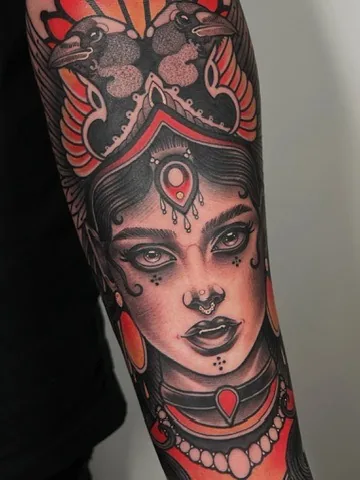
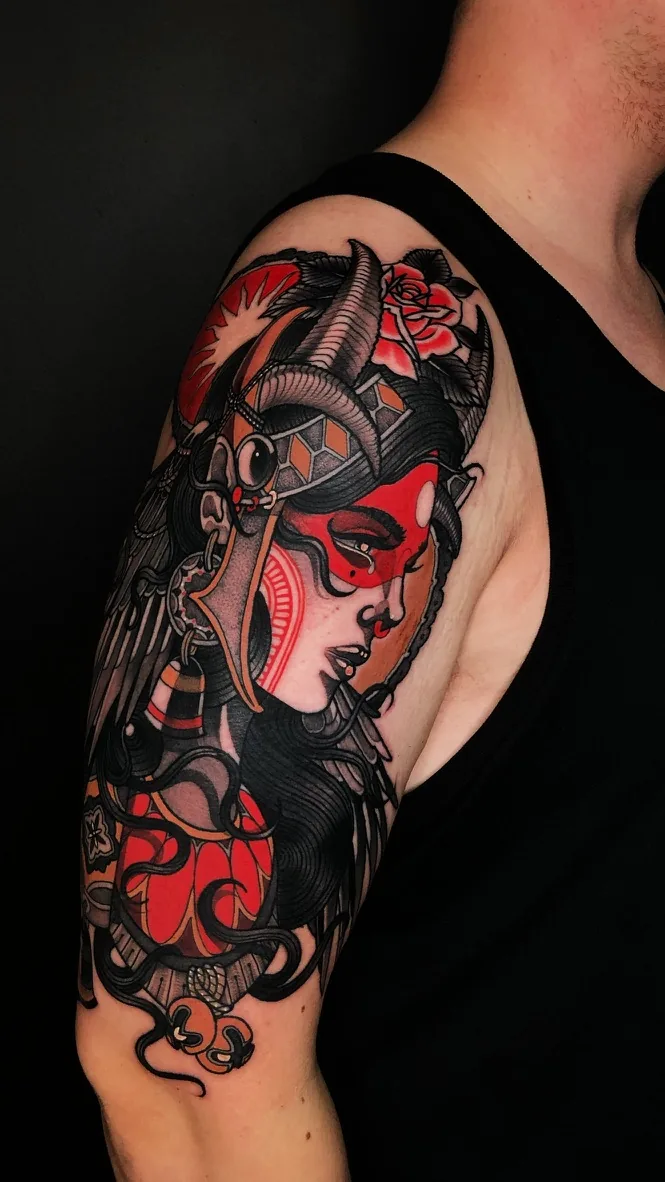
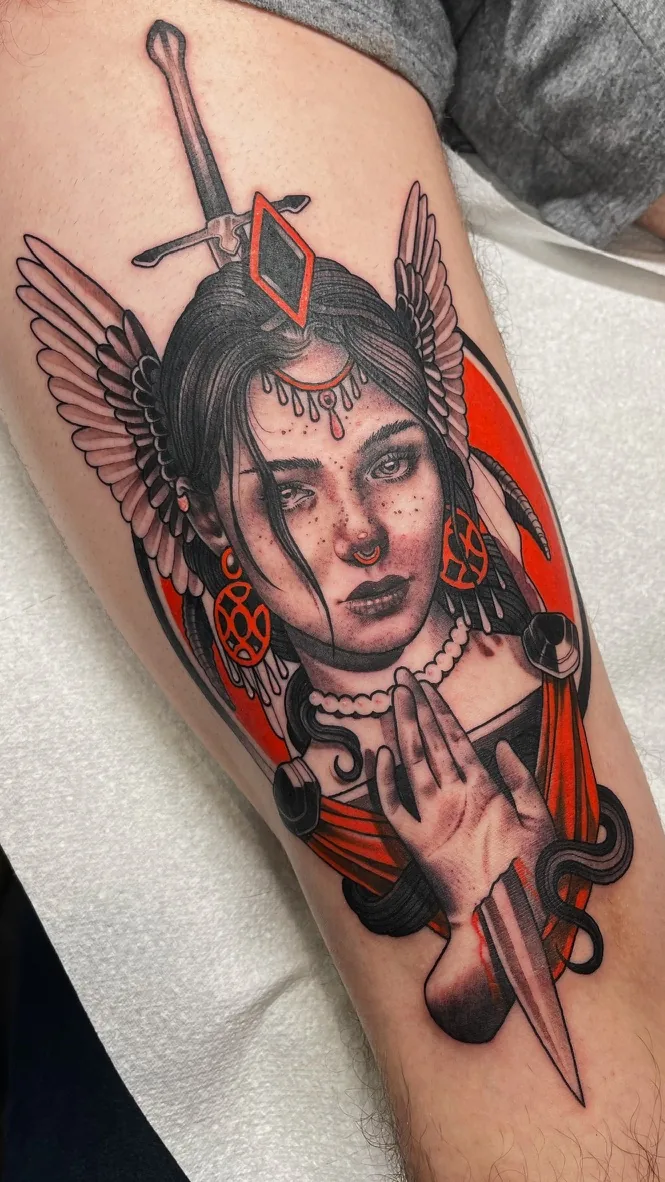
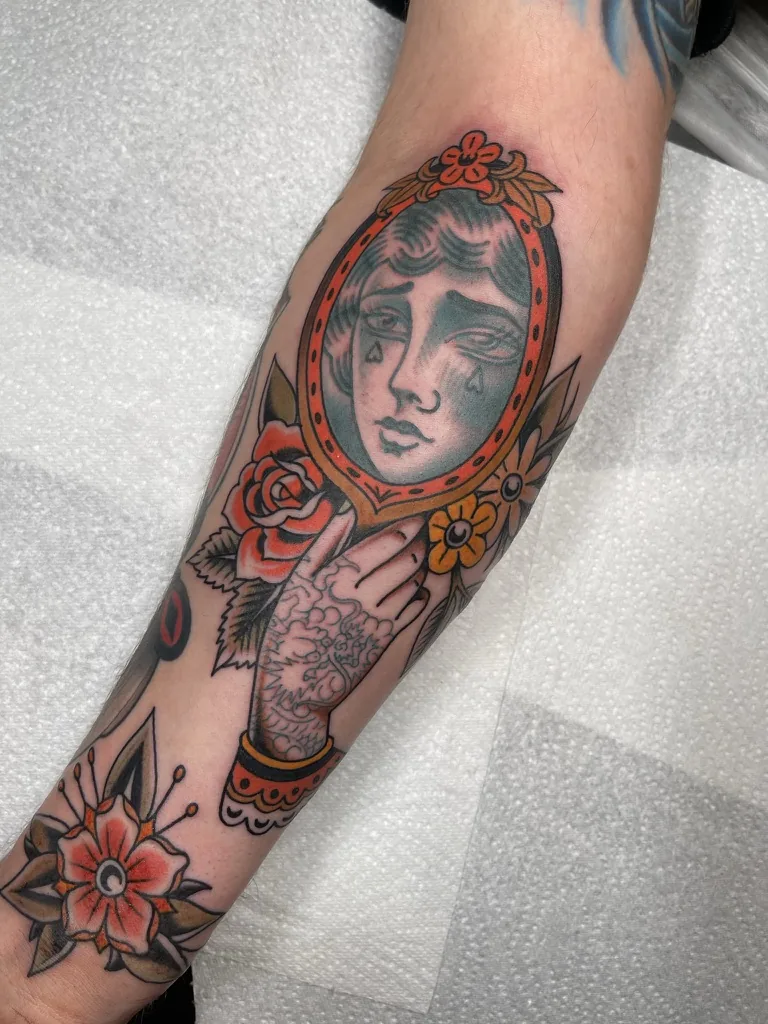
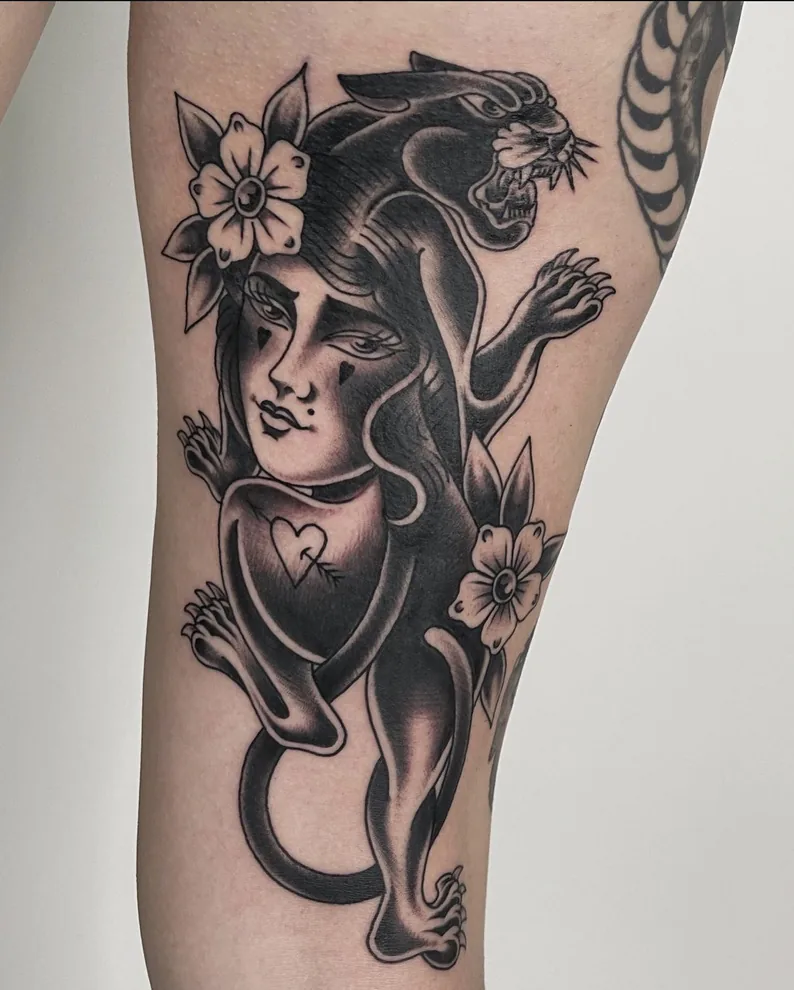
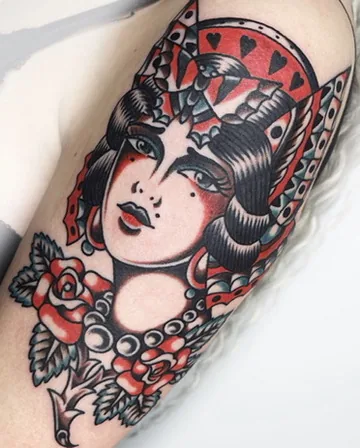
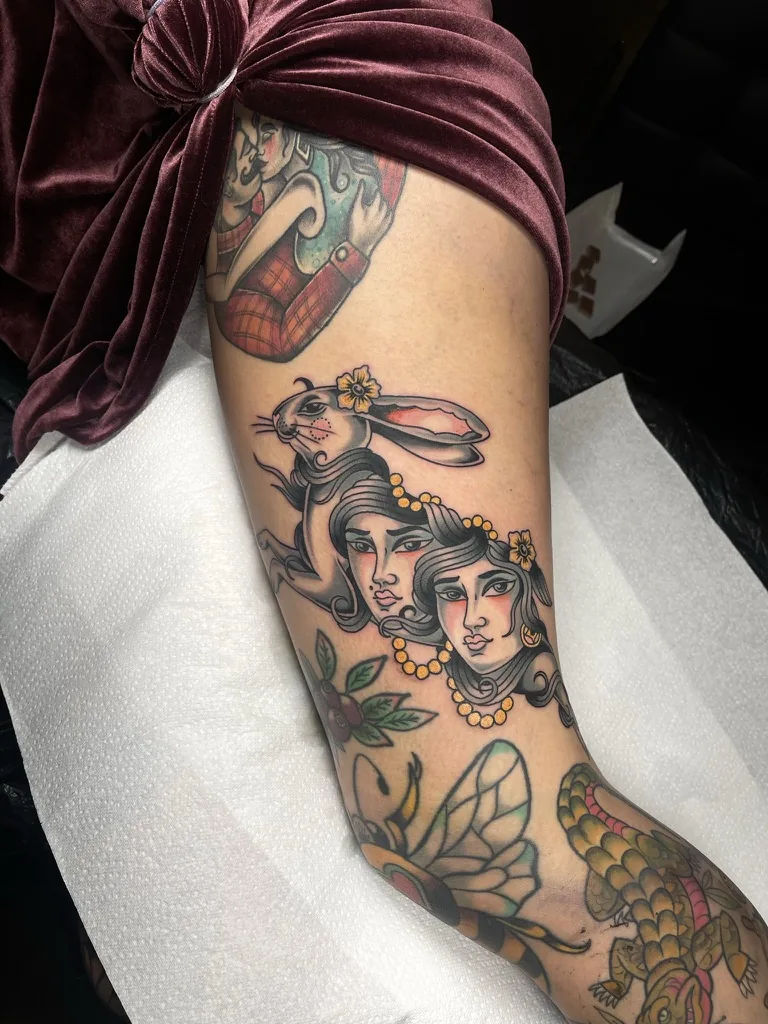
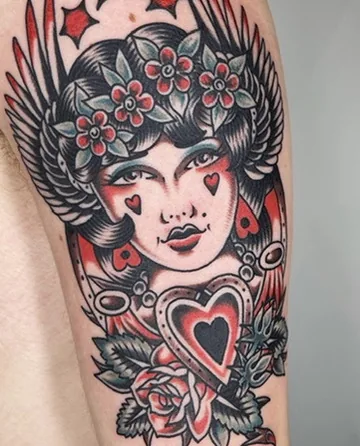
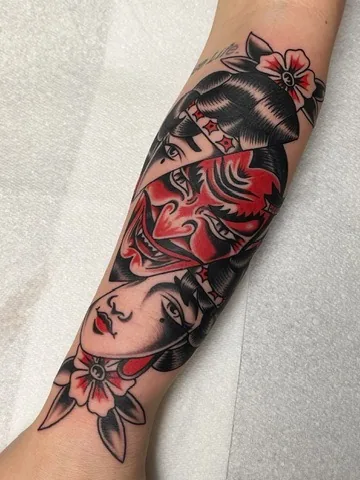
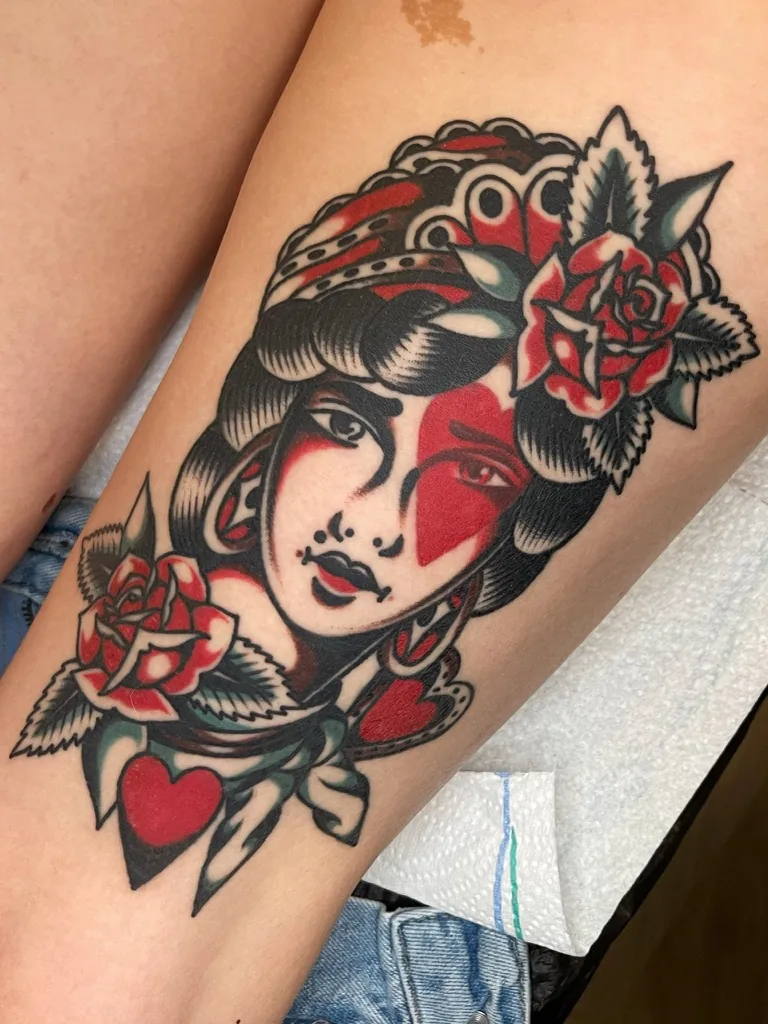
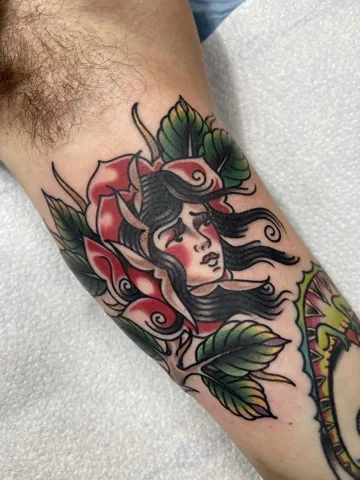
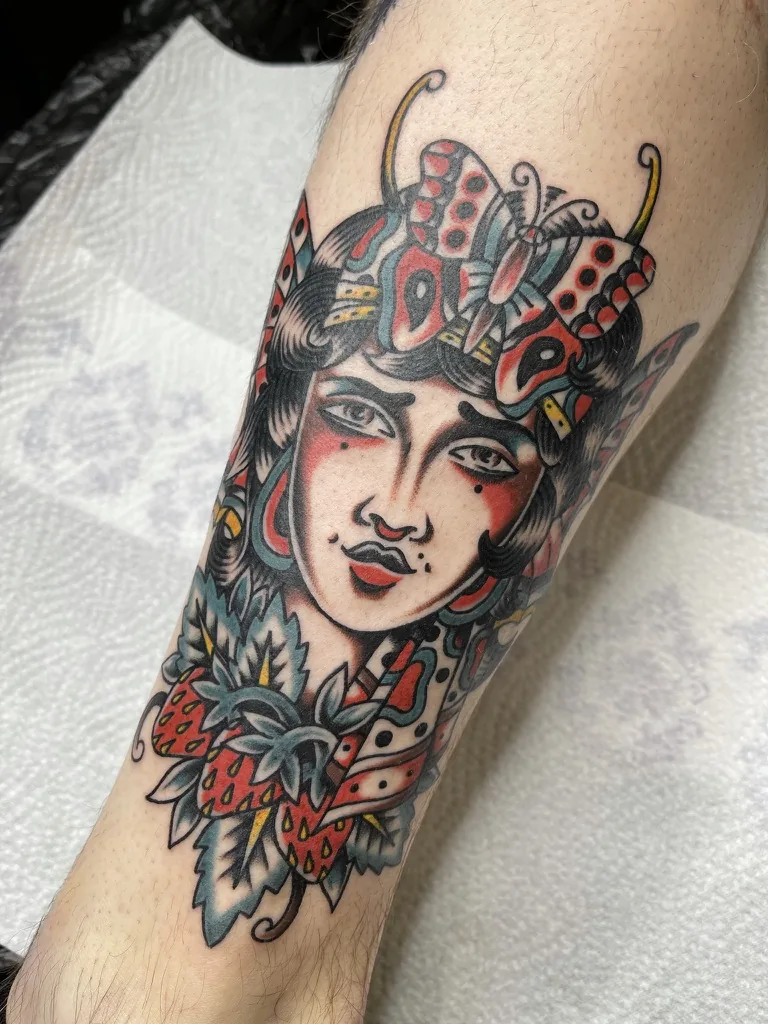
Portfolio inclusion proves that one or more woman-presenting faces are visibly central to the finished composition. It does not identify a real person, assign gender or cultural identity beyond the visible design, define universal symbolism, promise a likeness, or establish project acceptance, price, sessions, healing, longevity, or outcome.
Read the evidence
Twelve reviewed faces, not one repeated template
The accepted collection contains three neo-traditional works and nine traditional works. Some show one head with a headdress or mask; others pair a face with a panther, snake, mirror, birds, flowers, heart, moth, or dagger. Two photographs contain paired faces. The shared evidence is that the face remains a primary visual read, not that every work uses the same subject, identity, expression, proportion, or historical reference.
The portfolio boundary matters because many tattoos contain a person somewhere inside a larger scene. A cowgirl riding a horse is a figure-led narrative, but the reviewed photograph does not function as a lady-head composition. It was excluded even though the word cowgirl could have inflated the set. The page follows what the finished image visibly proves rather than collecting every caption that mentions a woman.
Use the gallery to compare face direction, amount of surrounding imagery, line weight, colour restraint, dark-to-light balance, and the relationship between the head and its frame. Do not use it to infer who a face depicts or what another client's symbols meant. Your enquiry needs its own subject, visual references, priorities, placement, and intended meaning.
Define the face
Expression, angle, and identity are separate decisions
Start by describing whether the face is an invented lady head, a fictional character, a historical or cultural reference, a stylized self-contained motif, or a portrait of a real person. Those requests require different reference evidence. If the person must be recognisable, use the portrait guide and send clear source photographs; a lady-head portfolio cannot promise likeness from a stylized example.
Name the expression and angle you want: calm, direct, grieving, defiant, masked, downward-looking, profile, three-quarter view, or another clearly referenced pose. Identify the features that must remain and those that are open to interpretation. Hair, eyes, brows, lips, jewellery, face markings, headwear, and visible hands can each change the first read even before companion objects are added.
Do not assign a real identity, ethnicity, nationality, religion, profession, or cultural role from appearance alone. If a design depends on a specific person, tradition, uniform, object, or story, name the source and explain the accuracy boundary. The visual examples can show composition and style; they do not authenticate a cultural label or make an invented face equivalent to a portrait.
Build the frame
Choose what surrounds the face and why
The reviewed works demonstrate several framing systems: flowers below or around the head, birds or wings above it, a heart or mask beside it, an animal merged into the silhouette, and an object placed behind the face. Those relationships determine whether the face dominates, shares attention, or becomes one component in a taller composition. List the primary subject, supporting elements, optional details, and unwanted imagery in that order.
If a companion motif carries personal meaning, explain that meaning in your own words instead of relying on a generic symbol list. A rose, moth, bird, snake, panther, mirror, heart, mask, or dagger can have different roles across projects. This page does not claim one universal interpretation, and the presence of a pairing in the portfolio does not mean a new design should repeat it.
For names, dates, banners, quotes, or other lettering, type the exact characters separately and state whether text is essential or optional. Do not rely on text embedded in a screenshot for spelling. A long word, date block, or banner changes the available frame and may compete with the face, so wording, hierarchy, orientation, and placement need explicit confirmation.
Compare visual systems
Traditional and neo-traditional solve the face differently
The traditional examples use direct silhouettes, controlled palettes, repeated black shapes, compact decorative frames, and faces that remain readable among roses, birds, hearts, animals, and masks. The neo-traditional examples use expanded facial rendering, longer body flow, layered headwear, softer value transitions, and larger integrated compositions. The subject family is shared, but the structural decisions are not interchangeable.
Open the full traditional and neo-traditional portfolios before choosing a label. Compare line weight, negative space, skin breaks, colour range, face scale, amount of rendering, and how companion motifs connect to the head. Select two or three Alex works and explain the useful property in each rather than asking for a finished tattoo to be copied.
If you are unsure of the style name, describe the intended result in ordinary language: compact and graphic, decorative and elongated, limited red and black, softer facial rendering, strong floral frame, dark animal merge, or another visible direction. That description exposes the actual design constraint and gives Alex more useful information than choosing a label only because it appears in a search result.
Design for the body
Placement, direction, and scale control readability
Name the exact body side and surface and provide approximate longest dimensions in centimetres or inches. A forearm, upper arm, thigh, calf, shoulder, or sleeve gap offers a different proportion and viewing direction. Send one straight, well-lit close photograph plus a wider view showing curvature, nearby tattoos, and the full available area.
State which direction the face should look and how the composition should travel on the body. A profile looking inward, a vertical headdress, a wide pair of faces, or a mask placed beside the head each creates a different footprint. If the piece must connect to existing work or reserve space for a future sleeve, include every relevant edge and explain the larger plan.
A portfolio photograph cannot reveal another client's exact dimensions, hours, sessions, pain, healing, or final price. Face detail, expression, companion motifs, style, placement, colour, existing work, skin, and reference quality all affect the design and estimate. Use the size and session guide to provide measurable constraints instead of reverse-engineering a photograph from a screen.
Make the enquiry decidable
What to send for a lady-head tattoo project
Send whether the face is invented, fictional, culturally specific, or a real-person portrait; the intended expression and angle; must-keep facial features; closest Alex portfolio examples; primary and supporting motifs; unwanted imagery; exact body side and surface; measured size; clear placement photographs; colour direction; budget; and date constraints. State whether the tattoo stands alone or belongs to a larger composition.
If a reference comes from another artist, identify the element you are responding to rather than requesting a duplicate. If it comes from a photograph, film, artwork, historical source, family archive, or cultural object, name that source and flag any uncertainty. This page supplies portfolio and planning evidence; it does not verify copyright status, cultural suitability, translation, portrait permission, or factual identity.
Alex's published rates are $280 CAD per hour and $2,000 CAD for a full day, but those figures are not a quote for a lady-head project. Submit the online enquiry for review, questions, an estimate, a possible date, and the next deposit step. Sending the form does not confirm availability, reply time, acceptance, placement, price, sessions, likeness, cover-up feasibility, or outcome.
Direct answers
Lady-head tattoo questions
Where does Alex Roze tattoo lady-head projects?
Alex tattoos at Rocky Mountain Tattoo, 532 Bernard Avenue in downtown Kelowna. Confirm the artist, date, and address in the final appointment details.
What styles appear in Alex's reviewed lady-head portfolio?
The twelve reviewed works span traditional and neo-traditional treatment, including compact lady heads, paired faces, and larger compositions with flowers, birds, masks, animals, a mirror, a heart, a moth, and a dagger.
Is a lady-head tattoo the same as a portrait tattoo?
Not necessarily. A lady head may be an invented or stylized motif. If a real person must be recognisable, state that clearly, use the portrait guide, and send strong reference photographs.
Does this page define what a lady-head tattoo means?
No. Meaning comes from the project context you provide. The page shows reviewed composition evidence without assigning one universal symbolism to a face, flower, animal, mask, heart, moth, mirror, or dagger.
What should I send for a lady-head tattoo enquiry?
Send the face type, expression, angle, required features, closest portfolio examples, supporting and unwanted motifs, exact body side and surface, measured size, placement photos, colour direction, budget, and date constraints.
Visible provenance
Sources and boundaries
- Rocky Mountain Tattoo: Alex Roze profile
- Rocky Mountain Tattoo: Contact
- Alex Roze: Traditional portfolio
- Alex Roze: Neo-traditional portfolio
- Alex Roze: Portrait tattoo collection
The RMT profile supports Alex's published traditional and neo-traditional style scope; the contact page supports the downtown Kelowna appointment address; Alex's canonical traditional, neo-traditional, and portrait pages supply the adjacent portfolio context. No depicted identity, fixed symbolism, cultural label, likeness guarantee, project acceptance, price, session count, availability, reply time, healing result, longevity, or outcome is inferred.
SEND A LADY-HEAD TATTOO ENQUIRY →