ALEX ROZE

Sleeve planning · eight reviewed photographs · Kelowna

Sleeve Tattoos in Kelowna

Alex Roze plans sleeve and half-sleeve tattoos at Rocky Mountain Tattoo, 532 Bernard Avenue in downtown Kelowna. A sleeve is not simply a larger isolated tattoo: it is a system of coverage, hierarchy, direction, transitions, negative space, and stopping points across a moving arm. Start by defining the complete arm plan, even if the tattoo will be built in stages.

Portfolio evidence and sources reviewed 14 August 2026

Evidence before claims

Three complete-arm views and five planning components

The eight photographs below were selected from a complete 119-image contact sheet and inspected individually. Three visibly show complete-arm coverage: one black-and-grey portrait composition and two traditional Japanese-style views. Five show half-sleeve-scale or large arm components that make structure, density, vertical flow, and transitions inspectable.

This is not a claim that the gallery contains eight distinct completed sleeves. The photographs do not establish whether the two traditional full-arm views belong to separate projects or show different sides of one project. They also do not reveal the client's pain, the number of appointments, the order in which sections were tattooed, price, healing course, or future appearance. The gallery is evidence of visual problems Alex has solved, not a template or outcome promise.

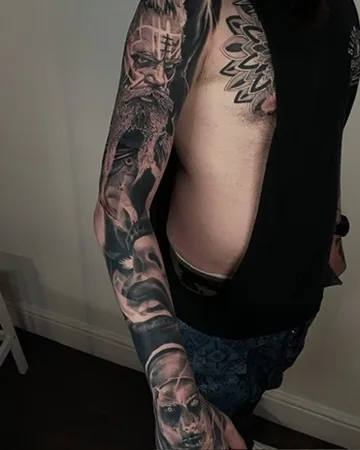
Bearded warrior and portraits sleeve — black & grey tattoo by Alex Roze, Kelowna
Portrait composition · complete-arm view
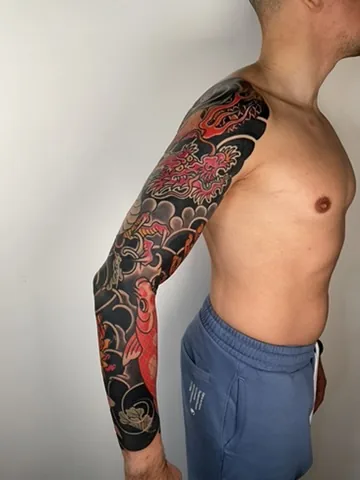
Japanese dragon and koi sleeve — traditional tattoo by Alex Roze, Kelowna
Dragon and koi · complete-arm view
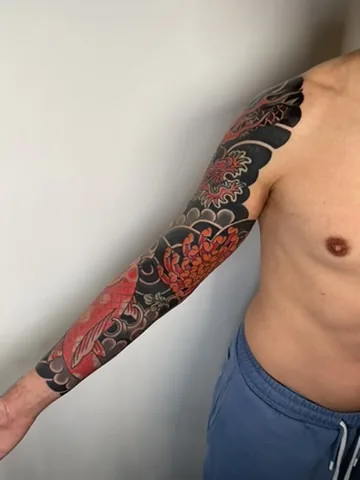
Japanese koi and chrysanthemum sleeve — traditional tattoo by Alex Roze, Kelowna
Koi and chrysanthemum · complete-arm view
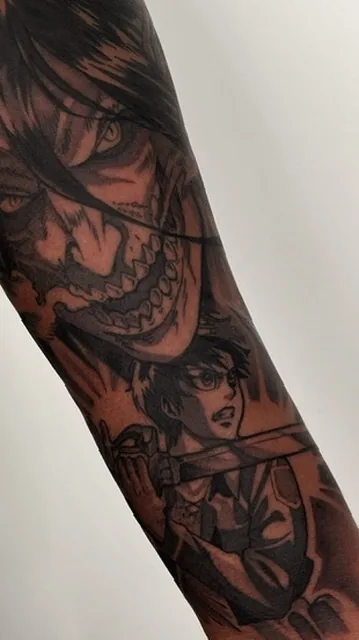
Attack on Titan anime sleeve — black & grey tattoo by Alex Roze, Kelowna
Character sequence · large arm component
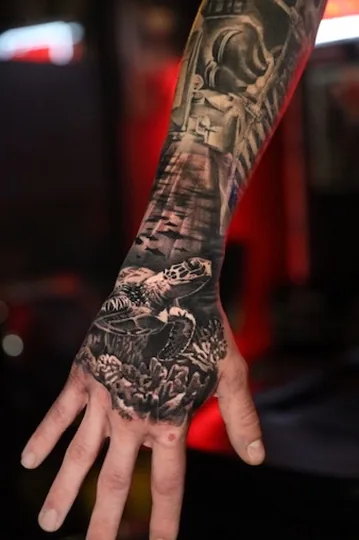
Sea turtle underwater sleeve — black & grey tattoo by Alex Roze, Kelowna
Underwater transition · large arm component
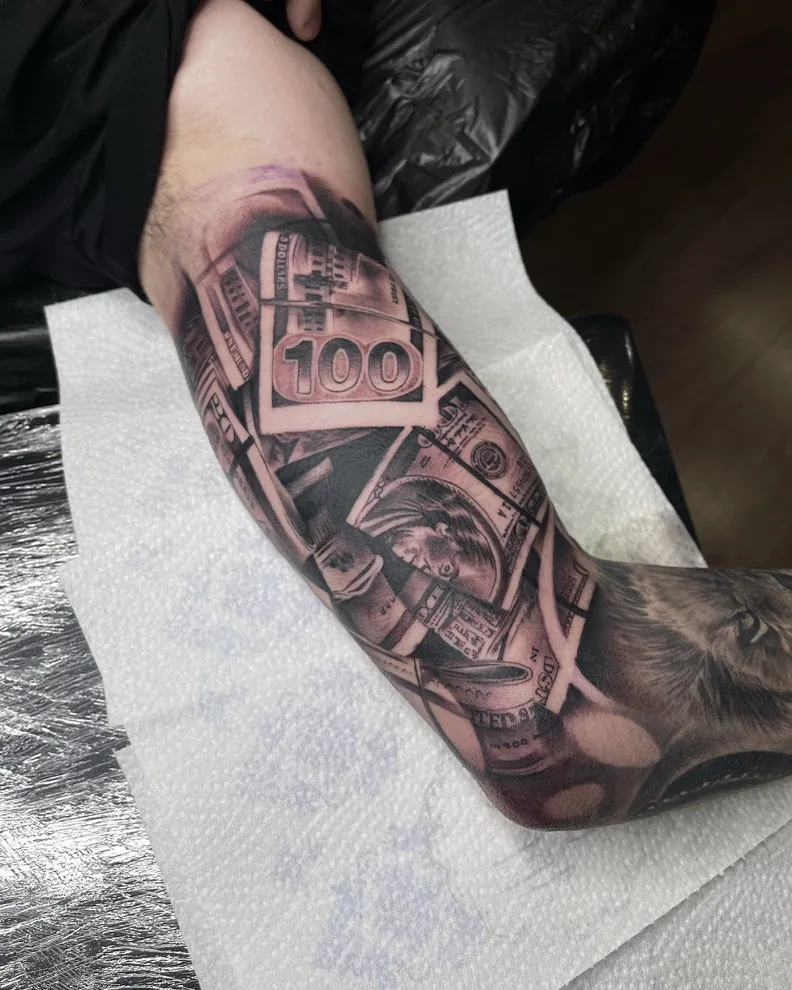
Hundred dollar bills and wolf money sleeve — black & grey tattoo by Alex Roze, Kelowna
Money and wolf composition · large arm component
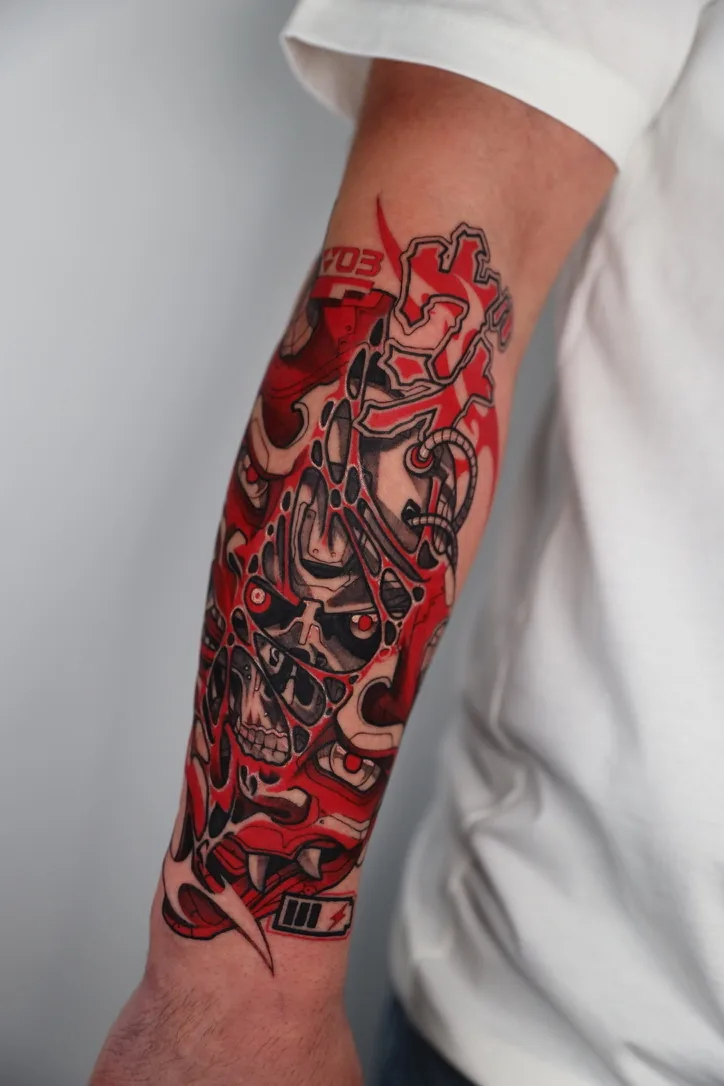
Red biomechanical skull sleeve — cyberpunk anime tattoo by Alex Roze, Kelowna
Biomechanical skull system · large arm component
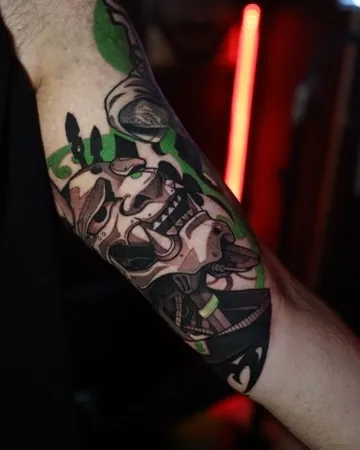
Green oni samurai mask sleeve — cyberpunk anime tattoo by Alex Roze, Kelowna
Oni mask and movement · large arm component

The manifest records each photograph's evidence role and 14 August visual review. “Complete-arm view” describes visible shoulder-to-wrist coverage in the photograph. “Large arm component” means the image is useful for sleeve planning without claiming a complete wrap or finished full sleeve.

Define the boundary

Full sleeve, half-sleeve, or a first component

Full sleeve

For this guide, a full sleeve means a composition planned from shoulder to wrist. State whether the hand, chest, shoulder cap, or back should remain separate. A complete plan needs front, back, inner, and outer arm evidence because no single photograph describes the entire surface.

Half-sleeve

A half-sleeve means a substantial upper- or lower-arm composition with a deliberate stopping point. Say where that stop should read when the arm is relaxed and whether the boundary must allow later extension. “Half” is not a measurement; photographs and coverage are still required.

First component

An isolated piece can become the first component of a future sleeve, but only if that intent is declared. Scale, orientation, framing, and surrounding negative space may change when future connections matter. Do not assume any existing tattoo can be joined invisibly.

Existing arm

Show every tattoo, scar, open space, and hard boundary on the arm. State what must remain untouched, what should connect, and what can be visually subordinate. Alex must evaluate the actual arrangement; this page cannot promise integration or acceptance.

One visual system

Choose hierarchy before collecting detail

Start with the primary read: the subject or relationship that must register first from ordinary viewing distance. Then identify secondary subjects, transitions, background structure, and quiet areas. If every reference is treated as equally dominant, the arm can lose hierarchy. A sleeve brief is more useful when it says what leads, what supports, and what can be changed or removed.

Direction matters because an arm turns. Explain whether the composition should read primarily from the front, side, or as a sequence around the limb. Note which elements must face a particular way and which relationships should appear when the elbow bends or the arm hangs naturally. Reference photographs can communicate subject, colour, texture, or mood, but label what each reference contributes rather than asking to reproduce another artist's finished sleeve.

Plan negative space as part of the composition, not as unused failure. It can separate subjects, preserve readability, create transitions, or leave a deliberate path for future work. The amount and position are design decisions for the actual arm and style. A page cannot prescribe a universal percentage or promise how the work will age.

Compare finished systems

Three styles, different structural tools

The reviewed black-and-grey examples organize portraits, character sequences, underwater imagery, and money-and-wolf elements through value, contrast, texture, and shifts in scale. The traditional complete-arm views use large recognizable subjects, repeated colour relationships, dark background, and flowing supporting forms. The cyberpunk-anime components use graphic red or green accents, character or mask focal points, mechanical structure, and strong black shapes.

These sleeve observations describe the reviewed photographs; they are not rules that force a style to behave one way. Compare Alex's complete black-and-grey, traditional, and cyberpunk-anime portfolios, then use the style comparison for a bounded discussion of visual structure, colour, readability considerations, and useful references. Choose by the system that fits the brief and the finished work you actually want to live with, not by a trend label.

Price and sequence

A sleeve label cannot produce a quote or session count

Alex publishes $280 CAD per hour and $2,000 CAD for a full day. Those figures are rate context, not a sleeve or half-sleeve quote. This page does not publish an Alex-approved sleeve range, and it would be misleading to invent one or multiply a guessed number of sessions by a rate.

Coverage is only one input. Subject count, visual style, detail, colour, existing tattoos, body position, drawing, placement, changes, setup, breaks, and the sequence agreed for the project all affect an estimate. Even two arms with similar coverage can represent different work. Use the size and session guide to describe measurable coverage and estimate inputs, then let the enquiry produce a project-specific answer.

Plan milestones without treating them as guaranteed timing. A first stage may establish a primary subject or structural area; later stages may extend, connect, or finish surrounding relationships. Alex's published process explains enquiry, design, placement review, tattooing, and aftercare, but it does not promise a universal order or number of appointments for a sleeve.

SEO-100 task #52 remains open on one point: Alex has not supplied approved sleeve or half-sleeve price ranges. The page is useful and indexable now, but no roadmap or search goal authorizes manufacturing those numbers.

Experience and healing

There is no honest universal sleeve pain score

A sleeve crosses multiple arm surfaces, but a body map still cannot predict one person's experience. The International Association for the Study of Pain states that pain is personal and influenced to varying degrees by biological, psychological, and social factors. Session conditions and individual experience also vary. Discuss concerns, positioning, and break needs with Alex instead of treating a ranked list as a guarantee.

A multi-stage project also creates a fresh tattoo each time an area is tattooed. Follow the artist's current instructions for that stage and use Alex's aftercare guide as the site route. British Columbia publishes body-modification guidance for operators to prevent health hazards, while HealthLink BC publishes symptom and medical-escalation guidance. This page is planning guidance, not medical advice, and it does not diagnose a symptom or predict healing.

Build the evidence packet

Send the complete arm, not one cropped angle

Begin with left or right arm and the intended coverage: shoulder to wrist, upper arm, lower arm, or a first component with later expansion. Send straight, well-lit front, back, inner, and outer views of the complete arm while relaxed. Add closer images of existing tattoos, scars, hard edges, or areas that must remain open. If movement or a particular viewing angle matters, explain it in words rather than assuming the photographs make the priority obvious.

Name the primary subject, secondary subjects, must-keep details, exclusions, style direction, and colour or black-and-grey preference. Link the closest examples from Alex's portfolio and say what you are responding to: hierarchy, background, line weight, colour relationship, texture, or overall density. Include budget and date constraints as real constraints, not as a request for an invented price or availability statement.

State whether the project should be complete at the proposed stopping point or preserve a path into the shoulder, chest, hand, or other arm section. If you are starting with the forearm, compare the reviewed forearm guide. Send the package through the tattoo consultation and booking form. An enquiry begins evaluation; it does not guarantee acceptance, a date, a design, a price, a duration, or an outcome.
Direct answers

Sleeve tattoo FAQ

What is the difference between a full sleeve and a half-sleeve tattoo?

For this guide, a full sleeve means a composition planned across the arm from shoulder to wrist. A half-sleeve means a substantial upper- or lower-arm composition with a deliberate stopping point. Exact coverage should be described and photographed because the label alone does not define the available area.

Do I need every subject decided before starting a tattoo sleeve?

Not necessarily, but Alex needs the main subject, visual hierarchy, style direction, must-keep elements, exclusions, stopping points, existing tattoos, and future expansion intent. Leaving some content open is different from beginning without a system for scale, flow, and transitions.

How many sessions does a tattoo sleeve take?

A photograph or coverage label cannot establish a session count. Subject count, style, detail, colour, existing work, drawing, placement, changes, setup, breaks, and the agreed sequence all affect a project-specific plan. Alex provides an estimate after reviewing the enquiry.

How much does a sleeve tattoo cost with Alex Roze?

Alex publishes an hourly rate of $280 CAD and a full-day rate of $2,000 CAD, but neither is a sleeve quote or approved range. Send the complete arm evidence and project brief for a project-specific estimate; do not multiply a guessed session count by a published rate.

How painful is a full sleeve or half-sleeve tattoo?

There is no honest universal sleeve pain score. Pain is personal and a sleeve crosses more than one arm surface, while individual experience and session conditions vary. Discuss concerns and break needs with Alex instead of treating a body-area ranking as a prediction.

Visible provenance

Sources and claim boundaries

The portfolio proves three complete-arm views and five large-arm planning components across three styles. It does not prove eight distinct sleeves or produce a price range, duration, session count, pain rank, healing prediction, availability statement, acceptance decision, or result guarantee. Page, portfolio evidence, and sources reviewed 14 August 2026.

START A SLEEVE TATTOO ENQUIRY →