Animal portfolio · wolves · wildlife · pets · Kelowna
Animal Tattoos in Kelowna
Alex Roze tattoos animal subjects at Rocky Mountain Tattoo, 532 Bernard Avenue in downtown Kelowna. This page brings together 12 visually reviewed works—including wolves, an owl, raccoon, tiger, turtle, lion, dog, panthers, and an eagle—so you can compare how species, pose, style, scale, and placement change the design problem before sending an enquiry.
Portfolio and sources reviewed 14 August 2026
12 reviewed works
Animal tattoo portfolio
Every work in this collection received a dated, subject-specific visual review. The set crosses neo-traditional, black-and-grey, and traditional portfolios, plus Alex's documented 2026 Okanagan award piece. Selection required a clearly visible animal as a primary or substantial subject; a cropped background fragment was not enough.
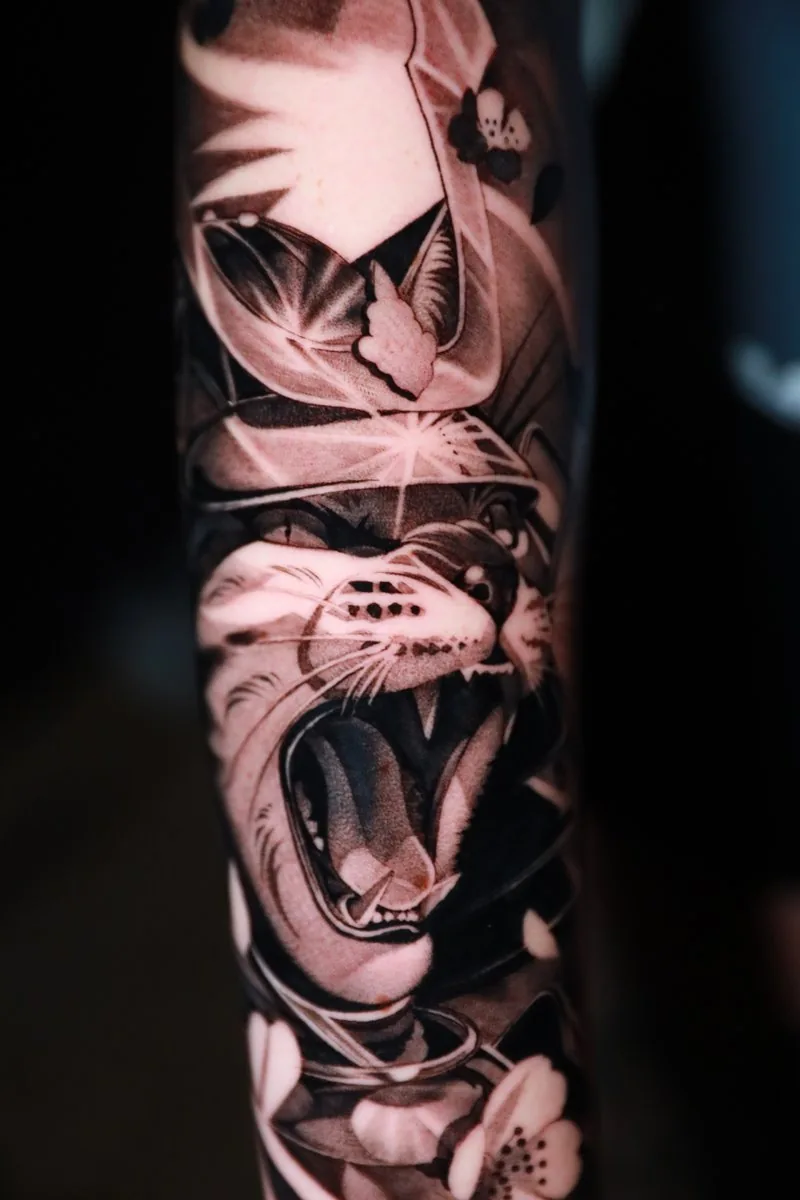
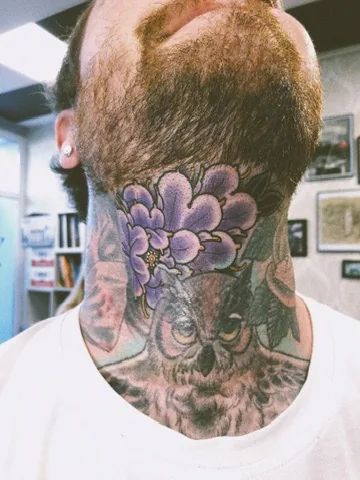
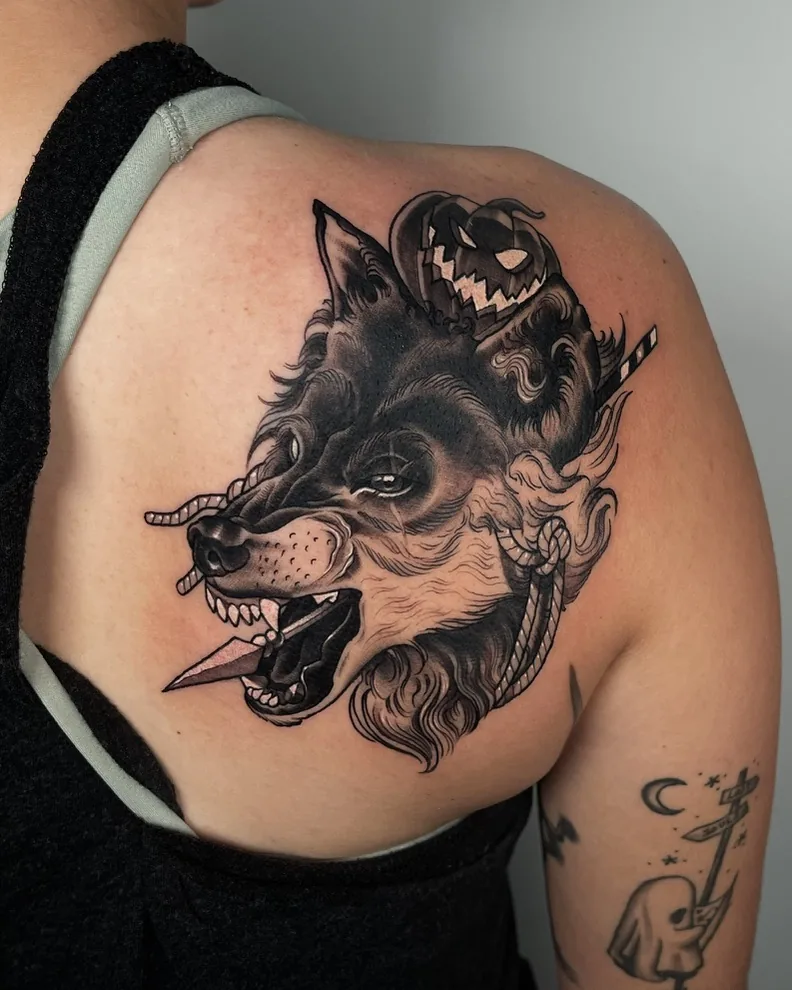
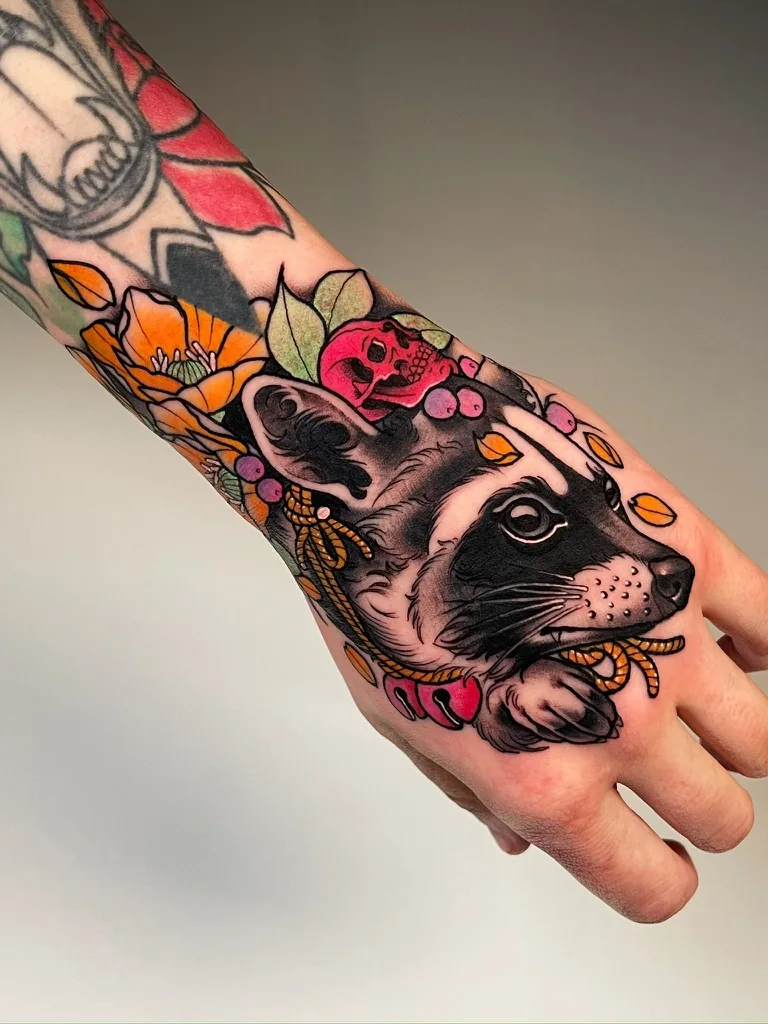
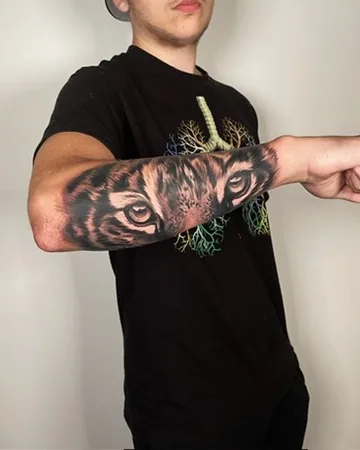
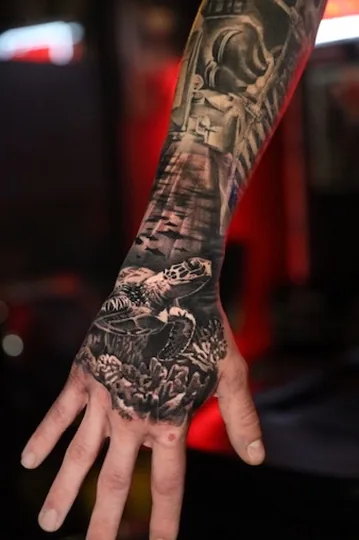
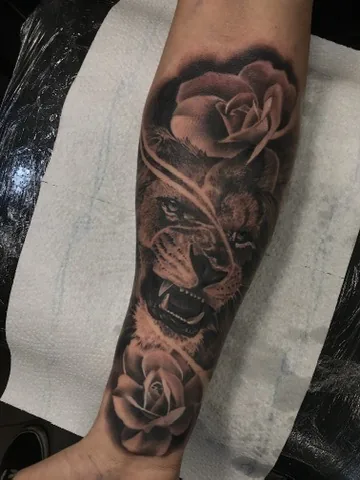
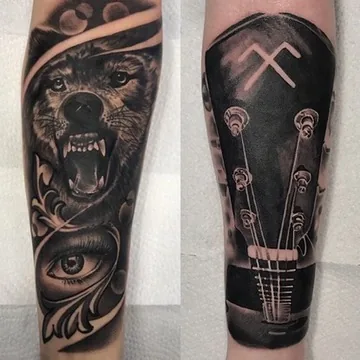
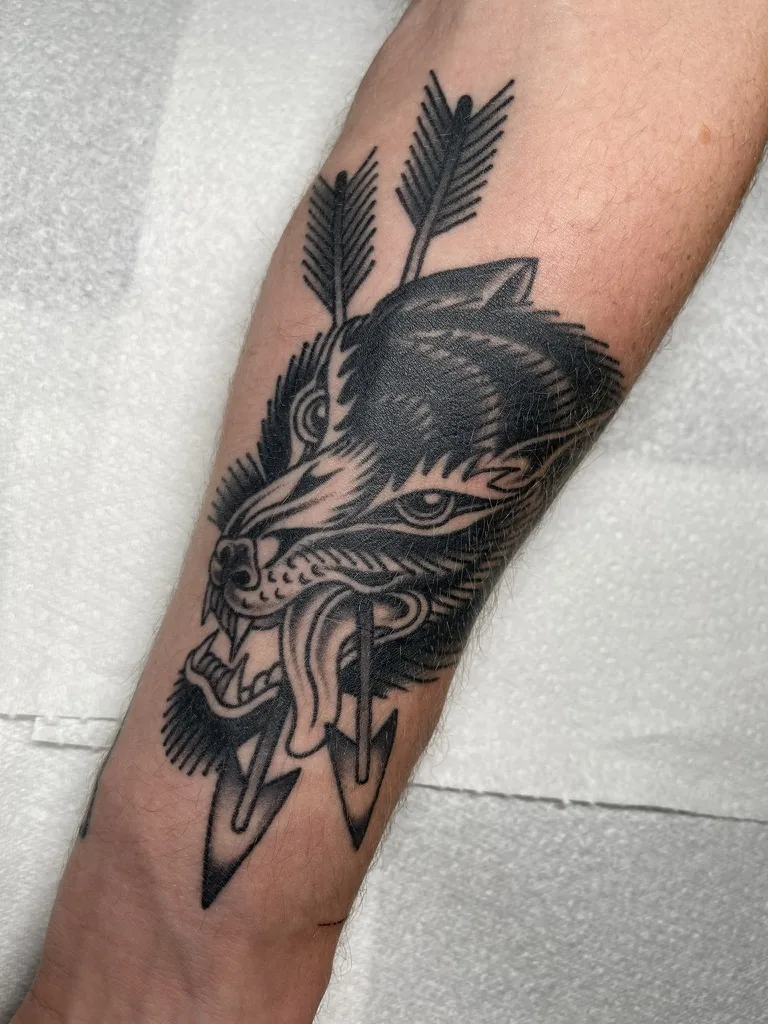
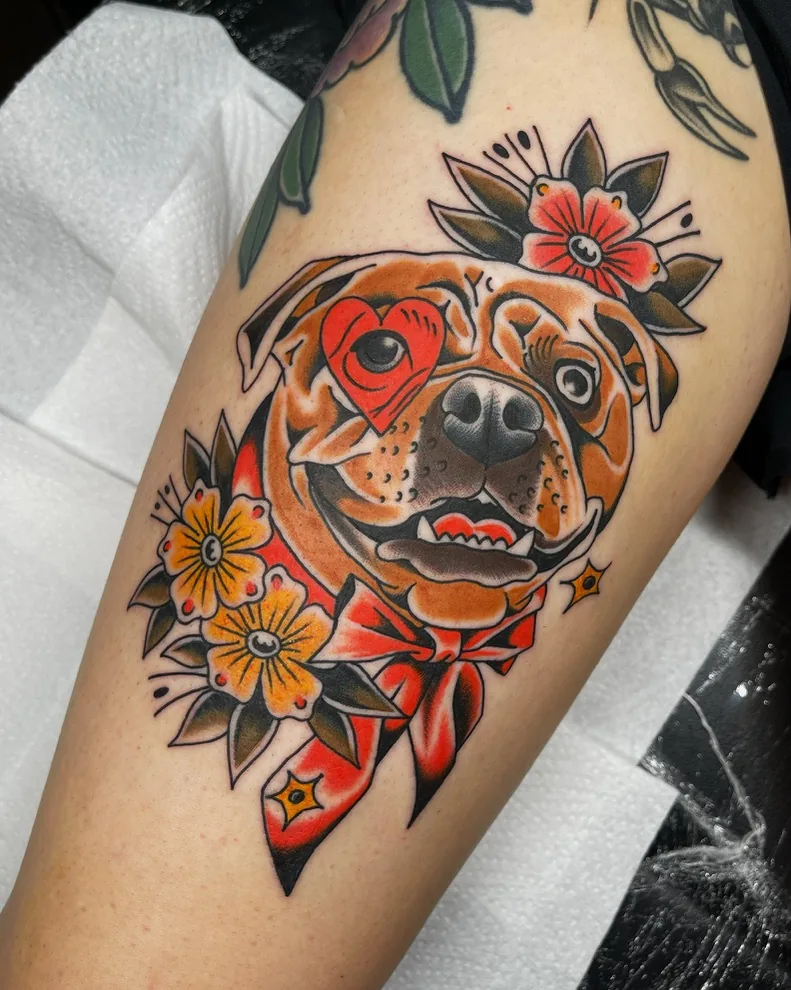
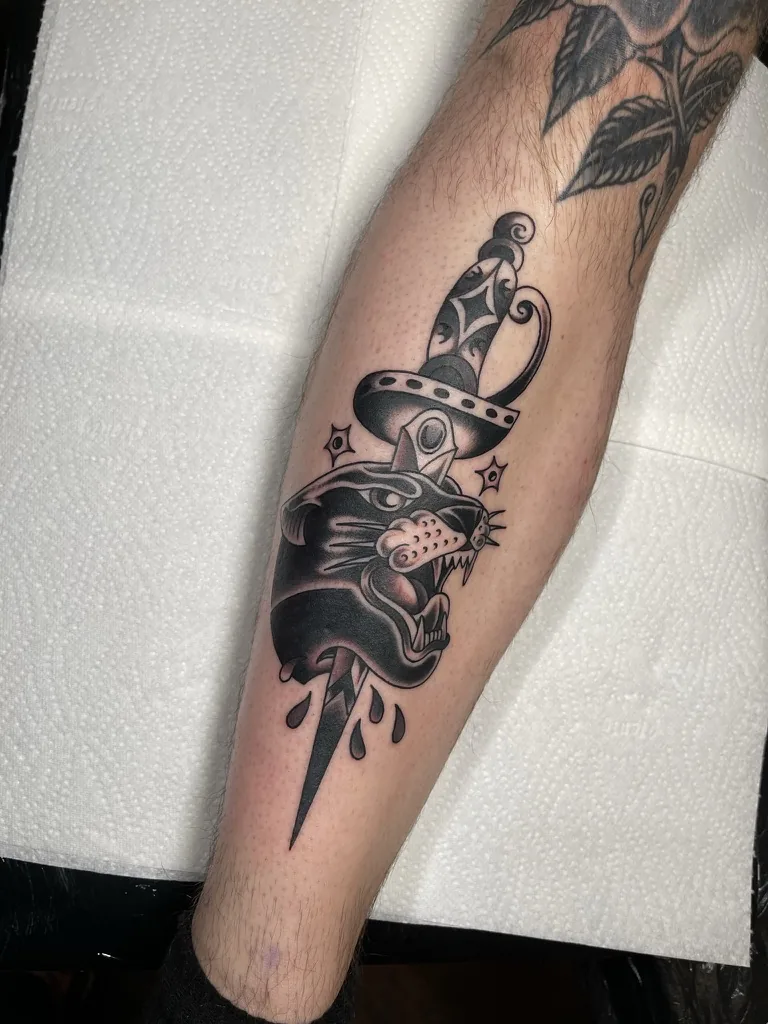
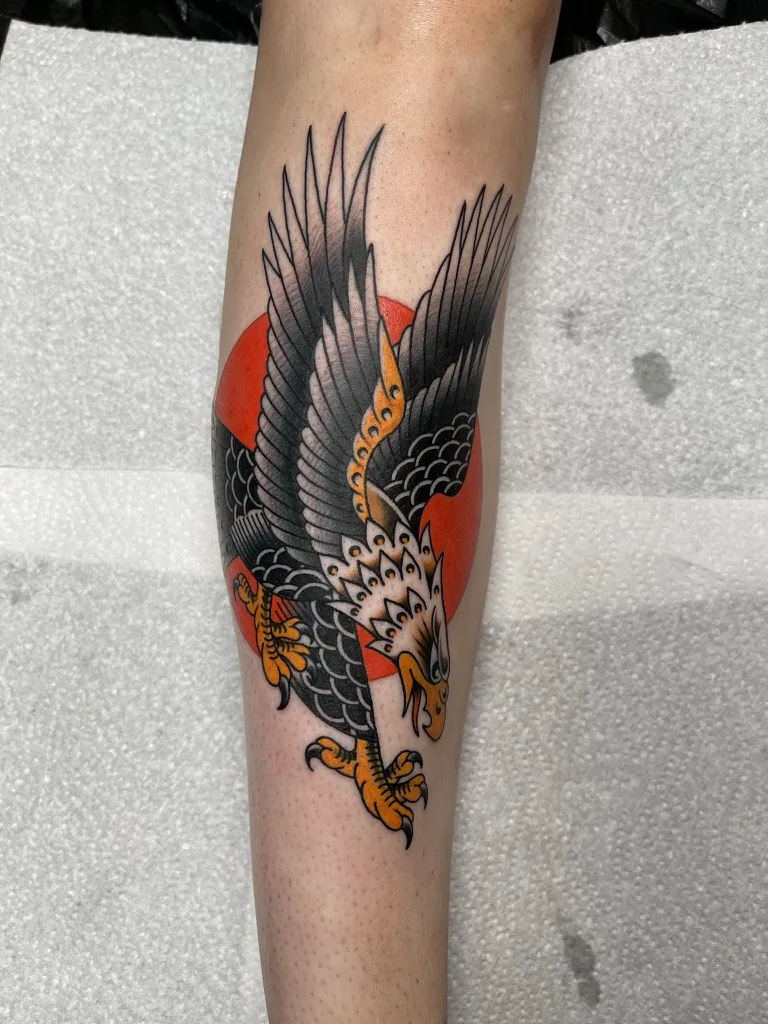
Portfolio inclusion proves that the named animal is visibly present in the finished work. It does not assign universal symbolism, promise that every animal or placement will be accepted, or establish the dimensions, hours, price, healing, or longevity of a new project.
Read the subject
What the reviewed animal work actually demonstrates
The 12 selected tattoos solve different visual problems. Some isolate a head or face, such as the tiger eyes, roaring lion, owl, panther, and arrow-pierced wolf. Others show more of the body or place the animal inside a scene, including the sea turtle underwater composition, raccoon hand piece, eagle against a red sun, and dog portrait with flowers. The evidence is breadth of finished animal work, not one repeatable animal template.
Several wolves appear, but they are not interchangeable. One neo-traditional wolf uses a pumpkin, dagger, and rope around a large shoulder-blade composition. One traditional wolf is reduced to a compact head-and-arrows emblem. One black-and-grey piece combines a snarling animal with a guitar headstock. Compare silhouette, expression, supporting objects, and value structure instead of treating the word wolf as a complete brief.
The collection also separates literal likeness from stylized identification. The Staffy piece keeps recognisable dog features inside a traditional colour composition; the raccoon uses a direct graphic face and seasonal flowers; the turtle relies on an underwater environment; the tiger is represented through a cropped eyes-only composition. Decide which kind of identification matters before collecting references.
Reference with purpose
Name the species, individual animal, and pose
Start with the exact animal. If the project represents a pet, state the animal's name and send clear photographs that show the features you want preserved: face shape, ears, markings, eyes, coat pattern, posture, or a familiar expression. If the subject is wildlife or an archetypal animal rather than an individual, name the species and describe whether accuracy, motion, attitude, or stylization matters most.
Choose references for different jobs. One image may establish anatomy or markings, another the pose, and another the light, palette, or atmosphere. Label those roles in the enquiry. A crowded folder without explanation can contain contradictory angles, species details, and visual systems; a smaller set with a reason for each image gives the design a clearer hierarchy.
Do not use another artist's finished tattoo as a tracing request. It can identify a broad direction—compact traditional emblem, high-contrast black-and-grey head, colourful neo-traditional character, or environmental scene—but say which qualities you want carried forward. Photographs, natural-history references, and your own pet images can clarify the subject while Alex's finished portfolio clarifies his available visual languages.
Choose the visual system
Animal is the subject; style controls how it reads
The reviewed traditional works rely on direct outlines, simplified shapes, compact palettes, and emblem-like arrangements. The wolf with arrows, dog with flowers, panther and dagger, and eagle over a sun remain readable through silhouette and controlled supporting elements. That does not mean every traditional animal should use the same pose, weapon, flower, or expression; it shows one structural family available in Alex's portfolio.
The neo-traditional examples allow more modelling, decorative framing, and character treatment. The owl uses blossom and neck placement, the wolf combines multiple objects in a broad composition, and the raccoon integrates colour and flowers across the hand. Black-and-grey examples use value and texture for eyes, fur, underwater space, a roaring head, or a larger collage. Each style changes what reference detail matters and what can be simplified.
Use the style comparison and parent portfolio pages when the subject is settled but the visual system is not. Link two or three finished works and explain what you are responding to: line weight, black-and-grey value, restricted colour, realistic texture, graphic shape, decorative framing, or the balance between the animal and surrounding elements. You do not need to diagnose the label perfectly before enquiring.
Compose for the body
Decide the main read, placement, and measurable scale
An animal head, full body, eyes-only crop, pet portrait, and animal-in-environment scene require different spaces. State which read should land first. If the face or likeness is primary, list the identifying features that cannot be lost. If motion or environment matters more, explain the pose, direction, and supporting elements. If several animals belong together, rank them rather than assigning every subject equal weight by default.
Name the exact body side and surface and provide approximate longest dimensions in centimetres or inches. “Arm” is less useful than “outer right forearm,” and “large” is less useful than measured height and width. Send a straight, well-lit placement photograph plus a wider view showing body direction, nearby tattoos, and whether the new piece must stand alone, connect, or preserve space for future work.
Curvature and movement can affect the relationship between a muzzle, eyes, wings, paws, tail, or surrounding objects. A finished photograph does not reveal every design or placement constraint, and it cannot be reverse-engineered into your hours or session count. Species detail, number of subjects, style, dimensions, placement, colour, background, existing tattoos, and reference quality all belong in the project-specific review.
Make the enquiry decidable
What to send for an animal tattoo project
Send the species or pet, whether likeness or stylization matters, preferred pose and expression, must-keep markings or features, closest Alex portfolio examples, supporting elements, unwanted elements, exact body side and surface, measured size, placement photographs, colour direction, budget, and date constraints. If the project is memorial, explain the role of any name, date, text, ashes-related request, or personal object without assuming this page establishes a memorial policy.
If the animal carries personal symbolism, describe what it means to you and which visual element expresses that meaning. The page does not assign one universal meaning to wolves, owls, panthers, eagles, dogs, or any other species. Personal context can guide pose, expression, object choice, or hierarchy, but symbolism is an operator-provided input rather than a claim inferred from the animal name.
Alex's published rates are $280 CAD per hour and $2,000 CAD for a full day, but those figures are not an animal-project quote. Submit the online enquiry for review, questions, an estimate, a possible date, and the next deposit step. No appointment, project acceptance, availability, response time, price, session count, or result is confirmed by this collection or by sending the form.
Direct answers
Animal tattoo questions
Where does Alex Roze tattoo animal projects?
Alex tattoos at Rocky Mountain Tattoo, 532 Bernard Avenue in downtown Kelowna. Confirm the artist, date, and address in the final appointment details.
Does Alex's animal portfolio include wolf tattoos?
Yes. The visually reviewed collection includes wolves in neo-traditional, traditional, and black-and-grey compositions, alongside owl, raccoon, tiger, turtle, lion, dog, panther, and eagle work.
What should I send for a pet portrait tattoo?
Send clear photographs showing the pet's face, markings, ears, eyes, coat, posture, and preferred expression; identify must-keep features; then include placement, measured size, style direction, budget, and date constraints.
Do animal tattoos have one fixed meaning?
No meaning is assigned by this page. If the animal has personal symbolism, explain it and identify which pose, expression, object, text, or relationship should carry that meaning in your project.
Can this page estimate the price or sessions for my animal tattoo?
No. Species detail, likeness, pose, number of subjects, style, dimensions, placement, colour, background, existing work, and reference quality affect the estimate. Send measurable project details for review.
Visible provenance
Sources and boundaries
- Rocky Mountain Tattoo: Alex Roze profile
- Rocky Mountain Tattoo: Contact
- Alex Roze: Black and grey portfolio
- Alex Roze: Traditional portfolio
- Alex Roze: Neo-traditional portfolio
- https://alexroze.com/about
The RMT profile supports Alex's published realism, traditional, neo-traditional, colour, and black-and-grey scope; the RMT contact page supports the downtown Kelowna appointment address; Alex's own style pages and About page supply the parent portfolios and award context. No symbolism, result, availability, reply time, fixed price, session count, healing outcome, or longevity claim is inferred.
SEND AN ANIMAL TATTOO ENQUIRY →