Skull portfolio · three styles · Kelowna
Skull Tattoos in Kelowna
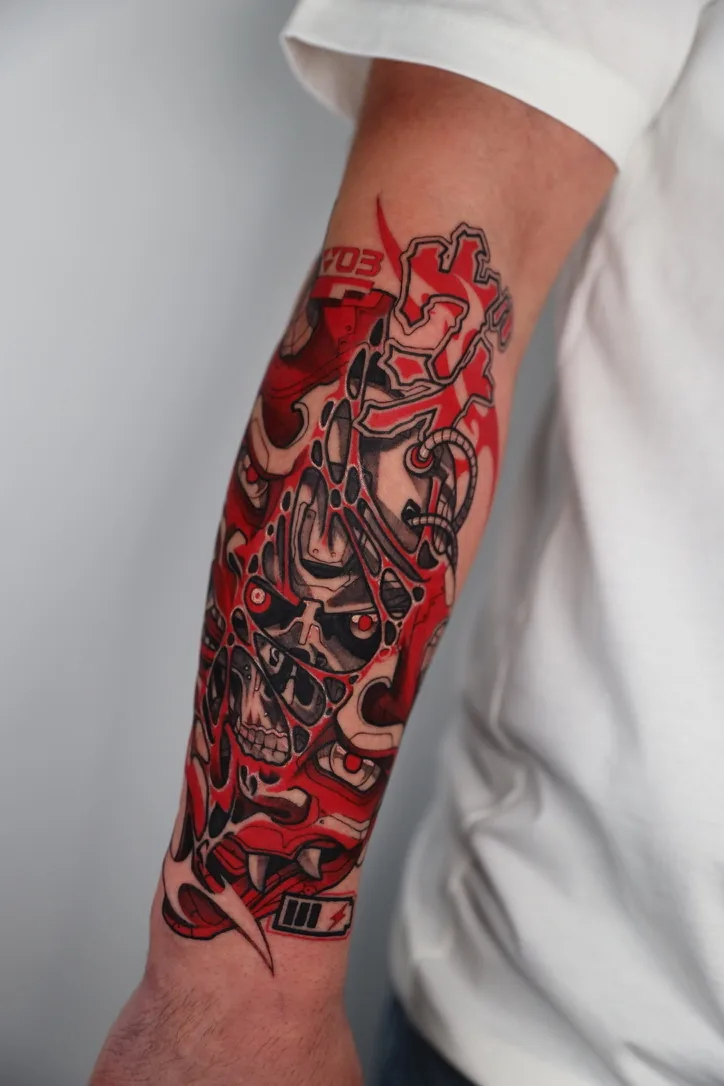
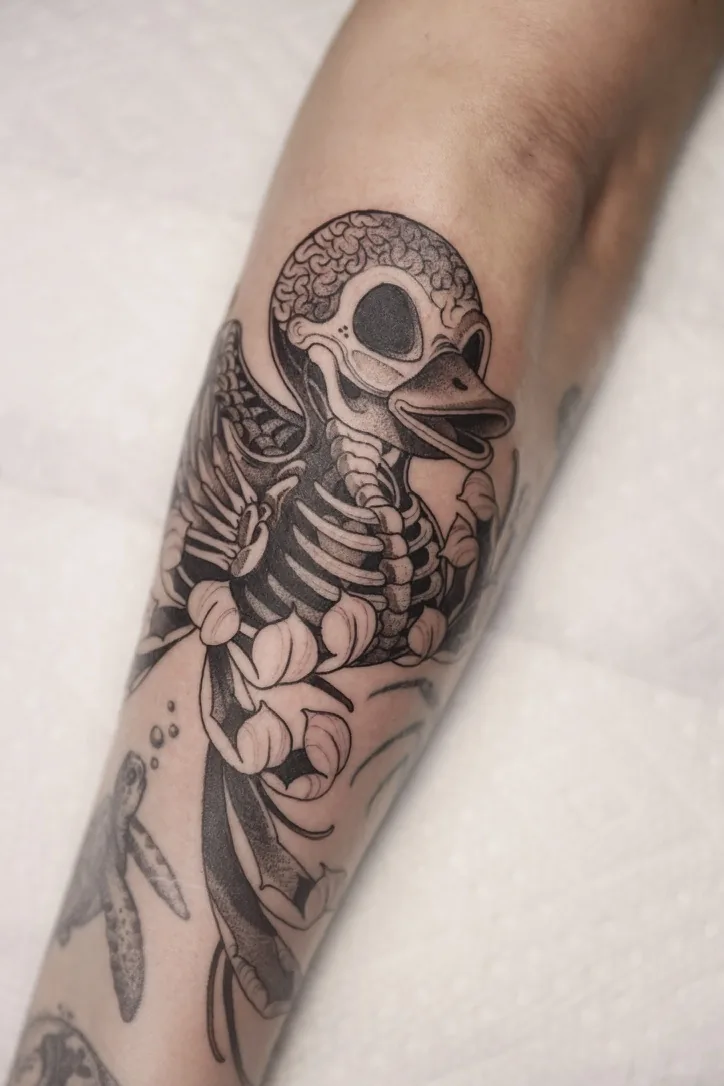
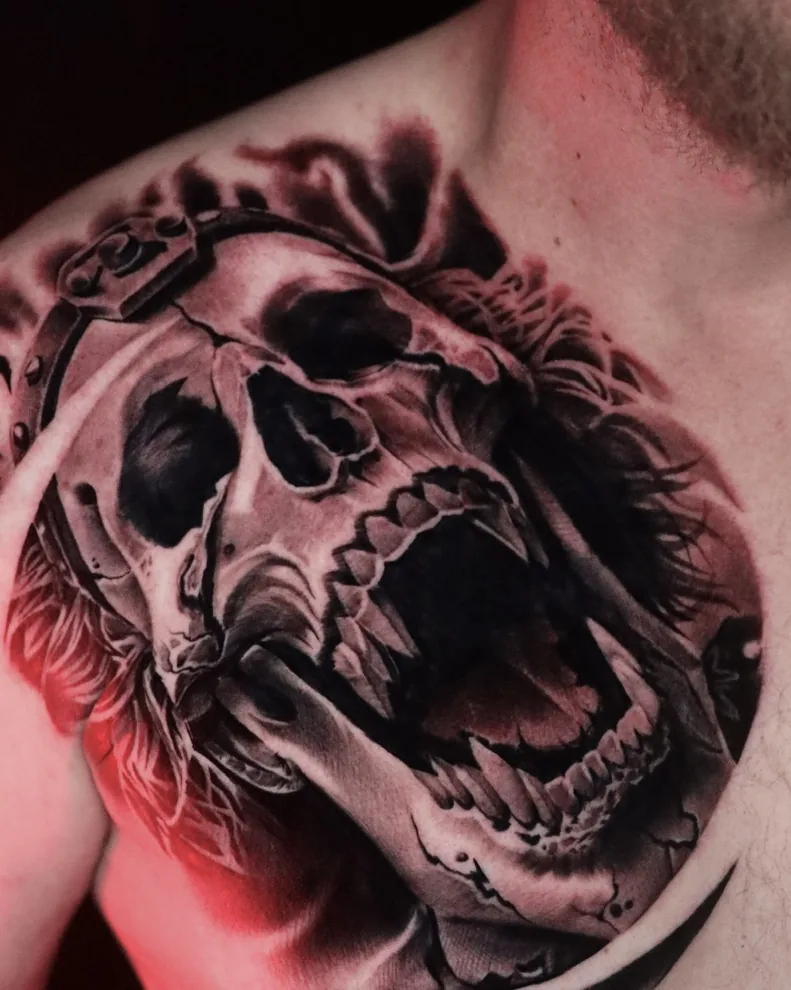
Alex Roze tattoos skull subjects at Rocky Mountain Tattoo, 532 Bernard Avenue in downtown Kelowna. This page contains exactly six visually reviewed works: a biomechanical skull, skeletal duckling, roaring bear skull, sugar-skull collage, skull with serpent, and skull with roses across cyberpunk anime, black-and-grey, and traditional portfolios.
Portfolio and sources reviewed 14 August 2026
6 reviewed works
Skull tattoo portfolio
Every included photograph carries a dated skull-specific visual review in the site's image taxonomy. Two caption-matched candidates were rejected after direct inspection because they show an owl composition and a blackwork squid rather than a visible skull. The six retained works are the complete evidence set for this page, not a claim about every older caption.
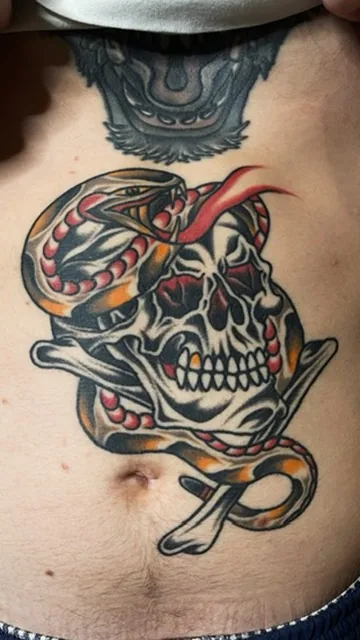
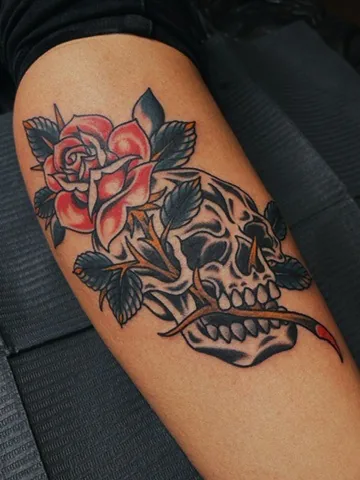
Portfolio inclusion proves that a skull or clearly skeletal head is visibly substantial in the finished photograph. It does not assign universal symbolism, promise an identical drawing, establish cultural meaning, confirm cover-up feasibility, or predict price, sessions, healing, longevity, acceptance, or outcome.
Read the evidence
Six skull works, six different composition problems
The reviewed set does not present one repeatable skull template. The red biomechanical piece stretches a layered mechanical skull through a large arm composition. The skeletal duckling makes exposed bone and anatomy part of a small character. The roaring bear skull uses an animal head and open jaw as the dominant chest image. Each asks for different reference, scale, and body-space decisions.
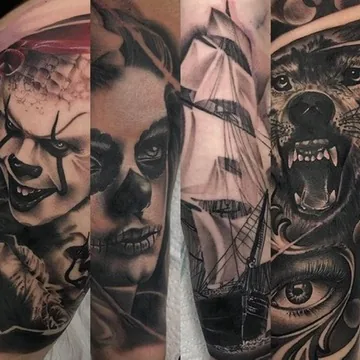
The black-and-grey collage combines a sugar-skull figure with Pennywise, a ship, an animal face, and an eye across connected panels. The traditional serpent piece compresses a skull, snake, blade-like forms, and controlled colour into a compact emblem. The skull-and-roses piece gives the skull one clear supporting floral relationship. Compare hierarchy and silhouette before comparing decorative details.
Two old captions looked relevant in text search but failed direct visual inspection. One photograph shows an owl, swallow, web, and rose; the other shows a blackwork squid with dice. They remain outside this collection. That rejection matters because a subject page should describe what a visitor can inspect in the photographs, not what a legacy label happened to say.
Choose the subject
Name the kind of skull before choosing a style
Start with the subject: human skull, animal skull, full skeleton, stylized character, sugar-skull imagery, biomechanical construction, or another clearly described direction. Those categories are not interchangeable. Send references that show the anatomy, silhouette, expression, angle, jaw position, damage, ornament, or mechanical treatment that actually matters to the idea.
If the skull belongs to a specific animal, identify the species and say whether anatomical accuracy or stylization is more important. If the image refers to a character, tradition, memorial, or cultural practice, name that context rather than expecting a generic skull reference to carry it. This page does not infer meaning or cultural authority from appearance alone.
Separate required features from atmosphere. Required may mean horns, missing teeth, one eye socket, an open jaw, a particular flower, or a mechanical element. Atmosphere may mean smoke, web, shadow, sparks, background texture, or a restricted accent colour. A short hierarchy keeps supporting material from overtaking the subject that must read first.
Choose the visual system
Skull is the subject; style controls the structure
The cyberpunk anime example uses red, black, mechanical layering, and repeated internal shapes across a long composition. The black-and-grey examples use value, texture, skeletal anatomy, fur, or narrative collage without relying on a full colour palette. The traditional examples use direct outlines, compressed forms, limited colour, and clear supporting symbols. Those are distinct visual systems, not interchangeable filters.
Use Alex's three linked parent portfolios to compare finished structure. Look at outline weight, negative space, number of value steps, colour restraint, background density, and how fast the skull reads from a normal viewing distance. Then link the closest two or three examples and explain which property you want carried forward rather than asking for one finished tattoo to be duplicated.
If you do not know the style name, describe the decision in ordinary language. You may want graphic and compact, dark and textural, mechanical and bright, anatomically direct, or surrounded by flowers or a serpent. Those observations are more useful than choosing a label that conflicts with the references, placement, or level of detail you actually prefer.
Control the hierarchy
Decide what belongs around the skull
The six works show skulls alone, skulls attached to a skeletal character, an animal skull, and skull imagery combined with roses, a serpent, or a larger collage. Decide whether the skull is the entire tattoo, the anchor inside a scene, or one element in a sleeve. List primary, supporting, optional, and unwanted elements in that order.
A multi-subject design needs one main read. If a skull, face, animal, ship, flower, text, and background all appear in the references, identify which element should land first and which can recede. If every object must remain equally prominent, the required physical area may change. The gallery cannot prove that a long object list fits the intended placement.
Type names, dates, quotes, banners, and other lettering exactly in the enquiry. Explain whether text should be central, integrated, or omitted if it weakens the composition. Do not rely on words embedded in a screenshot for spelling or priority. The final relationship between lettering and skull imagery requires explicit confirmation before tattooing.
Design for the body
Give placement and size as measurable constraints
Name the exact body side and surface and provide approximate longest dimensions in centimetres or inches. A chest, forearm, upper arm, lower leg, and sleeve panel offer different proportions and movement. Send one straight, well-lit close photograph plus a wider view that shows body direction, available space, and nearby tattoos.
Say whether the piece should stand alone, connect to existing work, cover an area, or preserve space for a future composition. Include clear photographs of anything the new design must approach. Skull imagery does not automatically make a project suitable for cover-up work, and a portfolio photograph cannot establish what pigment, scar, or existing linework can be changed.
A finished image also cannot reveal the exact dimensions, hours, or session count behind it. Anatomy, number of subjects, style, line weight, texture, colour, placement, existing work, and reference quality affect the design and estimate. Use the size and session guide to prepare measurable evidence instead of reverse-engineering another client's appointment.
Make the enquiry decidable
What to send for a skull tattoo project
Send the skull type, species or character when relevant, required features, intended meaning in your own words, closest Alex portfolio examples, supporting and unwanted elements, exact body side and surface, measured size, placement photographs, colour direction, existing tattoos, budget, and date constraints. State whether the project may grow into a larger composition later.
If the idea relates to a memorial, religious symbol, cultural practice, copyrighted character, or another context where accuracy matters, identify the source and the boundaries that must be respected. This page supplies portfolio and planning evidence; it does not authorize a symbol, assign meaning, promise project acceptance, or replace a project-specific discussion.
Alex's published rates are $280 CAD per hour and $2,000 CAD for a full day, but those figures are not a skull-project quote. Submit the online enquiry for review, questions, an estimate, a possible date, and the next deposit step. No appointment, availability, response time, price, session count, cover-up result, or outcome is confirmed by this page or by sending the form.
Direct answers
Skull tattoo questions
Where does Alex Roze tattoo skull projects?
Alex tattoos at Rocky Mountain Tattoo, 532 Bernard Avenue in downtown Kelowna. Confirm the artist, date, and address in the final appointment details.
What skull tattoo styles appear in Alex's reviewed portfolio?
The six reviewed works span cyberpunk anime, black-and-grey, and traditional treatment, including biomechanical, skeletal character, animal skull, sugar-skull collage, serpent, and floral compositions.
What should I send for a skull tattoo enquiry?
Send the skull type or species, required features, intended meaning, closest portfolio examples, supporting and unwanted elements, exact body side and surface, measured size, placement photos, colour direction, budget, and date constraints.
Does this page define what a skull tattoo means?
No. Meaning and cultural context come from the project information you provide. This page shows reviewed finished work and planning choices without assigning one universal symbolism.
Can this page estimate the price or sessions for my skull tattoo?
No. Subject anatomy, style, dimensions, placement, supporting elements, colour, existing work, and reference quality affect the estimate. Send measurable project details for review.
Visible provenance
Sources and boundaries
- Rocky Mountain Tattoo: Alex Roze profile
- Rocky Mountain Tattoo: Contact
- https://alexroze.com/tattoos/cyberpunk-anime
- Alex Roze: Black and grey portfolio
- Alex Roze: Traditional portfolio
The RMT profile supports Alex's published cyberpunk anime, realism, black-and-grey, and traditional style scope; the contact page supports the downtown Kelowna appointment address; Alex's canonical style pages supply the parent portfolios. No universal symbolism, cultural interpretation, cover-up result, fixed lifespan, hours, session count, availability, reply time, or project price is inferred.
SEND A SKULL TATTOO ENQUIRY →