Horror portfolio · multiple styles · Kelowna
Horror Tattoos in Kelowna
Alex Roze tattoos horror and dark-subject projects at Rocky Mountain Tattoo, 532 Bernard Avenue in downtown Kelowna. This collection brings together twelve visually reviewed works containing xenomorphs, demons, skeletons, skulls, horror characters, a plague knight, and biomechanical imagery across three different visual systems.
Portfolio and sources reviewed 14 August 2026
12 reviewed works
Horror and dark-subject tattoo portfolio
Every image in this collection carries a dated horror visual-review tag in the site's image taxonomy. The set excludes Hannya and oni pieces rather than flattening culturally specific Japanese imagery into a generic horror label, and it includes only works whose visible subject supports this page's narrower claim.
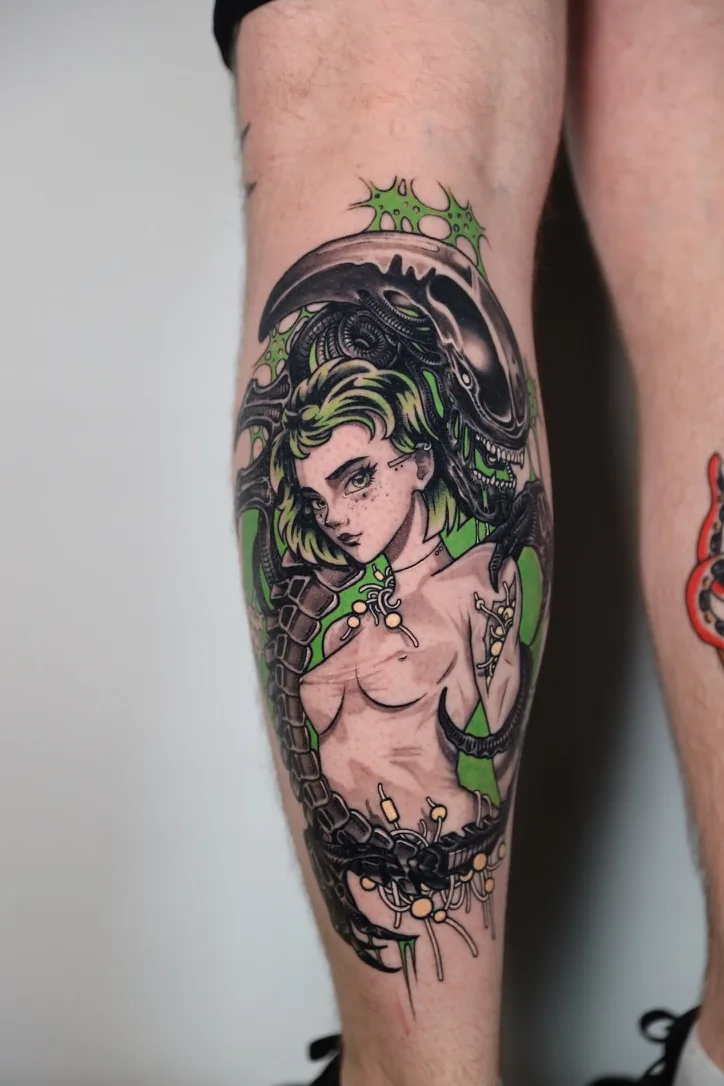
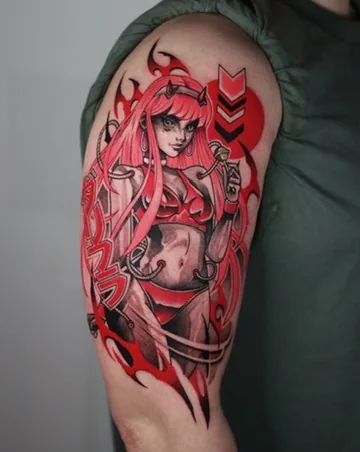
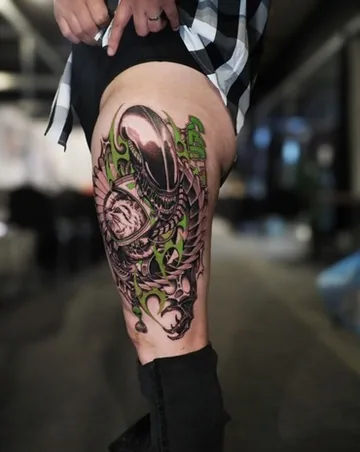
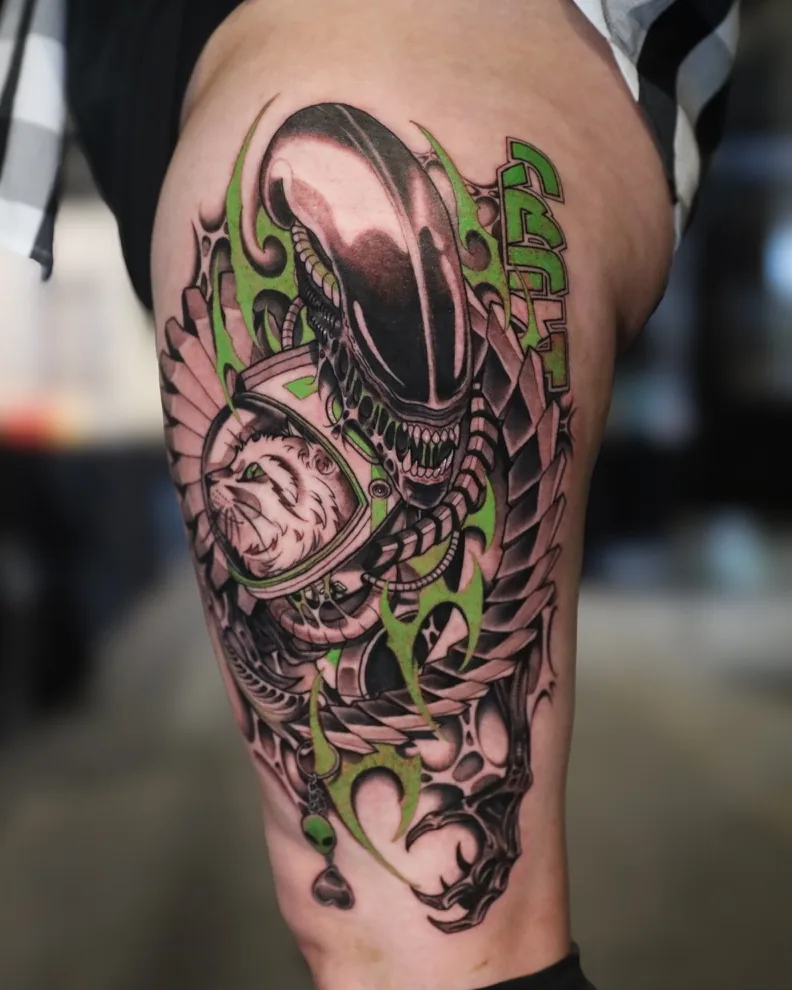
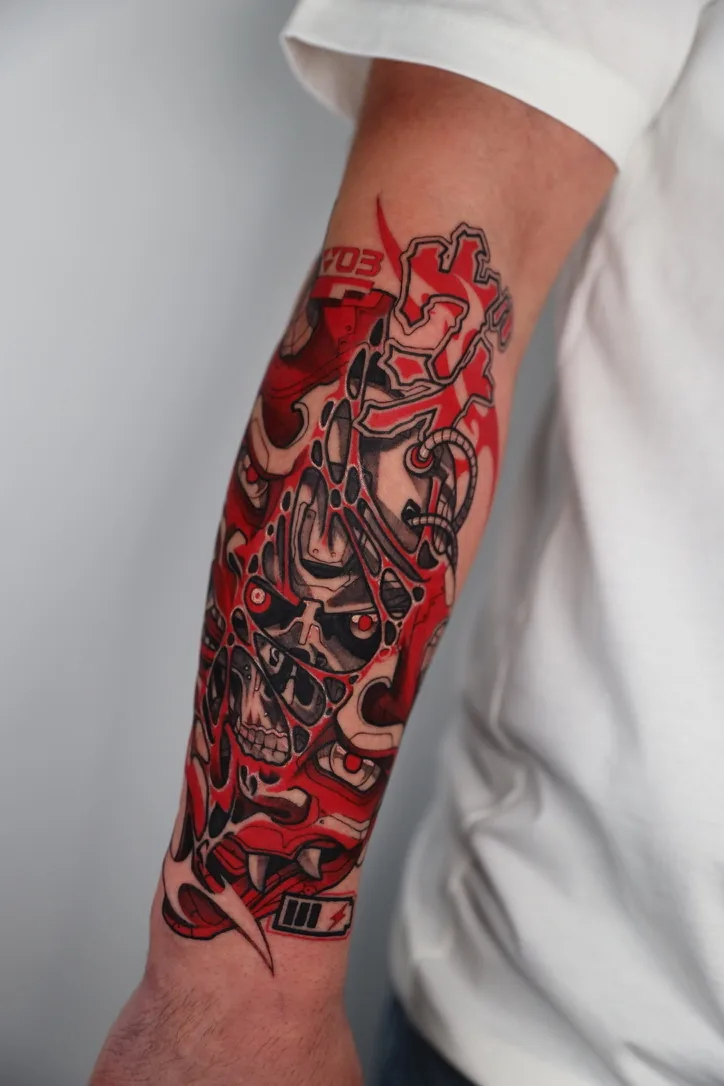
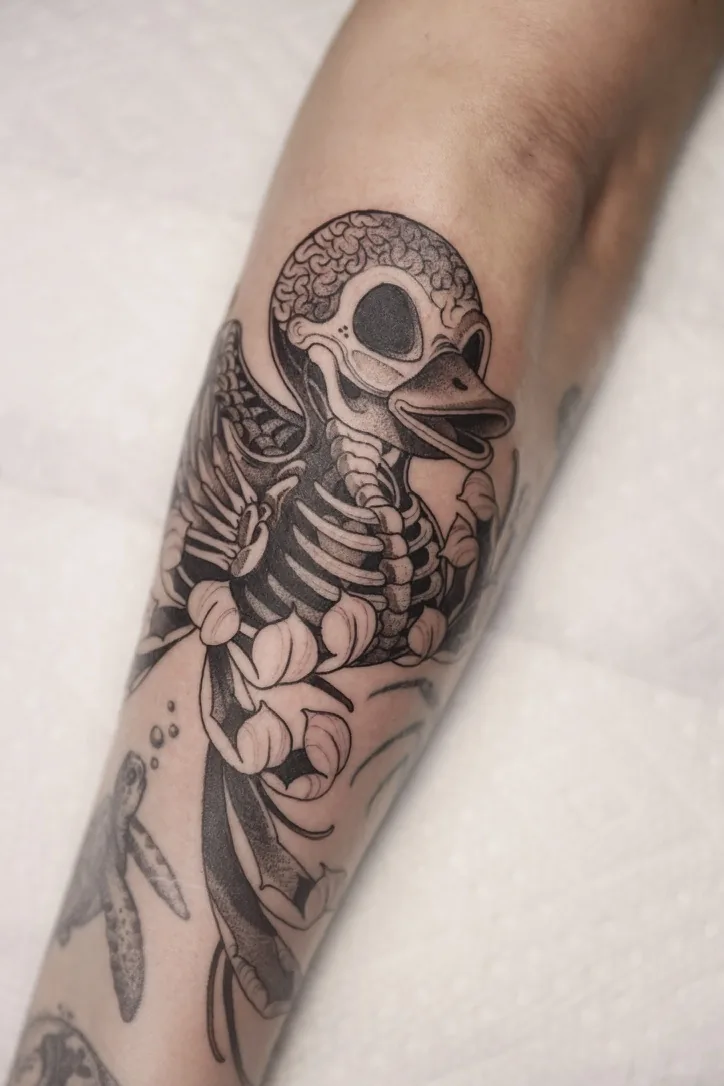
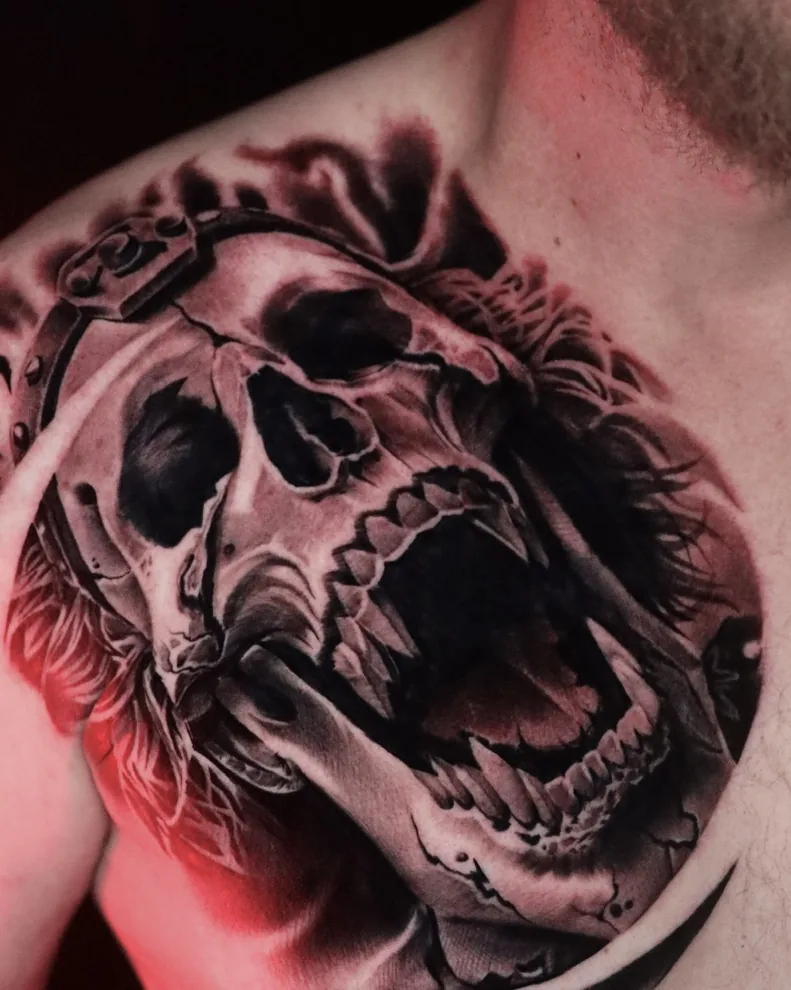
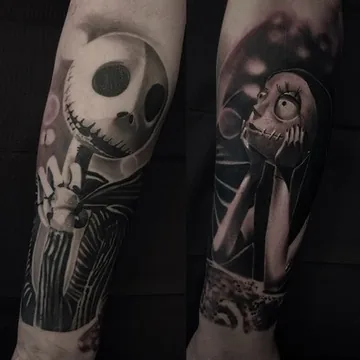
Portfolio inclusion proves that a clearly dark, skeletal, monstrous, or horror-linked subject is visible in the finished work; it does not promise character licensing, an identical design, project acceptance, a fixed intensity, or a particular result.
Name the visual system
Horror is the subject, not one tattoo style
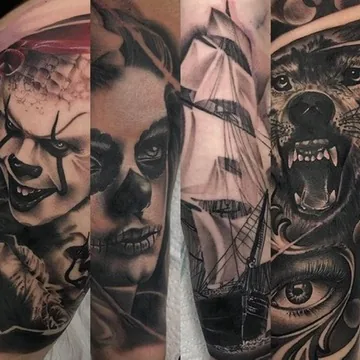
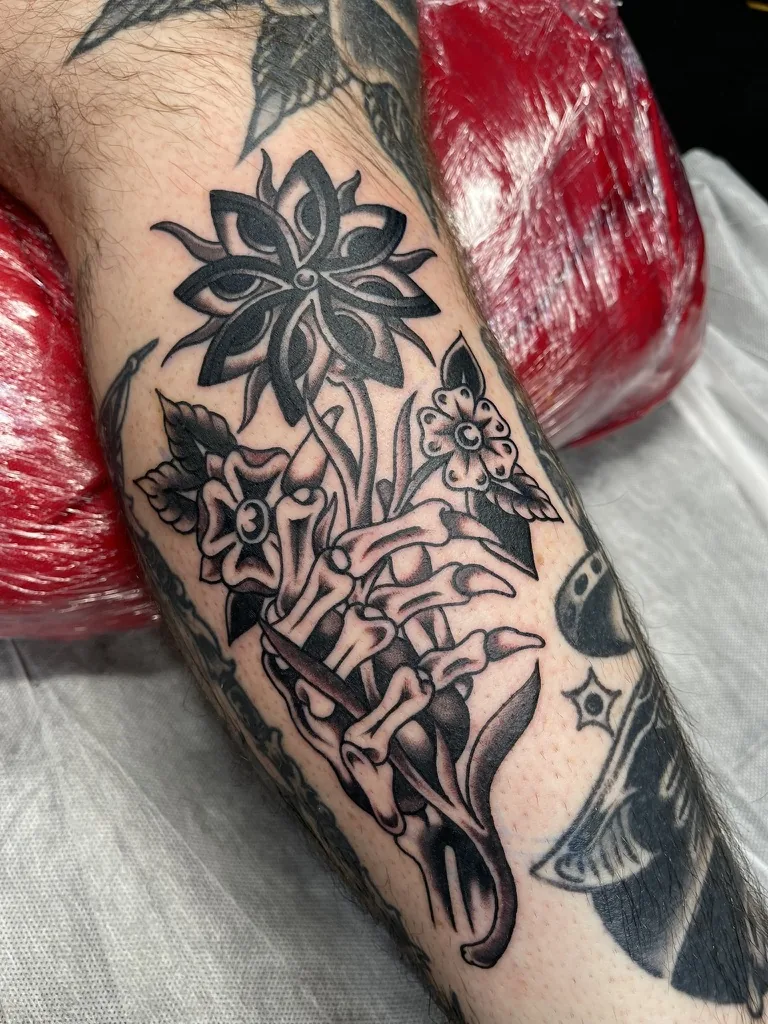
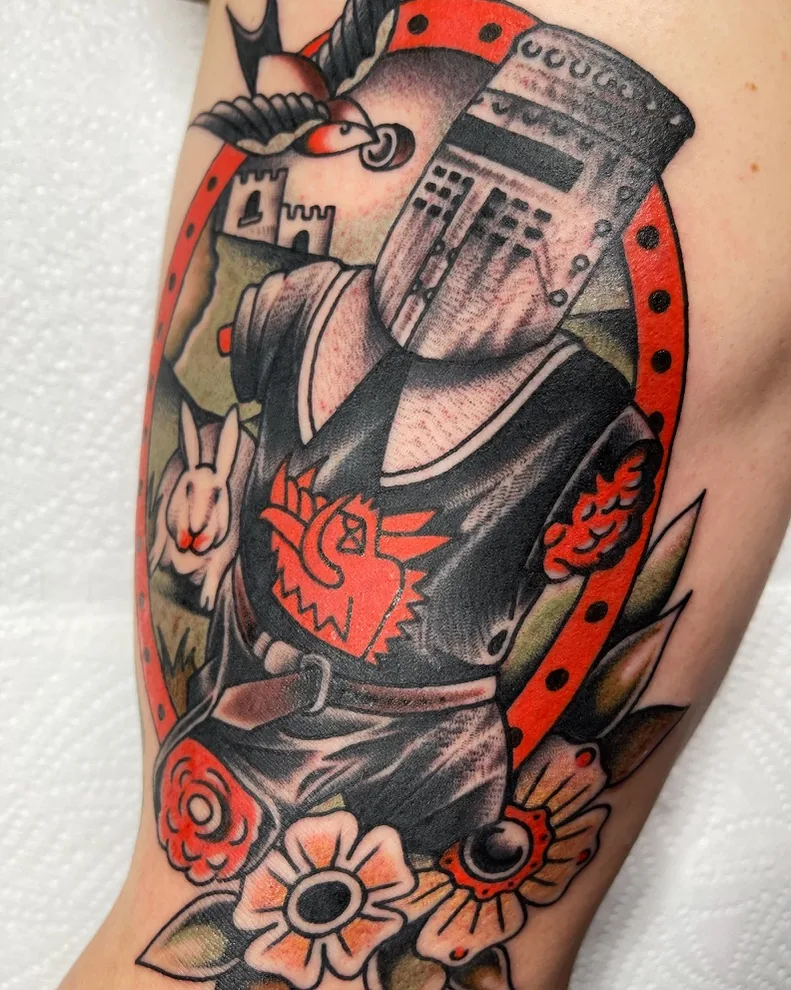
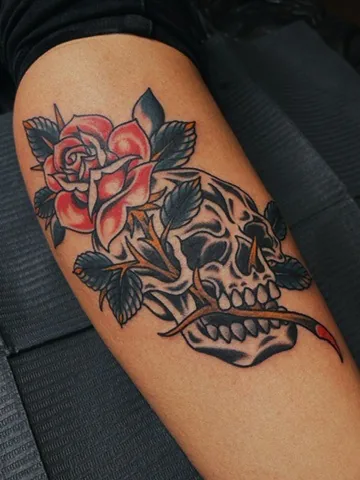
The reviewed works use cyberpunk anime, black-and-grey, and traditional construction. Xenomorph and demon subjects can use graphic colour, manga-influenced linework, or biomechanical detail. Black-and-grey pieces can use value, texture, and shadow for cinematic or skeletal imagery. Traditional pieces reduce a skull, skeleton hand, or plague figure into direct shapes and controlled colour.
Start by deciding which finished work handles the visual problem closest to yours. A character portrait, creature, isolated skull, full collage, and compact symbol are not interchangeable simply because each can feel dark. Compare outline, value, palette, background density, and how quickly the main subject reads before choosing a style label.
If you do not know the style name, link the closest portfolio examples and state what you like about them. You may be responding to sharp graphic colour, heavy shadow, a restricted palette, skeletal anatomy, unsettling atmosphere, or a clear emblem. Those observations give Alex more usable direction than the word horror alone.
Define the subject
Identify the exact character, creature, or original idea
For an existing film, game, comic, anime, or folklore subject, name the exact character and version. Costume, mask, era, pose, props, expression, and colour treatment can change between appearances. Send clear source material for the version that matters instead of expecting one title or character name to resolve every visual decision.
For an original creature or dark composition, list the identifying features in priority order. Describe the silhouette, anatomy, face, texture, clothing, objects, setting, and mood that must survive the drawing. Separate essential features from optional atmosphere so the core idea remains legible if the placement cannot carry every reference detail.
References communicate identity and direction; they do not authorize copying another artist's tattoo. A film still can identify a character, concept art can clarify anatomy, and a mood image can show light or palette. Label each reference by purpose and say which elements must not appear in the final composition.
Set the intensity
Dark can mean graphic, eerie, violent, or playful
The reviewed portfolio ranges from an exposed-brain skeleton duckling and Jack and Sally to Pennywise, xenomorphs, demons, animal skull imagery, and a plague knight. Those subjects do not carry the same emotional intensity. Explain whether you want playful macabre, recognisable character work, grotesque anatomy, threatening atmosphere, or a restrained dark symbol.
State any content limits directly. Blood, exposed anatomy, teeth, weapons, eyes, religious imagery, sexualized treatment, text, and realistic violence can each change the result. If a reference contains something you do not want, identify it instead of assuming the unwanted element is obvious from the rest of the mood board.
Public visibility may matter on a hand, forearm, neck, or other exposed area. That is a personal and workplace decision rather than a universal rule. Tell Alex if the subject needs to remain concealable, readable only at close range, or visually restrained in ordinary settings so placement and scale can be discussed with the actual constraints visible.
Build one main read
Control the hierarchy in a horror composition
One reviewed black-and-grey collage combines Pennywise, a sugar skull, a ship, and a wolf; other works concentrate on one creature, character, mask, or skull. A multi-subject scene needs an explicit focal point. List the primary subject first, supporting elements second, and background or atmosphere last.
If likeness or exact character recognition matters, say which face, mask, costume detail, or silhouette cannot be lost. If atmosphere matters more than literal recognition, describe the light, texture, motion, or emotional quality you want. A composition cannot treat every small prop as the dominant read at the same time, especially at constrained physical sizes.
Text, logos, dates, and symbols should be typed exactly in the enquiry and assigned a role. Do not rely only on lettering embedded in a screenshot. The page does not guarantee that every requested object or word will fit; the final hierarchy, scale, and relationship between elements require project-specific review.
Design for placement
Give the body area and size as measurable constraints
The reviewed works appear on arms, legs, torso, and other differently shaped surfaces. Name the exact body side and surface and give approximate longest dimensions in centimetres or inches. A straight, well-lit close photograph shows the proposed area; a wider photograph shows body direction, nearby tattoos, and the space available for the composition to breathe.
Tell Alex whether the piece should stand alone, connect to existing work, cover an area, or become part of a future sleeve or larger scene. Include close and wider photographs of existing tattoos and identify edges that may be approached or must remain separate. Horror imagery does not automatically make a project suitable for cover-up work.
A screen image cannot establish the actual dimensions, hours, or session count of a finished tattoo. Character detail, number of subjects, placement, colour, value range, background, existing work, and reference quality affect the estimate. Use the size and session guide to prepare evidence rather than reverse-engineering another client's appointment from a photograph.
Make the enquiry decidable
What to send for a horror tattoo
Send the exact character, creature, or original concept; preferred version; closest portfolio examples; required and unwanted elements; intended intensity; exact body side and surface; measured size; clear placement photographs; colour direction; budget; and date constraints. Mention existing tattoos and any plan to extend the composition later.
Alex's published rates are $280 CAD per hour and $2,000 CAD for a full day, but those figures are not a project quote. Composition, scale, detail, placement, colour, existing work, and the required drawing affect the estimate. Submitting the online enquiry begins review; it does not reserve time, guarantee acceptance, or confirm availability.
If the project and proposed date work, follow the studio instructions you receive for the deposit and contract. Read Before You Book for the current source-linked policies, and do not arrange travel until the date, artist, and Rocky Mountain Tattoo address are confirmed. The design and placement are reviewed together before tattooing begins.
Direct answers
Horror tattoo questions
Where does Alex Roze tattoo horror projects?
Alex tattoos at Rocky Mountain Tattoo, 532 Bernard Avenue in downtown Kelowna. Confirm the artist, date, and address in the final appointment details.
Is horror tattooing one specific style?
No. This reviewed collection uses cyberpunk anime, black-and-grey, and traditional approaches. Horror identifies the subject family; the portfolio pages show how structure, colour, contrast, and detail change between styles.
What should I send for a horror character tattoo?
Name the exact character and version, then send clear references, must-keep and unwanted features, closest portfolio examples, exact body side and surface, measured size, placement photos, colour direction, budget, and date constraints.
Can Alex combine several horror subjects in one tattoo?
The reviewed portfolio includes both isolated subjects and a multi-subject collage. State the primary subject, supporting elements, and optional atmosphere so the composition has a clear hierarchy. Feasibility remains project-specific.
Can this page estimate the price or sessions for my horror tattoo?
No. Character detail, number of subjects, scale, placement, colour, background, existing work, and reference quality affect the estimate. Send measurable project details for a project-specific response.
Visible provenance
Sources and boundaries
- Rocky Mountain Tattoo: Alex Roze profile
- Rocky Mountain Tattoo: Contact
- https://alexroze.com/tattoos/cyberpunk-anime
- Alex Roze: Black and grey portfolio
- Alex Roze: Traditional portfolio
The RMT profile supports Alex's published cyberpunk anime, traditional, realism, and black-and-grey style scope; the contact page supports the downtown Kelowna appointment address; Alex's canonical style pages supply the parent portfolios. No character licence, fixed outcome, hours, session count, availability, reply time, or project price is inferred.
SEND A HORROR TATTOO ENQUIRY →