Masks · four tattoo styles · Kelowna
Mask Tattoos in Kelowna
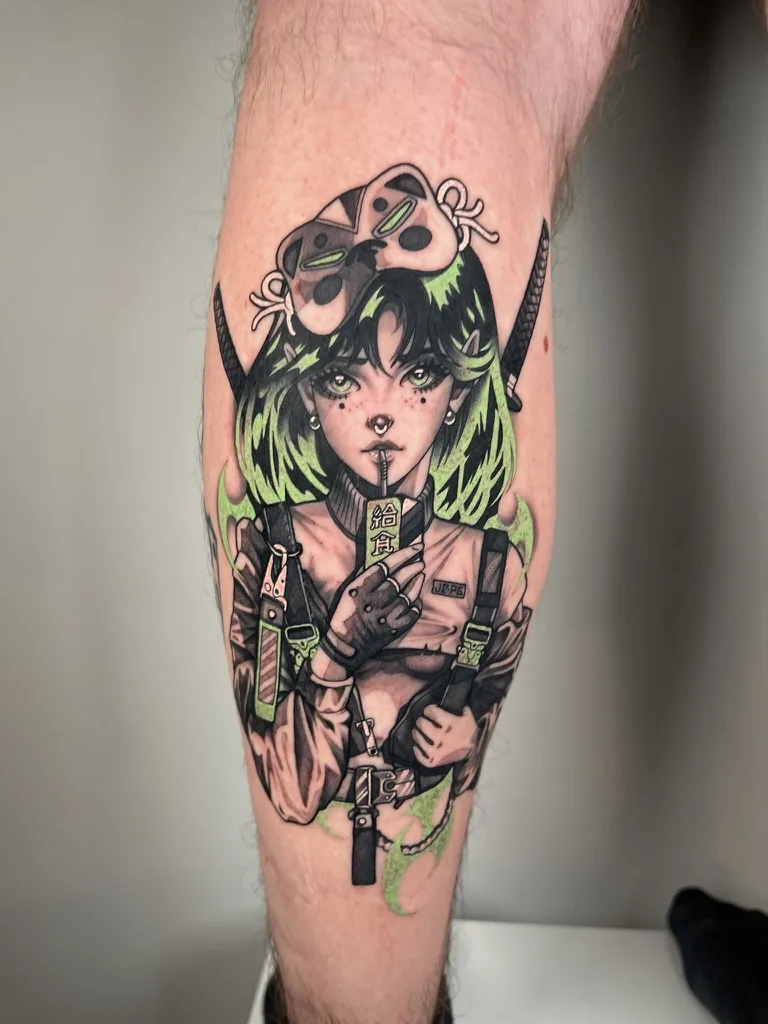
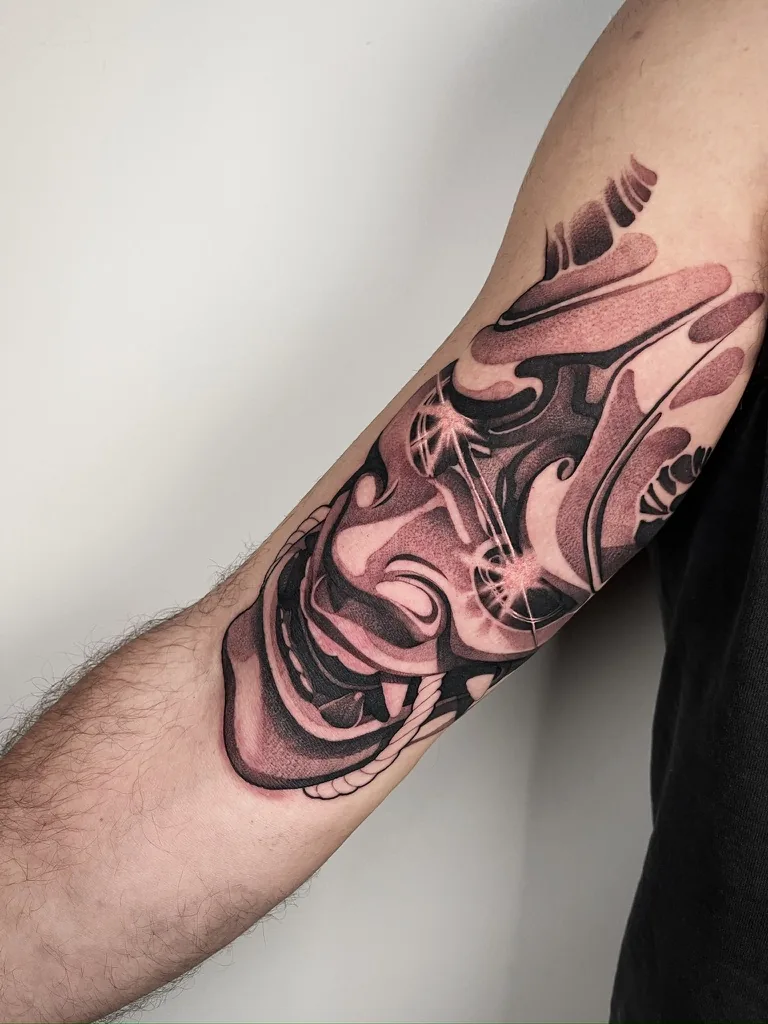
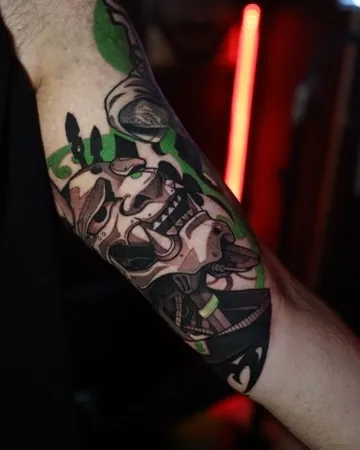
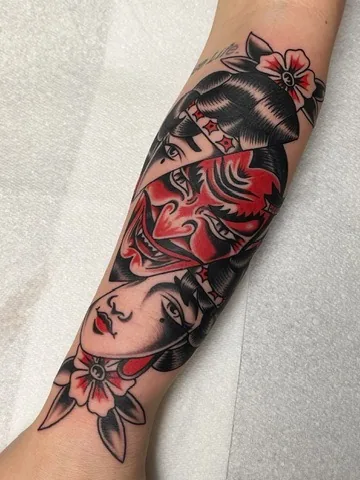
Alex Roze tattoos mask-led and mask-integrated compositions at Rocky Mountain Tattoo, 532 Bernard Avenue in downtown Kelowna. This page contains exactly eight visually reviewed works across neo-traditional, cyberpunk anime, black-and-grey, and traditional portfolios, including masks worn above a head, held beside a figure, placed behind a character, used as a face covering, and treated as the primary subject.
Portfolio and sources reviewed 14 August 2026
8 reviewed works
Mask tattoo portfolio
Every selected photograph carries a dated mask visual review in the site's image taxonomy. All eight caption candidates were inspected directly and contain a clear mask form. The collection remains object-led: masks overlap with Japanese-inspired, lady-head, and dagger pages, but those adjacent pages own different decisions and do not turn every mask into one cultural or stylistic category.
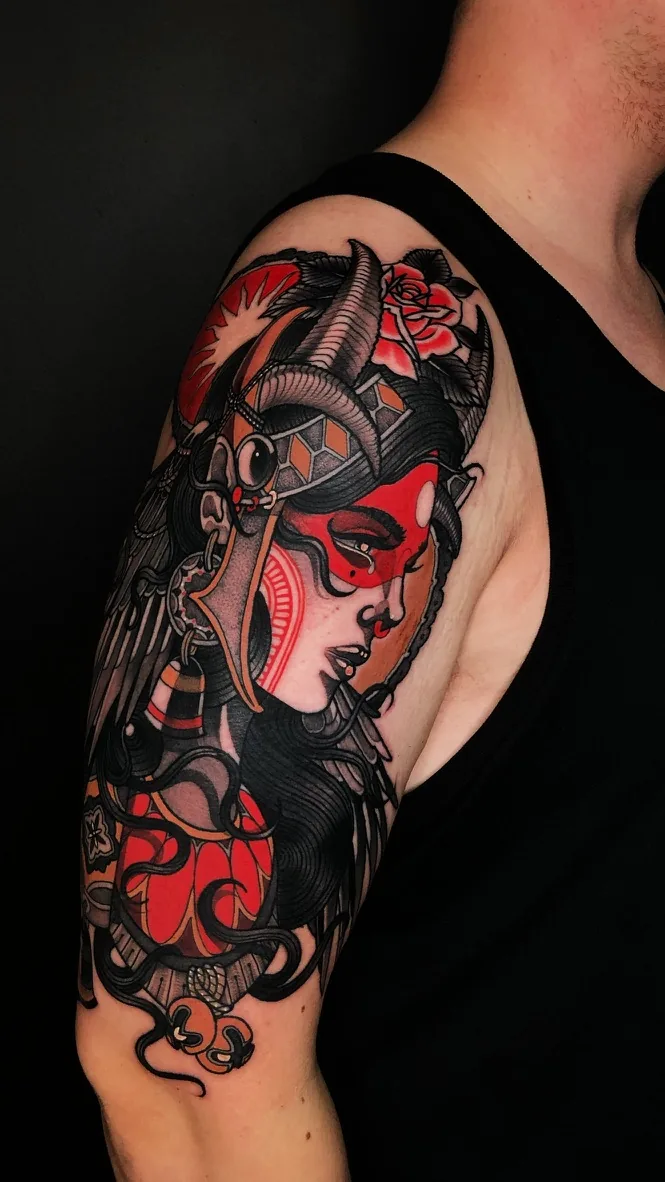
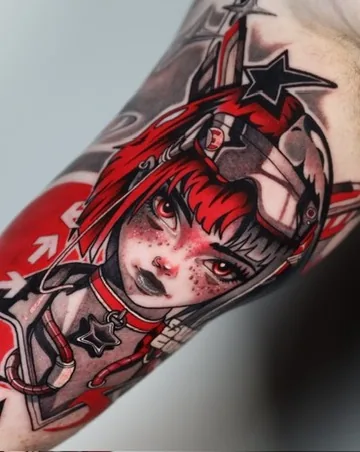
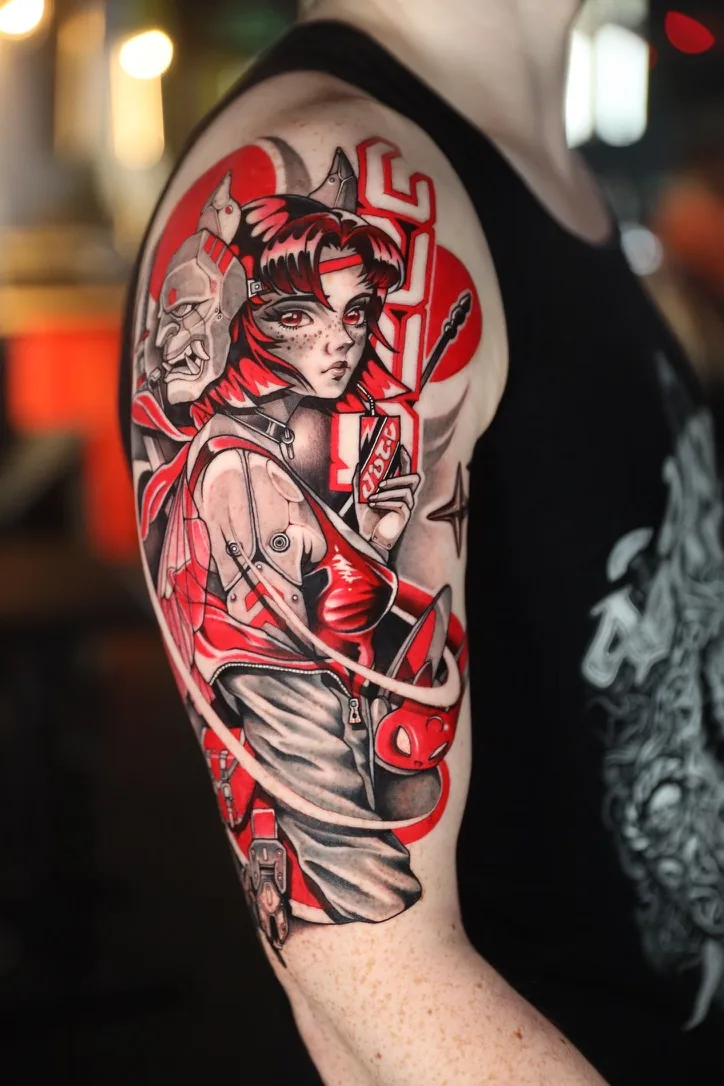
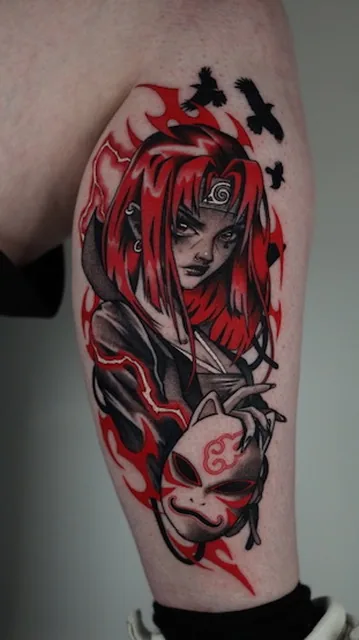
Portfolio inclusion proves that a clear, substantial mask form is visible in the finished composition. It does not authenticate a mask type, tradition, character, language, historical period, cultural or spiritual meaning, irezumi specialization, tebori practice, apprenticeship, lineage, another client's intent, or project outcome.
Read the evidence
Eight masks, several different composition roles
The reviewed set includes a large black-and-grey mask as the main subject, character scenes with a mask behind or beside the figure, masks worn above the head, a red face covering integrated into a lady-head composition, and a heart-shaped mask separating two faces. The common evidence is the visible object, not one style, tradition, character, meaning, or method.
Keeping mask objects distinct from adjacent subjects makes the taxonomy useful. The Japanese-inspired page owns source and specialization boundaries for oni, Hannya, kitsune, and related motifs. The lady-head page owns face-led composition decisions. The dagger page owns blade direction and object hierarchy. This mask page owns what the mask is, how it relates to the figure, and how that structure fits the body.
Use the gallery to compare mask size, face coverage, viewing angle, expression, symmetry, material cues, line weight, colour, negative space, companion subjects, and body flow. Do not use it to assume that two visually similar masks share the same name, tradition, story, or meaning.
Identify the source
Mask type and cultural reference need evidence
Begin by naming the mask only to the level you can support: a generic face mask, a fictional character prop, a theatrical mask, a fox-shaped mask, an oni reference, a Hannya reference, a kitsune reference, or another clearly sourced object. If terminology matters, send the exact source image, title, character, object, or tradition and explain which features must remain accurate.
Do not treat Hannya, oni, and kitsune as interchangeable labels for any horned or fox-like face. Their visual and contextual references can differ, and a modern anime or cyberpunk interpretation may depart from historical forms. The portfolio shows Alex's finished interpretations; it does not authenticate a museum object, folklore claim, translation, religious use, performance tradition, or historical period.
If the reference comes from a living culture, family object, ceremony, uniform, theatre practice, game, manga, film, or another artist's work, identify it. State whether accuracy, respectful adaptation, fictional remix, or only a broad silhouette is intended. That gives the enquiry a checkable boundary instead of asking a style label to carry the whole meaning.
Set the hierarchy
Worn, held, backgrounded, or mask-led
A mask can cover a face, rest above the head, sit behind a figure, be held in a hand, float beside a character, or occupy the whole design. Choose which role applies and which element must be read first. A mask-led piece needs enough scale for its expression and surface; a figure-led scene may reduce the mask to a supporting identifier.
Describe whether the mask is front-facing, angled, split, mirrored, broken, lifted, worn, or separate from the face. State how much of the eyes, mouth, horns, ears, teeth, ties, straps, ornament, or interior should show. Those choices affect silhouette and negative space before colour or rendering style is chosen.
For multi-element designs, list the primary subject, supporting elements, optional details, and unwanted imagery in order. Explain whether the mask and figure represent the same character, contrasting identities, a transformation, a prop, or simply a visual pairing. This page does not assign that relationship or another client's story for you.
Compare visual systems
Four styles change the same object differently
The traditional example uses direct silhouettes, controlled red and black, and a face-mask relationship that remains legible inside a compact composition. The neo-traditional example expands value, colour, ornament, and body flow around a red mask. Black-and-grey isolates form through tonal structure, while cyberpunk anime integrates masks with characters, graphic red or green accents, blades, interface-like marks, and larger narrative scenes.
Open the complete traditional, neo-traditional, black-and-grey, and cyberpunk anime portfolios before choosing a label. Compare outline weight, symmetry, rendering, colour range, face scale, background density, and whether the mask reads as an object or as part of a character design. Select two or three Alex works and name the useful property in each rather than requesting a duplicate.
If you do not know the style name, describe the intended result in ordinary language: graphic and compact, dark and sculptural, character-led with sharp colour, mask-only, face-covering, held beside a portrait, or another visible direction. That description communicates the design constraint without inventing a cultural or technical credential.
Design for the body
Placement, direction, and scale control the face
Name the exact body side and surface and provide approximate longest dimensions in centimetres or inches. A forearm, upper arm, lower leg, shoulder, chest, hand, neck, or sleeve gap offers different proportions and viewing angles. Send one straight, well-lit close photograph plus a wider image showing curvature, nearby tattoos, and the full usable area.
State which way the mask looks and how the composition should travel. A full frontal mask needs width and symmetry; a three-quarter mask introduces depth; a mask behind a figure requires separation; a mask above the head creates vertical height. If the piece connects to existing work or reserves future space, show every relevant edge and describe the larger plan.
A portfolio photograph cannot reveal another client's exact dimensions, hours, sessions, pain, healing, or final price. Mask detail, expression, reference accuracy, hierarchy, style, placement, colour, existing work, and source quality affect the design and estimate. Use the size and session guide to provide measurable constraints instead of reverse-engineering a photograph from a screen.
Make the enquiry decidable
What to send for a mask tattoo project
Send the mask type or source; whether it is worn, held, backgrounded, separate, or mask-led; viewing angle and expression; must-keep features; closest Alex portfolio examples; primary and supporting subjects; unwanted imagery; exact body side and surface; measured size; placement photographs; colour direction; budget; and date constraints.
If a reference comes from another artist, identify the property you like rather than requesting duplication. If it comes from folklore, theatre, religion, a family object, manga, anime, a game, film, museum, or historical source, name it and flag uncertainty. This page does not verify copyright, translation, historical accuracy, cultural suitability, permission, or ritual meaning.
Alex's published rates are $280 CAD per hour and $2,000 CAD for a full day, but those rates are not a quote for a mask project. Submit the online enquiry for review, questions, an estimate, a possible date, and the next deposit step. Sending the form does not confirm acceptance, availability, reply time, placement, price, sessions, cover-up feasibility, healing, longevity, or outcome.
Direct answers
Mask tattoo questions
Where does Alex Roze tattoo mask projects?
Alex tattoos at Rocky Mountain Tattoo, 532 Bernard Avenue in downtown Kelowna. Confirm the artist, date, and address in the final appointment details.
What mask tattoos appear in Alex's reviewed portfolio?
The eight reviewed works include mask-led and figure-integrated designs across traditional, neo-traditional, black-and-grey, and cyberpunk anime treatment, including Hannya, oni, kitsune, fox-shaped, face-covering, and generic mask forms.
Is every mask tattoo Japanese-inspired?
No. Mask is the object category. Some reviewed works use Japanese-inspired references, while others are generic, character-led, heart-shaped, or treated through a different visual context.
What does a mask tattoo symbolize?
This mask-tattoo guide does not assign one meaning. Explain your own personal, fictional, historical, cultural, theatrical, or spiritual context and identify any source that must be handled accurately.
What should I send for a mask tattoo enquiry?
Send the mask type or source, composition role, viewing angle, expression, required features, closest portfolio examples, supporting and unwanted imagery, exact body side and surface, measured size, placement photos, colour direction, budget, and date constraints.
Visible provenance
Sources and boundaries
- Rocky Mountain Tattoo: Alex Roze profile
- Rocky Mountain Tattoo: Contact
- Alex Roze: Neo-traditional portfolio
- https://alexroze.com/tattoos/cyberpunk-anime
- Alex Roze: Black and grey portfolio
- Alex Roze: Traditional portfolio
- Alex Roze: Japanese-inspired tattoo collection
The RMT profile supports Alex's current style range and the contact page supports the downtown Kelowna appointment address. Alex's canonical style and Japanese-inspired pages supply the adjacent portfolio context. No mask classification, translation, cultural authority, specialist credential, project acceptance, price, session count, availability, reply time, healing result, longevity, or outcome is inferred beyond those sources.
SEND A MASK TATTOO ENQUIRY →